

Standard kitchen cabinet knobs typically measure 1 to 1.25 inches across and rely on mounting bolts built for 3/4-inch thick lumber. Put one on a delicate tabletop chest or watch case, and that heavy hardware immediately crowds the wood grain and splits thin joinery, which is why choosing properly scaled jewelry box knobs matters for compact furniture.
Quick Answer on Choosing Jewelry Box Knobs for Small Drawers
When selecting mini knobs for small drawers, follow three core buying rules. First, match the knob diameter to the drawer front height so plenty of natural wood frames the hardware. Second, check the projection to guarantee comfortable finger clearance when pinching the knob. Third, confirm that the screw post length fits the thin wooden wall of a compact drawer without bottoming out.
Key Hardware Terms to Know
Understanding three basic measurements makes shopping for compact furniture much easier. Diameter is the width across the front face of the knob, which determines how much visual space the piece occupies on your drawer. Projection measures the distance the knob sticks out from the wood surface toward you, governing whether your fingertips can comfortably grip behind the head. Base width refers to the footprint where the metal stem meets the drawer face, directly affecting stability and how much old hardware wear gets covered during a restoration.
Standard dresser or kitchen knobs fail on miniature drawers because their wide faces visually compress small wooden panels, and their heavy bolts are far too thick and long for delicate dovetail or mitered box joinery. While many shoppers search specifically for jewelry box hardware, these tiny furniture hardware fittings are versatile miniature pieces also suited for apothecary chests, desktop organizers, watch cases, and vanity keepsake drawers. Restorers updating an entire heirloom piece often pair these small drawer fittings with scaled lid hardware, using resources like our guide on choosing small box hinges for jewelry boxes to keep every metal detail in proportion.
How to Judge a Knob Size Against a Small Drawer Front
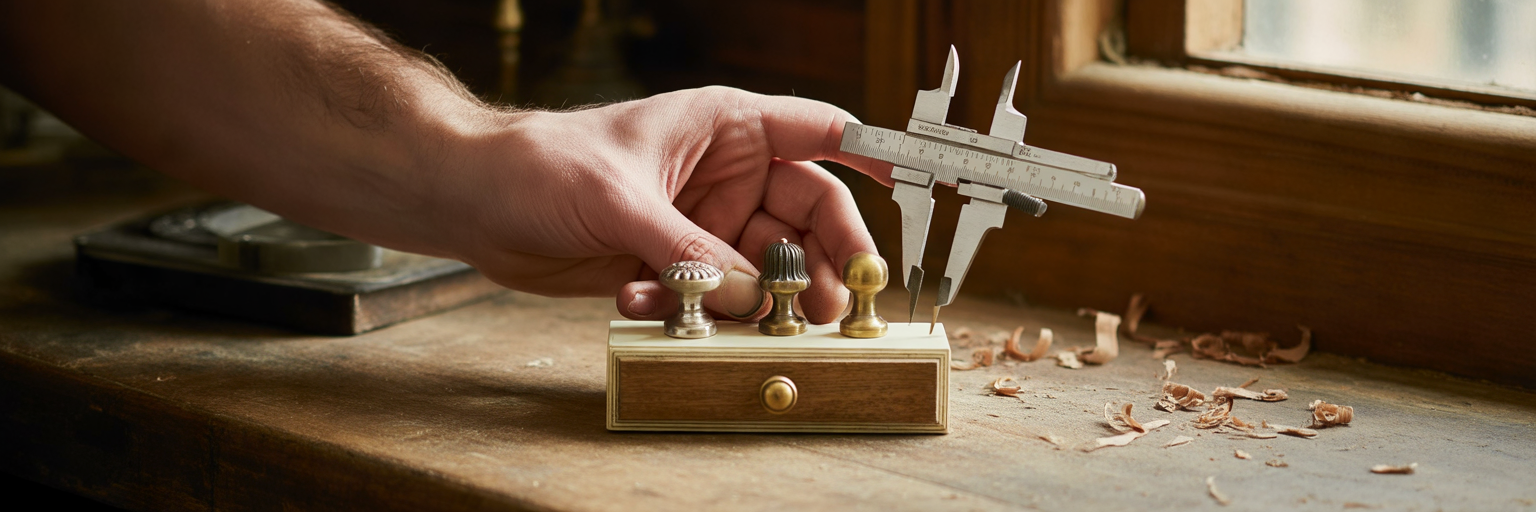
Once you know the basic terminology, the next step is evaluating how a miniature knob will look and feel on your specific furniture piece. Small drawers on tabletop chests or desk organizers usually measure between 1.5 and 3 inches tall, leaving very little margin for sizing errors.
Balancing Visual Proportion and Pinch Grip
Properly scaled miniature cabinet knobs should leave generous visible wood framing around the hardware so the drawer front looks balanced rather than crowded. A tiny 3/8-inch or 7/16-inch knob preserves the fine scale of a small chest and keeps the focus on the wood grain. However, visual delicacy must balance with a functional pinch grip. Even a tiny head requires 1/4 inch to 3/8 inch of projection so your fingertips can pinch the knob cleanly without your fingernails scraping the wood finish. If you want to compare how finger clearance works across different styles, our overview of finger pulls and grip placement breaks down how daily comfort depends on smart spacing.
Pay close attention to the base width on thin wood faces as well. A stem base that is too narrow can wobble under tension or press circular indentations into softer wood species like pine or cedar over time, whereas a balanced base distributes pulling force evenly across the surface.
The Pre-Purchase Paper Cutout Test
Before placing an order, run this quick visual check at home using painter's tape or scrap paper:
- Cut out three tiny paper circles in 3/8-inch, 7/16-inch, and 1/2-inch diameters to represent verified miniature knob sizes.
- Tape each circle to the exact center of your drawer fronts, placing different sizes on adjacent drawers for a direct comparison.
- Step back three feet under your normal room lighting to judge the visual weight and wood framing before committing to a size.
Comparing Verified Dimensions and Materials Across Mini Knob Variants
After testing paper cutouts on your drawer fronts, comparing exact metal specifications ensures the hardware performs well in daily use. When working at this scale, a fraction of an inch changes both how the knob sits against the wood and how easily it opens a loaded compartment.
| Variant Material and Finish | Knob Diameter | Projection | Ideal Drawer Application |
|---|---|---|---|
| Solid Brass | 3/8 inch | 1/4 inch | Ultra-small keepsake compartments and watch boxes |
| Brushed Antique Brass | 7/16 inch | Standard mini pinch profile | Vintage tabletop chests and warm traditional wood tones |
| Nickel-Plated Brass | 1/2 inch | 3/8 inch | Small apothecary or desk drawers needing extra finger grip |
These verified dimensions illustrate how subtle 1/16-inch to 1/8-inch shifts in diameter and projection change both the visual footprint and finger clearance on compact drawers.
Height, Base Width, and Projection Tradeoffs
Stepping up from a 1/4-inch projection on the 3/8-inch solid brass variant to a 3/8-inch projection on the 1/2-inch nickel-plated brass variant noticeably alters the side profile. That extra 1/8 inch of depth gives your fingers much stronger purchase when pulling open slightly heavier solid hardwood drawers or compartments filled with metal tools, watches, or coins. Meanwhile, the 7/16-inch brushed antique brass option sits right between the two in face width, offering a balanced middle ground for multi-drawer chests. Because these miniature knobs rely on M4 or smaller threaded posts, their compact stems pass cleanly through small bore holes without weakening thin wooden drawer fronts.
Best For and Avoid If Recommendations by Material
Choosing between small brass drawer knobs and plated finishes comes down to wood tone and touch frequency. Solid brass and brushed antique brass are best for walnut, mahogany, cherry, and vintage painted chests where warm golden or muted bronze undertones complement the timber. If you are coordinating a smaller chest with full-size room furniture, browsing our solid brass cabinet pulls and knobs can help you keep metal tones consistent across the room. Avoid raw or unsealed brass if you want a cool silver look or dislike natural tonal warming from skin oils.
Nickel-plated brass is best for cool-toned woods, modern grayscale finishes, or vanity drawers exposed to humid bathroom air. As highlighted in a maintenance guide from K2 Fishing on preventing metal corrosion, ambient moisture and surface salts gradually react with exposed metals over time, though indoor jewelry box hardware obviously has much gentler care needs than outdoor fishing gear and only requires an occasional wipe with a dry microfiber cloth. Avoid cool nickel plating if your chest already features warm antique brass hinges or locks, as mixing metal temperatures on a tiny box often looks unintentional.
Why a Miniature Decorative Knob Is Not a Ring Pull or Drawer Pull

Even with exact measurements in hand, online marketplace labels can make finding the right piece frustrating. Many broad product listings lump every small fitting under the same title, but a miniature decorative knob should never automatically be called a ring pull or a standard drawer pull.
Stationary Single-Post Knobs vs. Hinged Ring Pulls
The difference comes down to structural mechanics and how your hand interacts with the hardware. A miniature knob is a stationary, single-post fitting that projects straight out from a single screw hole, requiring a simple two-finger pinch to open the drawer. In contrast, a ring pull uses a hinged loop attached to a base or post that pivots upward when lifted and drops flat against the drawer face when released, much like the mechanism on our solid brass geometric cabinet ring pulls designed for larger cabinetry. A traditional drawer pull is an entirely separate category that usually bridges two mounting holes measured center-to-center, which is the exact distance between the centers of the two screw holes.
Each mechanism carries practical tradeoffs on small furniture. Fixed mini knobs never swing, rattle, or tap against delicate lacquered or veneered wood faces. Miniature ring pulls sit flatter against the box, making them helpful inside cabinets with tight door clearance or on campaign and apothecary chests, though the dropping ring will lightly contact the wood over time.
Choosing the Right Category for Your Furniture Piece
When shopping for a compact project, filter by how the hardware mounts and moves rather than relying on vague titles. Choose a stationary single-post mini knob when you want crisp, silent operation and a clean pinpoint profile on thin drawers. If you are outfitting a larger vanity or desk that pairs tiny top compartments with wider lower storage, you can coordinate fixed mini knobs on the upper tiers with standard handles from our broader drawer pulls and knobs collection below.
Common Measuring and Installation Mistakes to Avoid Before You Buy
Selecting the right style and diameter is only half the project. Because miniature chests use much thinner wood than kitchen cabinetry, overlooking fastener dimensions can stall your installation before you even tighten the first piece.
Drawer Wall Thickness and M4 Fastener Fit
Tabletop chests, spice cabinets, and jewelry boxes normally feature 1/4-inch to 1/2-inch drawer fronts rather than the standard 3/4-inch lumber found on kitchen cabinets. If you use a standard-length cabinet bolt on a 3/8-inch jewelry box drawer, the screw will bottom out inside the knob threads long before the base pulls snug against the wood. To get a tight fit on thin panels, pair your miniature knobs with shorter machine screws or add small metal spacer washers on the inside of the drawer wall.
When installing M4 or smaller miniature threaded posts, always tighten the screw by hand with a manual screwdriver rather than a power drill. Excessive torque can easily strip fine internal brass threads or crush soft wood fibers around the bore hole. If you are restoring a multi-compartment chest with 10 or 20 tiny drawers, ordering a single knob first through our sample program while browsing our furniture hardware collection lets you test the screw length, pinch clearance, and finish tone under your room's actual lighting before committing to a full set.
Pre-Purchase Measurement Checklist
- Measure the existing hole diameter with a ruler or caliper to confirm whether your drawer accepts an M4 or smaller miniature post without re-drilling.
- Check the exact drawer front thickness in fractions of an inch (including any interior velvet lining) so you know if shorter screws or washers are needed.
- Compare the new knob base width against any circular footprints or finish shadows left behind by old hardware.
- Verify finger pinch clearance around decorative trim or recessed molding on the drawer face.
- Order one or two spare knobs on multi-drawer restoration projects so you have matching replacements and extra fasteners on hand.
Frequently Asked Questions and Next Steps for Your Project
What is a good knob size for a small jewelry box or desktop drawer?
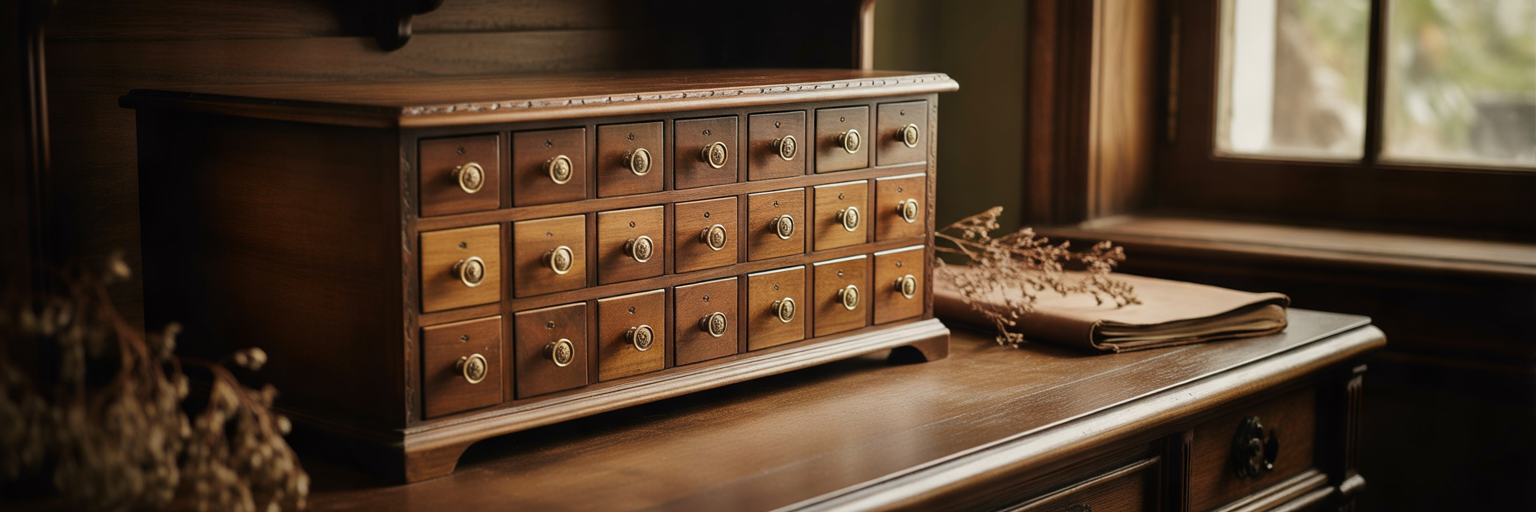
Drawers measuring 1.5 to 3 inches tall generally look and function best with knob diameters between 3/8 inch and 1/2 inch. A 3/8-inch knob suits ultra-small watch or ring compartments, a 15/32-inch knob fits classic tabletop chests, and a 1/2-inch knob works well on deeper desktop apothecary drawers.
What happens if my M4 screw is too long for a thin wooden drawer front?
If the mounting screw is longer than the drawer wall thickness plus the internal thread depth of the knob, the knob will remain loose and spin. You can solve this cleanly by adding small metal washers on the inside of the drawer front or trimming a breakaway machine screw to the exact depth needed.
Is a 1/4-inch projection enough to grip comfortably?
A 1/4-inch projection provides enough pinch clearance for light, smooth-gliding keepsake drawers that hold small items like rings or stamps. If your drawer is made of heavy hardwood, sticks slightly in humid weather, or holds heavier items, stepping up to a 3/8-inch projection gives your fingertips a much more secure grip.
Can I replace a miniature two-hole pull with a single-post mini knob?
Replacing a two-hole pull with a single-post knob leaves an exposed screw hole unless you fill and refinish the wood or mount two mini knobs per drawer on wider fronts. Measure your existing hole setup carefully before ordering so you know whether you need a single-point knob or a two-hole handle.
How do I choose between brushed antique brass, solid brass, and nickel-plated brass?
Match the metal to your wood tone and existing box hinges. Choose solid brass for bright golden warmth on dark walnut or cherry, brushed antique brass for a softer aged look on vintage pieces, and nickel-plated brass for a crisp silver contrast on cool-toned or painted wood.
Next Steps
Choosing the right miniature hardware comes down to matching scale and grip to your specific furniture piece. Reach for the 3/8-inch solid brass knob on delicate watch boxes, the 7/16-inch brushed antique brass knob for traditional tabletop chests, or the 1/2-inch nickel-plated knob when you want a full 3/8-inch projection on small desk drawers. Before ordering your full quantity, take two minutes to measure your drawer wall thickness and consider testing a sample under your home lighting so you can complete your restoration with confidence.


