

Choosing the right hardware is a small detail that makes a big difference in your kitchen or on a piece of furniture. Finger pulls offer a clean, modern alternative to traditional knobs and handles, but selecting the right style requires a bit of knowledge. This guide will walk you through the different types, what to measure, and how to choose with confidence.
Key Takeaways for Choosing Finger Pulls
If you need a quick answer, here are the most important points to consider before you buy:
- Grip Style: Finger pulls are defined by how you use them. Instead of grabbing a handle, you hook your fingertips over a lip or into a channel to open the door or drawer. This creates a very clean, minimal look.
- Main Types: There are three common styles of finger pulls. Edge-mounted pulls attach to the top or side edge of a door, recessed pulls sit flush within the cabinet face, and surface-mounted pulls attach directly to the front.
- Key Measurements: Before ordering, always measure your cabinet door or drawer thickness, the pull's projection (how far it sticks out), and check the grip depth to ensure it’s comfortable for daily use.
- Best Use Case: These pulls are ideal for modern, minimalist, and handle-free kitchen designs where you want the hardware to be discreet and integrated into the cabinetry itself.
Understanding Finger Pulls for Cabinets
Unlike a traditional knob or handle that you wrap your hand around, a finger pull works with a more subtle action. You simply curl your fingertips over a small lip or into a shallow channel to gain purchase. This simple difference is what gives finger pulls for cabinets their signature uncluttered and seamless appearance. They blend into the cabinetry, creating long, clean lines that are perfect for contemporary and minimalist spaces.
You may hear terms like "edge pull," "tab pull," or "flush pull" used interchangeably with "finger pull," which can be confusing. While they are all related and share a similar gripping style, there are important differences in how they are mounted and how they look. This guide will help you understand each type so you can choose the one that best fits your project.
Beyond the visual appeal, consider the tactile experience. Using a finger pull feels more intentional and discreet than using a standard handle. It’s a quiet, integrated function that complements modern design principles where form and function are closely linked.
The Three Main Types of Finger Pulls
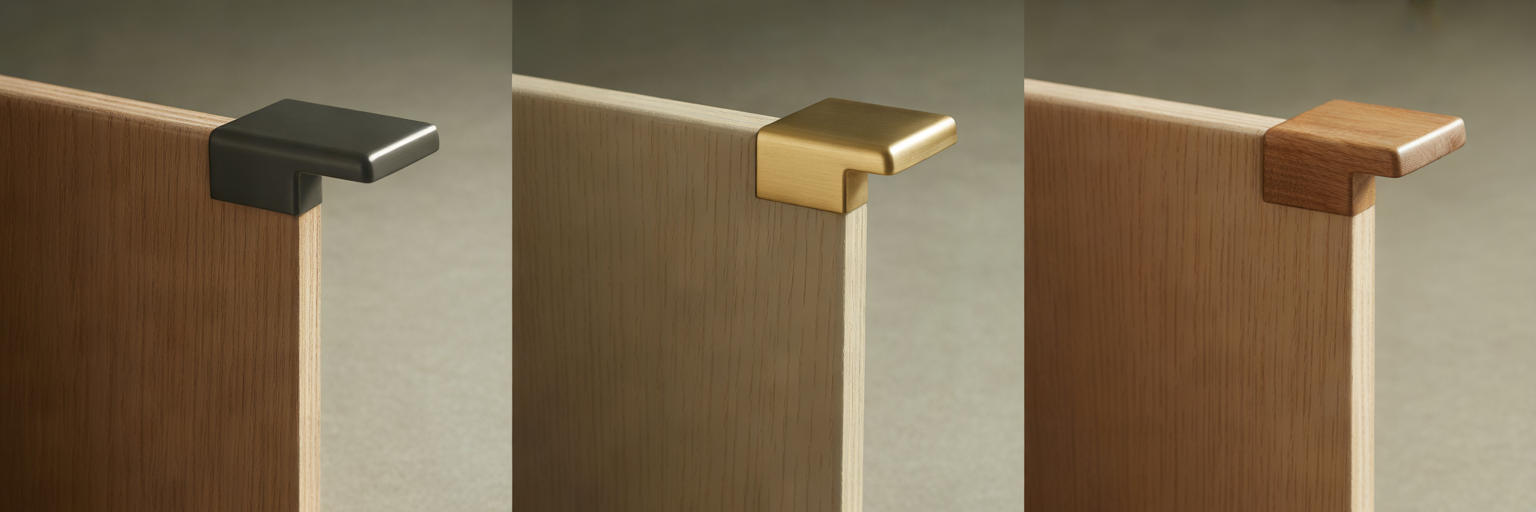
Finger pulls generally fall into three categories based on how they are installed. Understanding the differences in appearance and installation will help you select the perfect style for your project and skill level.
Edge-Mounted Pulls
Edge-mounted pulls attach to the top or side edge of a cabinet door or drawer. The main body of the pull is hidden behind the door, leaving only a small lip visible to grip. This makes them an excellent choice for achieving a nearly invisible, handleless look while keeping the front face of your cabinetry completely clear. They are often the easiest style to install on new or existing cabinets, typically attaching with screws from the back. For a sleek, modern kitchen, styles like these black edge-mounted pulls are a popular choice.
Recessed or Flush Pulls
For the most minimal profile possible, recessed pulls are the answer. These are installed into a routed-out cavity, allowing them to sit perfectly flush with the cabinet surface. This zero-projection design is ideal for sliding pantry doors, pocket doors, or cabinets in tight walkways where a protruding handle would get in the way. However, it's important to be honest about the installation. Fitting recessed pulls requires precise woodworking tools and skills to create the cavity, making it a more advanced DIY task. When done correctly, modern flush pulls offer a truly integrated and seamless finish.
Surface-Mounted Finger Pulls
Surface-mounted finger pulls attach directly to the face of the cabinet door or drawer. While more visible than edge-mounted styles, they are far easier to install than recessed pulls and can add a subtle decorative detail. They often feature a small, curved lip or a hollowed-out section for your fingertips. This style allows for more variety in materials and shapes, from warm wood finger pulls to elegant brass finger pull cabinet hardware. They offer a great balance of minimalist function and straightforward installation, as seen in these wood surface pulls.
| Feature | Edge-Mounted Pulls | Recessed/Flush Pulls | Surface-Mounted Pulls |
|---|---|---|---|
| Visual Profile | Hidden from the front, very minimalist | Completely flush, invisible profile | Subtle decorative element on the face |
| Installation Difficulty | Easy (screws into back or edge) | Advanced (requires routing a recess) | Easy (screws into the front face) |
| Best For | Achieving a clean, handleless look with simple installation | Sliding doors, tight spaces, and a true zero-projection finish | Adding a touch of style with straightforward installation |
| Key Consideration | Ensure there is clearance for the lip (e.g., under a countertop) | Requires precise woodworking tools and skills | The pull will be visible on the cabinet face |
What to Measure Before Buying Your Hardware
Taking a few simple measurements before you order will save you from frustration later. Here’s what you need to check to ensure a perfect fit.
- Door and Drawer Thickness: This is the most important measurement. The mounting screws that come with your hardware are designed for a standard thickness. If your doors are thicker or thinner than average, you may need to purchase screws of a different length to get a secure fit without the screw poking through the other side.
- Projection: Projection is simply how far the pull sticks out from the cabinet face. For a minimalist look, a smaller projection is often preferred. More importantly, check this measurement in tight areas, like next to a refrigerator or in a corner, to make sure your cabinet door can open fully without the pull hitting an appliance or an adjacent wall.
- Grip Depth and Comfort: This is all about daily use. The channel or lip of the pull needs to be deep enough for your fingertips to get a secure, comfortable grip. A depth of less than 3/4 inch can feel cramped or difficult to use. We always recommend ordering a single sample to test the feel in your own hand before buying a full set.
- Existing Holes (for Renovations): If you are replacing old hardware, measure the center-to-center distance between any existing drill holes. Choosing a new cabinet finger pull that can cover these old holes will save you the time and effort of filling, sanding, and repainting.
Common Mistakes to Avoid When Choosing
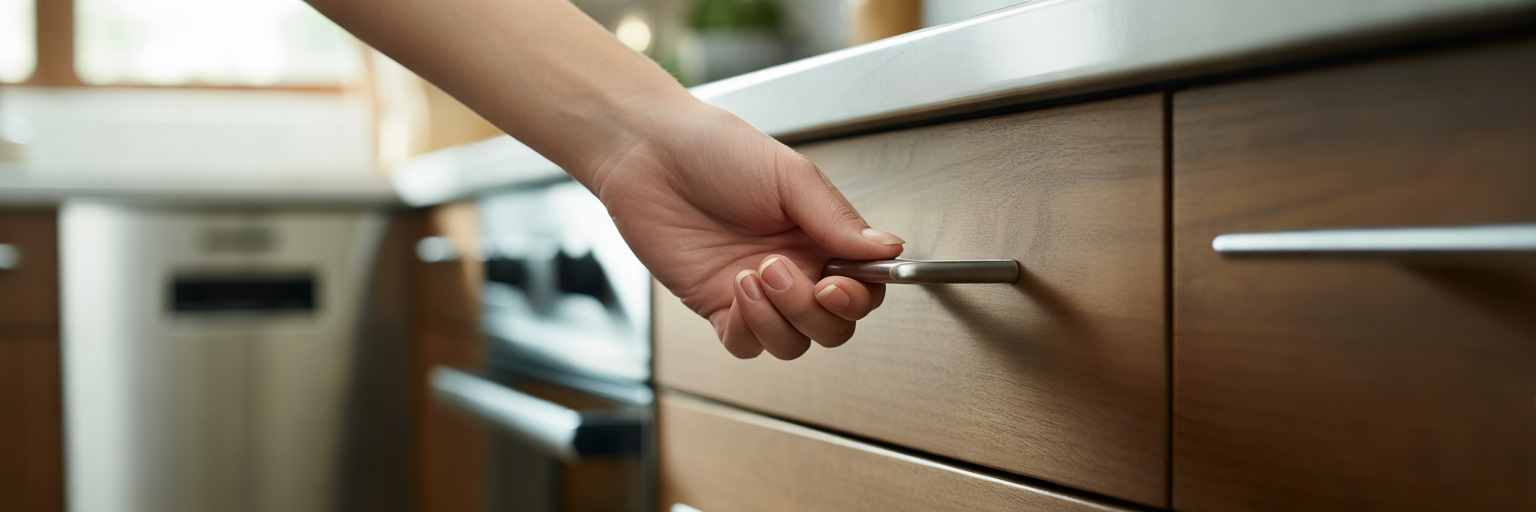
A little planning helps prevent common hardware headaches. Keep these tips in mind to ensure your project is a success.
- Ignoring Grip Comfort: A pull might look beautiful online, but if it has a sharp edge or a grip that’s too shallow, it can be a daily annoyance. This is where ordering a sample first proves its value.
- Forgetting About Clearance: Think about your kitchen in three dimensions. An edge pull on a top drawer might hit the countertop overhang, or a pull on a corner cabinet might prevent the neighboring door from opening. Check for conflicts with appliance handles and other nearby obstacles.
- Mismatching Finishes: Consider the other metal finishes in the room, including your faucet, lighting, and appliances. Colors can look different on a screen, so ordering samples to compare finishes in your home's actual lighting is the best way to ensure a cohesive look.
- Assuming Easy Installation for Recessed Pulls: It’s worth repeating: recessed pulls require cutting a cavity into your cabinet face. This is an advanced task that requires a router and precision. If you are not a confident woodworker, an edge-mounted or surface-mounted style is a much safer and easier choice.
Frequently Asked Questions
Are finger pulls hard to install?
It depends on the type. Edge-mounted and surface-mounted pulls are very easy to install, typically requiring just a screwdriver. Recessed pulls are more difficult because they require you to cut a precise cavity into the cabinet with a router.
Can you use finger pulls on heavy drawers?
Yes, but it’s important to choose a pull with a deep, comfortable grip that allows you to get good leverage. For very heavy drawers, like those for pots and pans, a longer pull that allows you to use several fingers will work better than a small one.
Do finger pulls work with soft-close drawers?
Absolutely. Finger pulls are an excellent aesthetic match for soft-close or push-to-open systems. Both contribute to a clean, quiet, and minimalist kitchen function.
How do I clean finger pulls?
For most finishes, including brass, wood, and matte black, a soft, damp cloth is all you need for regular cleaning. Avoid using harsh chemical cleaners, abrasives, or scouring pads, as they can damage the protective lacquer or finish over time.
Finding the Right Finger Pulls for Your Project
Now that you understand the key differences, you can choose your hardware with confidence. Start by deciding on your preferred type—edge, recessed, or surface—based on your desired look and installation comfort. Next, confirm your measurements for door thickness and clearance. Finally, select a material and finish that complements your space.
With this knowledge, you are ready to find the perfect hardware for your project. Take the next step by browsing our collection of drawer pulls and knobs to discover the right finger pulls for your cabinets. Remember, ordering a sample is a great, risk-free way to make sure you love your choice before committing to a full set.


