

Early American country kitchens and freestanding worktables rarely featured identical hardware on every door and drawer. Instead, carpenters fitted simple wooden or brass knobs on upper cupboards and sturdy bin pulls on heavy dry-goods drawers. Bringing that same functional logic to farmhouse cabinet hardware today lets you combine shapes and materials with confidence rather than guessing what belongs where.
Key Takeaways on Mixing Farmhouse Cabinet Hardware
Quick Answer: The Golden Rule of Rustic Hardware Pairing
Quick Answer: The easiest way to mix knobs and pulls for a cohesive farmhouse look is to keep a shared color tone or finish, such as antique brass, dark bronze, or warm wood, while varying the hardware shapes based on how each cabinet door or drawer functions.
A collected rustic kitchen, bathroom vanity, or upcycled dresser feels most authentic when the hardware looks chosen for daily work rather than bought in a single uniform bulk pack. Combining two or three distinct silhouettes, such as round knobs, curved cup pulls, and linear bar handles, gives cabinetry a relaxed, lived-in rhythm without looking chaotic.
While individual sizing details for specific pull profiles are covered in our guide to finger pulls and related pull types and our resource on choosing bar pulls and bridge pulls, this article focuses specifically on combining those shapes, materials, and finishes cohesively across an entire room or furniture piece.
Comparing Knobs, Cup Pulls, and Bar Handles by Function
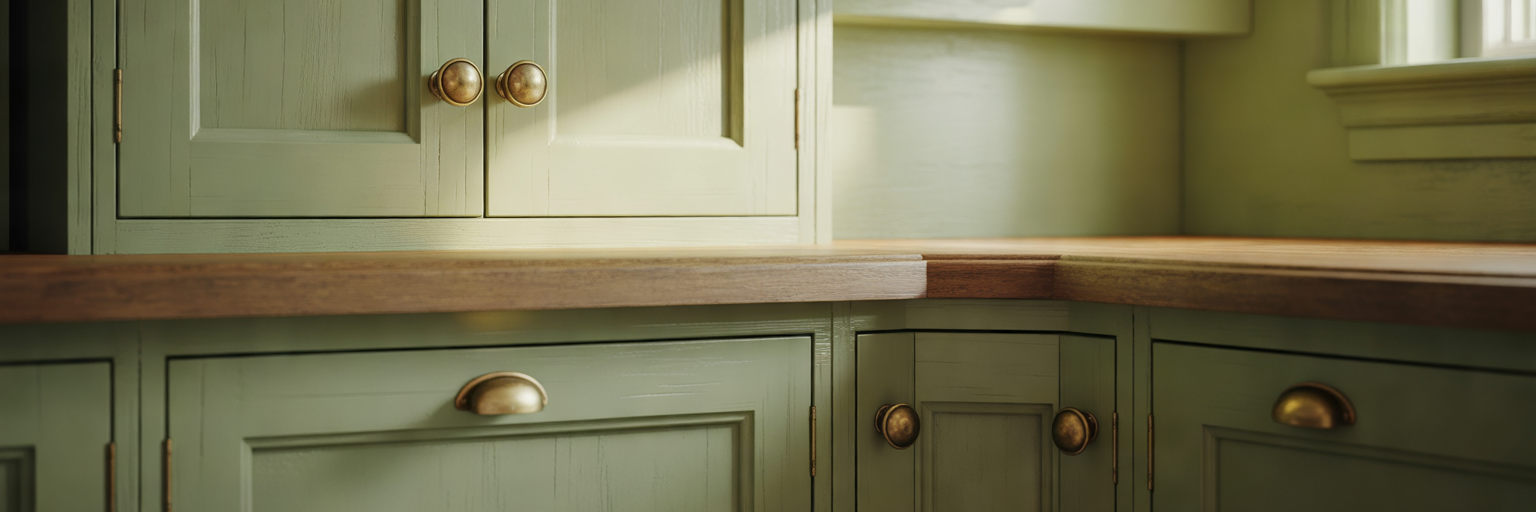
Traditional shaker and country kitchens rely on physical ergonomics to decide which piece of hardware goes where. When selecting kitchen cabinet knobs and pulls, think first about the weight of the door or drawer and the motion your hand makes to open it.
Simple round or mushroom knobs work naturally on upper cabinet doors and small lower doors where a light two-finger pinch and tug is all you need. On wider lower drawers holding cast-iron skillets, stacks of stoneware dishes, or heavy table linens, rustic cup pulls (which shoppers will also see called bin pulls) allow four fingers to scoop underneath the curved hood to distribute the pull force evenly. You can see this traditional half-moon shape in our bronze rustic farmhouse cup pulls. For tall pantry doors or vertical pull-out trash cabinets, linear bar or bridge handles let you wrap your whole hand around the grip from any angle, especially when crafted from durable solid brass cabinet pulls and knobs.
Understanding Center to Center and Projection
Before mixing hardware shapes across a kitchen or dresser, two standard measurements ensure everything fits comfortably. Center to center is the exact distance between the middle of one screw hole and the middle of the second screw hole on any two-screw pull. Projection measures how far a knob or handle extends outward from the cabinet face, which determines whether your knuckles have enough clearance to grip comfortably without scraping the woodwork.
| Hardware Type | Best Location | Ergonomic Feel | Visual Weight | Verified JRM Material Options |
|---|---|---|---|---|
| Cabinet Knobs | Upper cabinet doors, small spice drawers, bathroom vanity doors | Light two-finger pinch grip for quick opening | Minimal and understated | Solid brass, ceramic and porcelain, wood, zinc alloy |
| Cup Pulls (Bin Pulls) | Wide lower drawers, apothecary style layouts, dresser drawers | Underneath four-finger scoop grip that supports heavy loads | Medium to heavy traditional anchor | Solid brass, zinc alloy |
| Bar and Bridge Handles | Pantry doors, deep pot drawers, appliance panels, wardrobe doors | Full hand wrap grip from any angle | Clean linear presence | Solid brass, wood, leather, zinc alloy |
Flexible Ways to Combine Shapes and Finishes
You do not need strict design rules to put together a balanced room. Whether you are updating a full kitchen, refreshing a bathroom vanity, or restoring a vintage bedroom dresser, these three flexible approaches help you combine rustic drawer pulls and knobs with visual harmony.
Same Finish with Mixed Forms
The most dependable way to create calm visual flow in a busy kitchen is choosing one unified metal finish and varying only the silhouettes. Pairing antique brass or dark bronze cup pulls on lower bank drawers with matching round knobs on upper doors and longer bar pulls on tall pantry cupboards keeps the color palette quiet while giving every cabinet the grip it needs.
Mixed Materials with a Shared Warm Tone
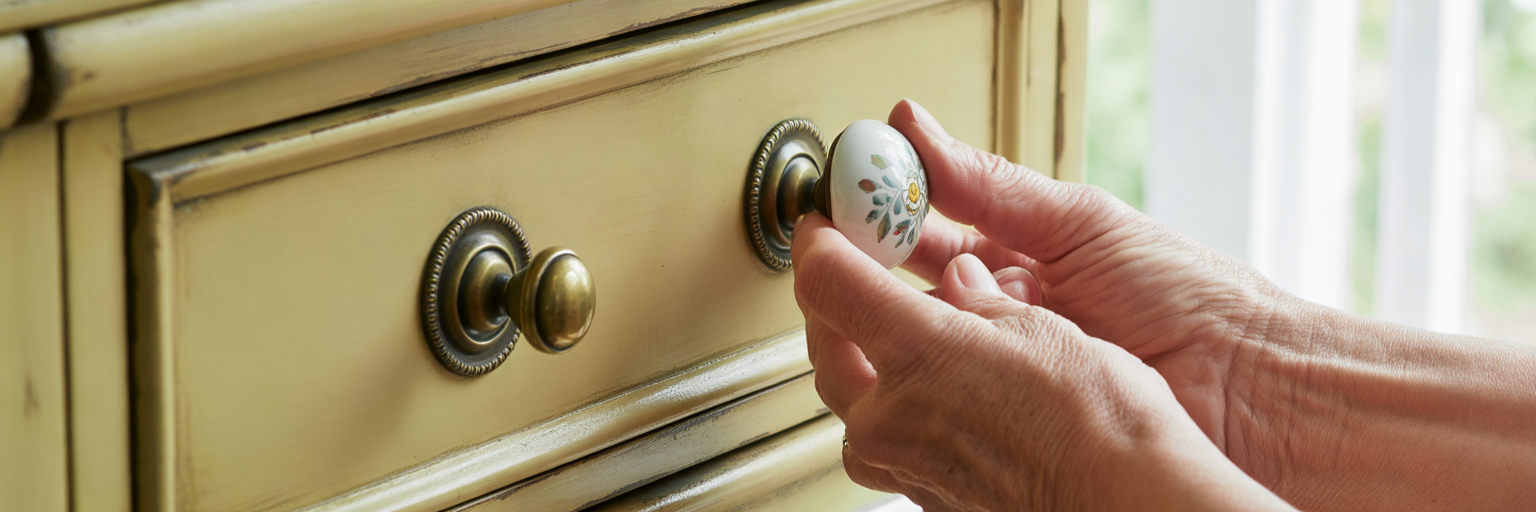
Freestanding furniture pieces like vintage dressers, sideboards, and cottage vanities look wonderfully personal when you mix tactile materials that share a warm undertone. Try pairing cream or floral ceramic cabinet knobs and pulls on upper jewelry or linen drawers with antique brass or warm wooden cabinet pulls and knobs on the deeper clothing drawers below.
Subtle Two Tone Pairing Across Zones
If your room already includes two metal finishes, such as a matte black gooseneck faucet and warm brass pendant lights, you can echo that pairing across distinct cabinetry zones. Install dark bronze or black pulls on perimeter base cabinets while placing warm aged brass knobs on an upper glass-front hutch or a wood-stained center island.
- Full country kitchens: Stick to one metal finish across two or three functional shapes for clean continuity.
- Upcycled dressers and hutches: Combine glazed ceramic or wood knobs on small top drawers with brass or bronze pulls below.
- Kitchen islands and vanities: Use zone pairing to bridge dark iron fixtures with warm brass lighting accents.
Aged Rustic Appearance Versus Actual Hardware Material
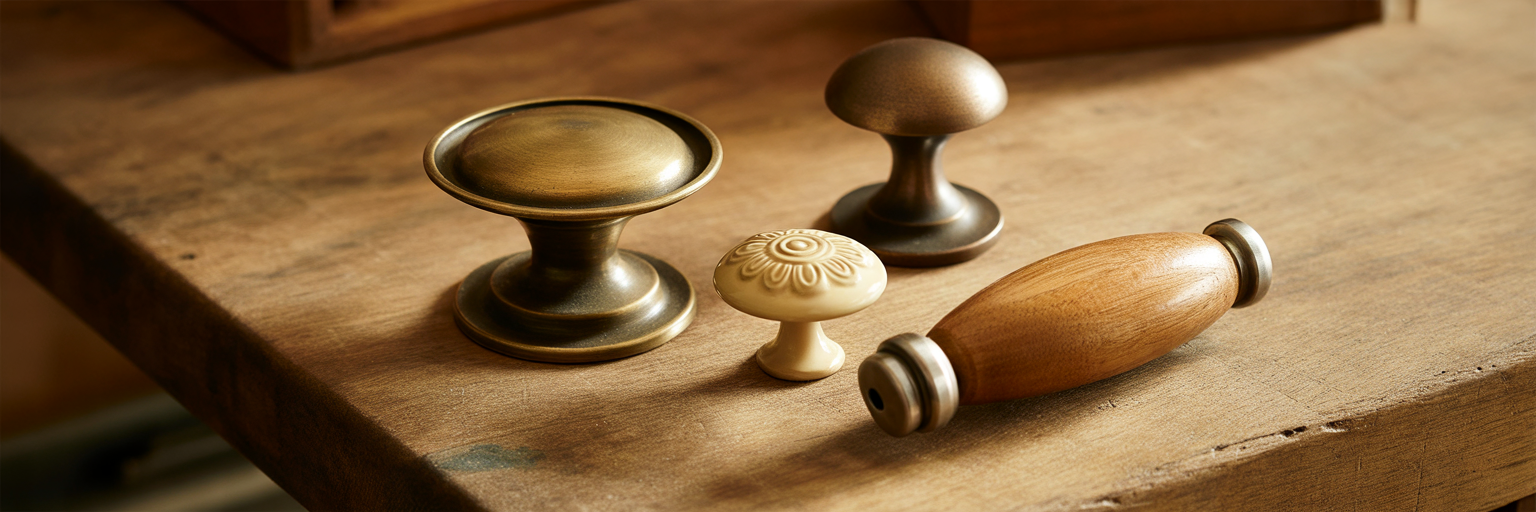
Surface Finish Versus Core Construction
When shopping online, it helps to separate the look of a piece from what lies underneath. Terms like rustic, vintage, or aged describe the visual surface finish and texture, whereas the core material (solid brass, zinc alloy, ceramic, porcelain, or wood) determines how heavy the piece feels in your hand, how it mounts, and how it responds to everyday grip. Matte, brushed, antique-style, and hammered surfaces suit country and shaker cabinetry because they diffuse light softly, whereas mirror-polished chrome or high-gloss gold often feels too stark against rustic wood grain.
Tradeoffs Between Solid Brass, Alloy, Ceramic, and Wood
Understanding finish names and base metals helps you balance aesthetics with your project budget. Within antique brass cabinet hardware, you will typically see warm muted golden browns with dark brushing in the recesses, whereas brushed gold looks brighter and more uniform, and antique bronze shifts toward deep coffee brown.
Solid brass offers noticeable weight in the hand and rich tonal depth, though it carries a higher per-piece material cost. Zinc alloy hardware can be cast into intricate vintage silhouettes at a more accessible price point, making it practical when outfitting a large kitchen with dozens of doors and drawers. Because cabinet paint colors and kitchen lighting dramatically change how metal tones appear, we always recommend ordering a few pieces through our Sample Program to compare finishes at home under both daylight and warm evening bulbs before placing a full project order.
| Visual Finish or Texture | What It Looks Like | Common Core Materials at JRM | Best Project Fit |
|---|---|---|---|
| Antique Brass and Matte Aged Gold | Warm, muted golden brown with low glare and subtle depth | Solid brass or zinc alloy | Cream, sage green, navy, or natural oak shaker cabinets |
| Antique Bronze and Coffee Tone | Deep earthy brown with warm undertones, softer than stark black | Solid brass or zinc alloy | Distressed wood dressers, butcher block kitchens, traditional vanities |
| Hammered or Textured Metal | Visible dimpled surface that catches light softly and hides fingerprints | Solid brass | High-use kitchen drawers and mudroom built-ins |
| Glazed Ceramic and Natural Wood | Smooth vintage porcelain glaze or warm natural wood grain | Ceramic, porcelain, walnut or beech wood combined with brass | Bedroom dressers, hutches, children's furniture, cottage vanities |
Common Mistakes to Avoid Before Drilling or Ordering
Before You Buy Checklist for Replacement and Upcycling Projects
Taking ten minutes to verify measurements and placement on your cabinets prevents frustrating return delays or mismatched drill holes. Run through this five-step checklist before finalizing your hardware list:
- Avoid the too-many-shapes trap: Limit any single room to two, or at most three, hardware silhouettes. Using a knob, a cup pull, and a bar pull is plenty; adding a fourth shape makes cabinetry look cluttered.
- Measure existing hole spacing accurately: When replacing old pulls, measure from the exact center of the left screw hole to the center of the right hole. Check both inches and millimeters, as vintage American furniture often uses imperial spacing while modern cabinetry frequently uses metric measurements like 64mm, 96mm, or 128mm.
- Check for old cabinet shadow marks: Removing wide vintage hardware often reveals unpainted rings, wood indentations, or extra screw holes. Choosing cup pulls with a solid rear rim or reading our guide on fitting cabinet knobs and pulls with backplates will help you cover old wear cleanly without sanding and repainting.
- Test placement before drilling: Hold your hardware against the cabinet face with painter's tape and step back a few feet to check visual balance. Always use a measuring template and mark holes with a pencil before touching a drill to wood.
- Order one or two extra pieces: Adding a couple of spare knobs or pulls from the same production batch ensures matching finish tones if you later build an extra shelf or need a replacement.
Frequently Asked Questions and Next Steps for Your Project
Should farmhouse kitchens use knobs or pulls?
Most farmhouse kitchens use both to balance visual lightness with daily leverage. Placing simple knobs on upper cabinet doors keeps eye-level woodwork uncluttered, while installing cup pulls or bar handles on lower drawers gives your hand a stronger grip for pulling open heavy storage.
Can you mix cup pulls and bar pulls in the same room?
Yes, mixing cup pulls and bar pulls works well when each shape has a clear purpose and shares a coordinated finish. Many homeowners use cup pulls on standard bank drawers and pair them with longer bar or bridge pulls on tall pantry doors, appliance panels, or wide deep pot drawers.
How do I match new cup pulls to existing drawer holes?
Remove one old handle and measure the exact distance from the center of the left hole to the center of the right hole. Rear-mounted cup pulls must match that exact center-to-center measurement, unless you choose a style with a wide solid shell that covers old holes while mounting at a new width.
Do cabinet knobs and pulls have to be the exact same finish?
They do not need to be identical as long as the combination looks intentional. You can pair different materials that share a warm undertone, such as cream ceramic knobs with antique brass pulls on a dresser, or divide two metal finishes cleanly by zone, such as an island versus perimeter cabinets.
How many hardware styles are too many in one space?
Sticking to two or three distinct shapes in one room creates a cohesive, collected look. Using more than three silhouettes or mixing multiple unrelated metal finishes across the same bank of cabinets usually makes the layout feel busy rather than restful.
Once you have mapped out which doors need knobs and which drawers need pulls, take a moment to verify your existing hole spacing and test how finishes look in your room's natural light. You can explore coordinated drawer pulls and knobs across our collections or order a few pieces through the JRM Accessories Sample Program to compare materials against your cabinetry at home. Orders are typically processed within 1 to 3 business days, delivered in 5 to 8 days after shipment, and supported by our 14-day return policy so you can complete your project with peace of mind.


