

Pressed glass knobs became a staple of American furniture design in the early twentieth century as a practical, light-catching alternative to heavy cast metal. When shopping for crystal cabinet knobs and pulls for a dresser or vanity makeover, knowing whether a piece is made from mineral glass, molded resin, or mixed materials helps you choose hardware that fits your project.
Understanding Crystal Cabinet Knobs and Pulls vs Other Clear Materials
Quick Answer and Key Takeaways
- Search terms are broad: Most shoppers type "crystal" when looking for any clear, faceted, or light-reflecting hardware, but online listings under that label may actually be leaded glass, standard pressed glass, artificial crystal, or clear resin.
- Specs beat titles: Always check the verified product specification sheet rather than relying on the style name to know what you are actually buying.
- Material affects daily feel: Mineral glass feels cool and weighty in your hand, whereas molded resin is lighter, warmer to the touch, and less likely to chip if dropped.
- Mixed materials add strength: Hardware that pairs a solid brass or zinc alloy base with a decorative insert gives you visual depth while letting the metal frame handle the daily pulling force.
Why Search Terms Differ from Verified Product Specs
When you browse online for a dresser update or vanity refresh, product titles often describe the visual style rather than the exact chemical makeup. A knob described as "crystal style" might be cut mineral glass, or it might be clear acrylic resin molded into sharp, light-catching facets.
Checking the verified material listing before ordering saves you from surprises when you open the box. Mineral glass and molded polymers differ noticeably in hand weight, how sharply they refract sunlight or vanity sconces, and how they hold up to fingernails and cleaning sprays. As you compare styles across our drawer pulls and knobs collection, you will also spot mixed-material designs where a solid brass or alloy body frames a translucent, ceramic, or pearlescent center. Never assume a shimmering or clear insert is natural crystal or quarried stone unless the specification table explicitly confirms it.
Comparing Glass, Artificial Crystal, Resin, and Mixed Hardware

Leaded Crystal, Pressed Glass, and Artificial Crystal
Understanding the physical differences in the glass vs resin cabinet knobs debate makes it much easier to match your hardware to how a piece of furniture is actually used. True leaded crystal and high-clarity cut glass contain mineral additives that give the knob noticeable heft and crisp, prism-like light refraction. Pressed or molded glass has slightly softer edges and thick, dependable walls that handle everyday bathroom or bedroom traffic with ease. Artificial crystal and clear resin are lightweight molded polymers that resist shattering if bumped, though they can develop fine surface wear if scrubbed with rough sponges.
| Material Type | Weight in Hand | Light Reflection | Everyday Durability | Best Furniture Use |
|---|---|---|---|---|
| Leaded Crystal / Cut Glass | Heavy and cool to the touch | Sharp, prism-like refraction | Resists surface scratches, can chip if hit hard | Bedroom dressers, vanities, formal hutches |
| Pressed or Molded Glass | Moderate to heavy | Soft, even glow | Thick walls handle regular household use well | Vintage dressers, bathroom cabinets, linen doors |
| Artificial Crystal / Clear Resin | Lightweight and warm to the touch | High clarity with softer edges | Shatter-resistant, can show fine surface wear over time | Low-traffic drawers, closet doors, upcycled accent pieces |
| Mixed-Material (Metal Base + Insert) | Solid weight anchored by brass or alloy | Varies by glass, resin, or pearl insert | Metal base absorbs pulling force and protects the core | Wardrobes, wider dresser drawers, statement furniture |
This comparison summarizes verified physical differences between mineral glass, molded polymers, and metal-mounted hardware so shoppers can match the material to how often a drawer or door is opened.
How the Metal Base Changes the Look of Clear Knobs
Transparent glass and clear resin act like small magnifying lenses. Because you look right through the top of the knob to the mounting post and screw thread underneath, the metal finish at the base changes the overall color of the hardware. Pairing brass and glass cabinet knobs creates a warm, honey-toned glow through the center of the piece, while a polished chrome or silver-toned base keeps the reflection crisp and cool.
Reading JRM Accessories Product Specifications
To know exactly how a piece will look and feel on your cabinets, check both the base metal and the surface detail listed in our product descriptions. For example, if you like a soft, luminous center without full transparency, you can inspect the exact specs on our brushed gold solid brass round knob with a minimalist pearl detail, which clearly lists its solid brass body alongside its decorative pearl-style face. If you decide you prefer an opaque vintage feel instead of glass or resin, browsing our ceramic cabinet knobs and pulls gives you classic pattern and color options with a smooth, glazed grip.
Sizing and Styling Knobs and Pulls for Dressers and Wardrobes
Cut Facets vs Smooth Surfaces
Once you settle on a material, the surface cut determines how the hardware interacts with your furniture finish. Multi-faceted octagon or diamond-cut knobs break up light into sharp little patterns, which stands out beautifully against matte navy, charcoal, or dark walnut drawer fronts. Smooth dome glass, fluted edges, or understated inlays offer a calmer visual presence that suits traditional painted dressers, Art Deco nightstands, or clean-lined modern wardrobes without competing with wood grain.
Key Measurements: Diameter, Projection, and Center-to-Center
Knowing how to measure cabinet hardware before adding items to your cart prevents awkward proportions and installation headaches. Keep three simple measurements in mind:
- Diameter: The width straight across the top face of a round or octagonal knob.
- Projection: How far the knob or pull sticks out from the flat drawer front into the room, which gives your fingers room to grip comfortably.
- Center-to-Center: For two-screw handles, the exact distance measured from the middle of one screw hole to the middle of the second screw hole.
Matching Hardware Size to Drawer Width and Room Traffic
When selecting clear drawer pulls for dresser drawers or closet doors, match the scale of the piece to the weight of the drawer. Small 1-inch to 1.25-inch knobs look balanced on narrow bathroom vanity doors or top jewelry drawers. For wide bedroom dresser drawers or tall wardrobe doors, step up to 1.5-inch diameter knobs, install two knobs per wide drawer, or use two-screw handles so the drawer opens evenly without racking on its glides.
If you are outfitting deep drawers packed with heavy sweaters, our practical guide to choosing bar pulls, T-bar pulls, and bridge pulls explains how two-post handles distribute pulling tension across the wood face. For high-traffic doors where you want faceted geometric character with maximum structural strength, consider all-metal designs from our solid brass cabinet pulls and knobs collection so there is no risk of loosening a decorative top over time.
Common Buying Mistakes and How to Test Before You Commit
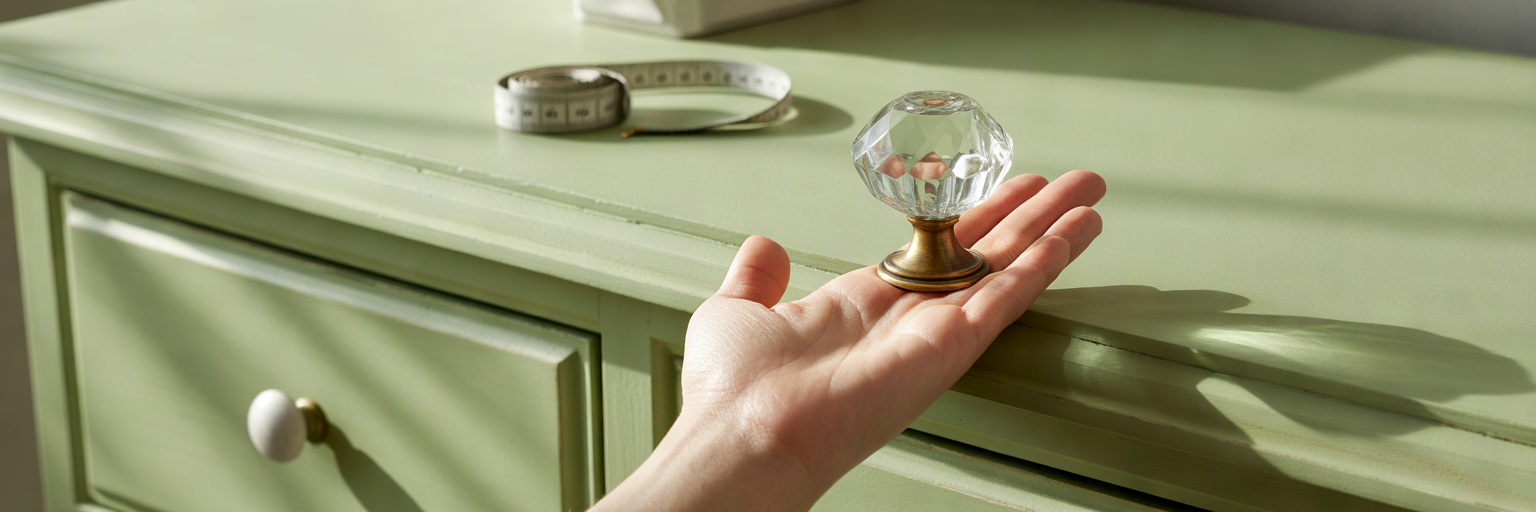
Before You Buy Checklist
Replacing hardware on an existing dresser or vanity goes much smoother when you verify a few details at home first. Run through these five checks before placing your full project order:
- Check existing hole spacing in both inches and millimeters: Vintage American furniture is often drilled in fractional inches, while many modern imports use metric spacing.
- Measure drawer front thickness: Open the drawer and measure the wood thickness (including any overlay frame) so you know if standard mounting screws will reach cleanly.
- Verify projection clearance: If your dresser sits in a tight walk-in closet or right beside a swinging bathroom door, make sure a tall knob will not bump the wall or trim.
- Count every door and drawer plus spares: Order one or two extra knobs beyond your exact count so you have matching replacements from the same production batch if a piece ever gets damaged.
- Confirm both base finish and insert material: Read the specification tab to ensure the metal post tone matches your room's faucets, hinges, or mirror frames.
Installation Tips to Protect Glass and Resin
Clear and mixed-material hardware requires a gentle hand during installation. Never use a powered impact driver or electric drill to tighten mounting screws into glass, ceramic, or resin knobs. High torque can instantly crack a glass core or strip the internal metal bushing that holds the top to the base. Instead, thread the screw by hand and tighten it with a standard manual Phillips screwdriver just until the base sits snug against the wood without spinning.
Testing Finishes at Home with Samples
Room lighting changes how clear glass, warm brass, and pearlescent inserts look throughout the day. Through the JRM Accessories Sample Program, you can order individual pieces to hold against your cabinet paint and test in your hand before committing to a full set of coordinated furniture hardware. When planning your project timeline, keep in mind that our orders are usually processed within 1 to 3 business days and delivered in 5 to 8 days after shipment, backed by a 14-day return policy after you receive your items.
Frequently Asked Questions
How can I tell if a cabinet knob is real glass or acrylic resin?
Always check the verified product specifications first. In your hand, mineral glass or leaded crystal feels noticeably heavy and cool to the touch, while acrylic resin feels lightweight, warmer, and slightly softer if tapped gently with a fingernail.
Are glass knobs durable enough for heavy dresser drawers?
Thick pressed glass knobs or mixed-material knobs with solid brass bases handle standard bedroom drawers well. For extra-wide or heavily loaded drawers, install two knobs per drawer or choose a two-screw metal pull to divide the pulling weight.
Does the metal base finish show through a clear knob?
Yes. Clear glass and resin magnify the mounting post underneath. A brushed brass or gold base casts a warm golden tint through the knob, whereas a chrome or nickel base keeps the center looking icy and cool.
How do I clean faceted glass or resin hardware without damaging the metal base?
Wipe the hardware gently with a soft microfiber cloth dampened with warm water and a drop of mild dish soap, then buff dry immediately. Avoid window sprays with ammonia or abrasive pads, which can cloud resin and strip brass finishes.
What size knob works best on a standard bedroom dresser?
A 1.25-inch to 1.5-inch diameter knob offers a comfortable four-finger grip and balanced visual scale on standard dresser drawers. On drawers wider than 30 inches, placing two knobs spaced evenly in the left and right thirds looks and functions best.
Next Steps for Your Project
Start by measuring your drawer widths, wood thickness, and any existing screw holes. Once you know the scale you need, review the verified material specifications on your favorite pieces and consider ordering a sample to see how the glass, resin, or brass catches the light in your own room.


