

Standard kitchen drawers and cabinet doors are opened and closed dozens of times a day, making the physical grip of your hardware just as important as its finish. Understanding the structural difference between bar pulls, T-bar pulls, and bridge pulls helps you pick hardware that fits your hands and your pre-drilled mounting holes.
Quick Answer on Bar Pulls, T-Bar Pulls, and Bridge Pulls
Key Takeaways for Cabinet Hardware Shoppers
The fastest way to tell these three styles apart is by looking at how the handle meets the cabinet face. A bar pull uses a straight rod supported by two perpendicular posts, a T-bar pull mounts a short horizontal bar onto a single center post like a knob, and a bridge pull forms a continuous, post-free arch directly from screw to screw. Because different shapes change how your hand engages with a door, reviewing our guide on finger pulls and grip placement can also help if you are comparing edge-mounted options alongside traditional handles.
- Choose linear bar pulls for wide drawers and pantry doors where you want clean, modern lines and a sturdy full-hand grip.
- Choose single-post T-bar pulls for compact cabinet doors or furniture makeovers where you want a directional grip that installs into a single knob hole.
- Choose continuous arch bridge pulls when you want a smoother, snag-free profile with traditional, vintage, or transitional character.
- Verify three critical dimensions before buying: your exact center to center measurement (distance between screw holes), total projection (how far the piece sticks out), and cabinet pull finger clearance (the usable knuckle space underneath).
Structural Profiles and Grip Styles Compared
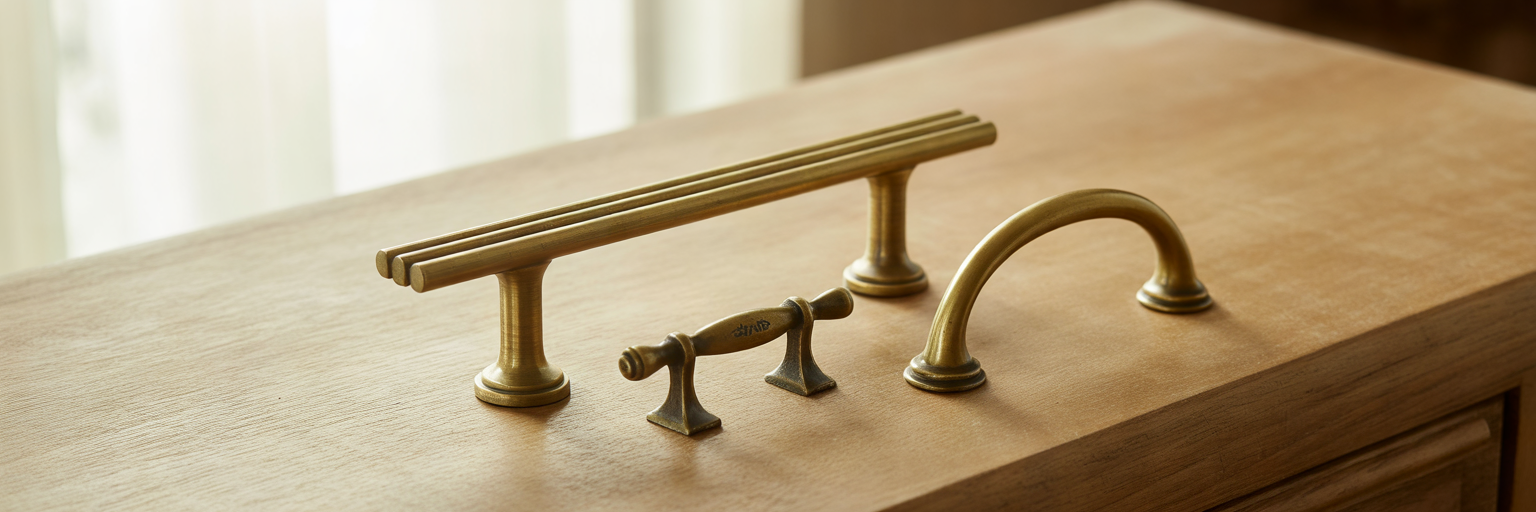
Once you narrow down your general aesthetic, looking closely at physical geometry helps you anticipate how each piece will behave during daily kitchen prep or morning routines.
Standard Linear Bar Pulls
Bar pulls feature a straight cylindrical, square, or hexagonal bar held away from the drawer front by two vertical mounting posts. On most designs, the horizontal bar extends slightly past the two support posts at either end. Those overhanging ends create a crisp, architectural look on flat-front or shaker drawers. However, there is an honest practical tradeoff to keep in mind: protruding bar ends can occasionally catch on loose belt loops, apron strings, or cardigan pockets if installed at hip height in tight kitchen corners.
Single-Post T-Bar Pulls
T-bar pulls take the linear geometry of a bar pull and shrink it onto a single central post (or a very narrow single-mount base), forming a distinct "T" silhouette. Because they typically mount using just one screw hole, they install as easily as a round knob while offering an index-finger hook or thumb-and-finger pinch grip. You can see how single-hole T-bars and matching longer two-hole bars work together on our solid brass knurled brushed gold bar pull and knob listing, where textured diamond knurling adds extra tactile grip for wet or soapy hands.
Continuous Arch Bridge Pulls
In the JRM Accessories catalog, bridge pulls (often searched as arch cabinet pulls or bow pulls) are defined by a continuous, gently raised arch or bow profile that curves smoothly from one mounting foot to the other without separate vertical support posts. Because the ends taper directly onto the cabinet face in a closed loop, there are no overhanging tips to snag clothing.
Structural Comparison of Bar Pulls, T-Bar Pulls, and Bridge Pulls
| Feature | Bar Pulls | T-Bar Pulls | Bridge Pulls (Arch/Bow) |
|---|---|---|---|
| Mounting Holes | 2 holes (requires exact center to center measurement) | Typically 1 hole (installs like a cabinet knob) | 2 holes (requires exact center to center measurement) |
| Profile Geometry | Straight horizontal bar resting on two vertical posts | Central post with short horizontal bar extending both ways | Continuous curved arch spanning directly between screw points |
| Typical Grip Style | Full four-finger underhand or overhand pull | Two-finger pinch or index-finger hook grip | Comfortable three-to-four finger closed-loop pull |
| Pocket Snag Risk | Moderate to high if bar ends overhang past the posts | Moderate due to open horizontal ends | Very low due to smooth, post-free tapered ends |
| Best Application | Wide base drawers, pantries, modern dressers | Upper cabinet doors, vanities, single-hole replacements | High-traffic kitchens, shaker cabinets, vintage dressers |
This comparison table is based on standard cabinet hardware geometry and installation mechanics to help shoppers evaluate how mounting holes, overhanging ends, and arch profiles affect daily kitchen and furniture use.
What to Measure: Center-to-Center, Projection, and Finger Clearance
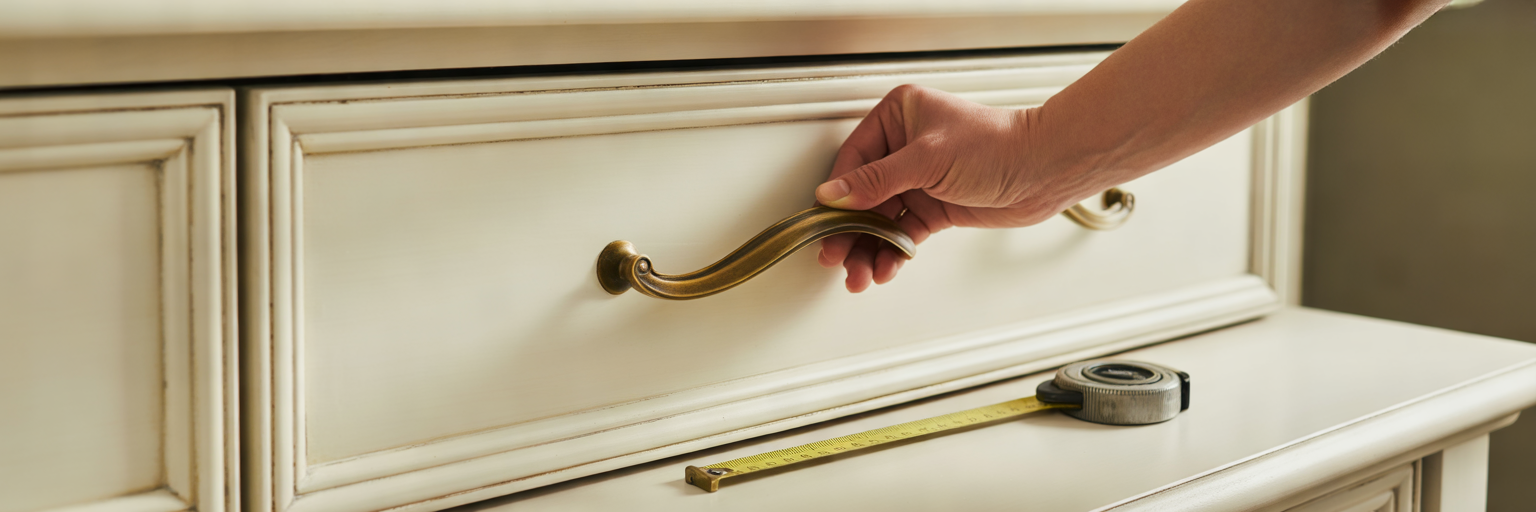
Ordering replacement hardware without checking your drill holes first is the most common project delay. For any two-hole bar pull or bridge pull, your center to center measurement is non-negotiable. This is the exact distance from the very middle of the left screw hole to the very middle of the right screw hole, not the overall end-to-end length of the handle. Single-post T-bar pulls bypass this step because they require only one drill hole.
Projection vs. Usable Finger Clearance
Shoppers often confuse total projection with actual knuckle room. Projection is the total outward distance from the cabinet door surface to the outermost front edge of the pull. Cabinet pull finger clearance is the open air space tucked underneath the handle where your fingers actually slide in.
Here is why that distinction matters: a chunky decorative bar pull or a low-slung bow pull might list a 1.25-inch total projection, but if the metal bar itself is 0.5 inches thick, you are left with only 0.75 inches of usable clearance underneath. Aim for a total projection of at least 1 inch to 1.25 inches with enough open span beneath the center so your fingernails and knuckles do not scrape painted cabinet doors over time.
Pre-Purchase Measuring Checklist
- Remove one existing pull from both an upper door and a lower drawer, as builders sometimes use different sizes across the same kitchen.
- Measure hole centers in both inches and millimeters. Many decorative and vintage pulls are crafted to metric standards, such as 96mm (approx. 3.78 inches) or 128mm (approx. 5.04 inches). For example, if you are replacing hardware on an older dresser with 96mm spacing, checking the exact metric spec on our 96mm aged solid brass vintage cabinet pulls ensures the mounting bolts pass cleanly through your wood without binding.
- Measure the overall length footprint to confirm the new pull bases will cover any old paint rings or wood indentations left by your previous hardware.
- Check drawer box thickness so you know whether standard mounting screws will fit or if you need longer breakaway screws for thick drawer fronts.
How to Choose the Right Pull for Cabinets, Drawers, and Furniture
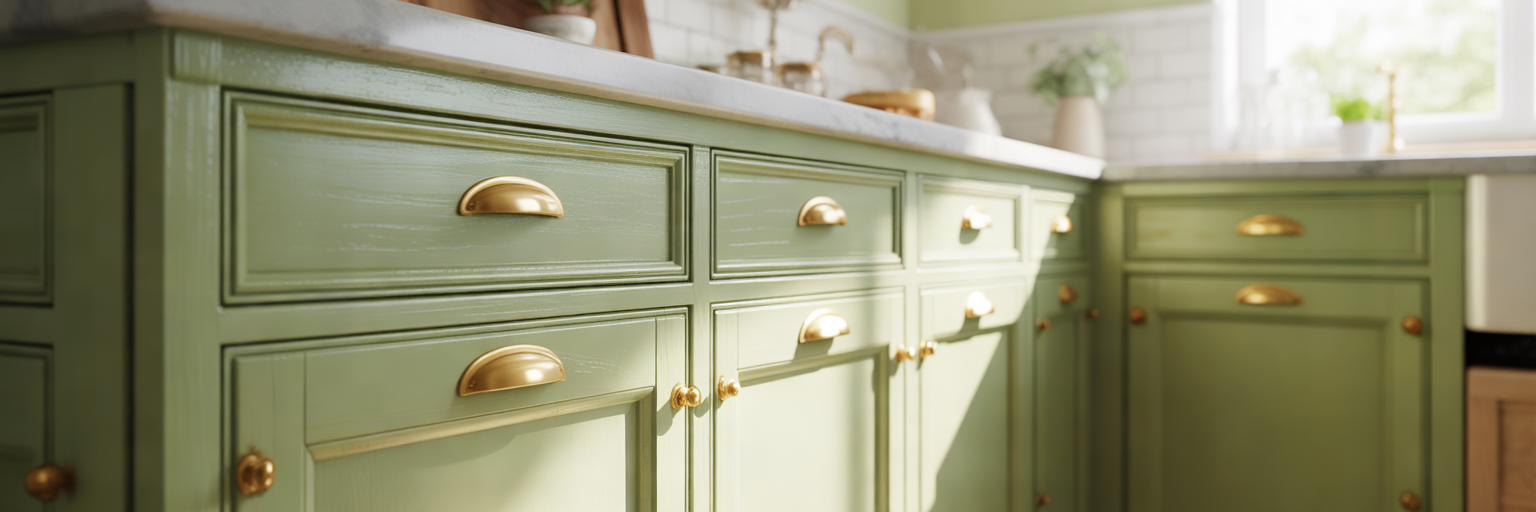
Matching the hardware profile to the weight of the drawer and the traffic pattern of the room keeps your cabinets comfortable to use every day.
Best For and Avoid If Scenarios by Room
- Bar Pulls — Best for: Wide kitchen base drawers, heavy pot-and-pan storage, integrated appliance panels, and modern bedroom dressers where a wide grip distributes weight evenly. Avoid if: You have narrow galley walkways or tight corner drawers right next to a dishwasher, where overhanging bar tips can bump neighboring doors or catch pockets.
- T-Bar Pulls — Best for: Upper kitchen cabinets, bathroom vanities, bifold closet doors, and vintage nightstands that already have a single knob hole drilled. Avoid if: You are outfitting heavy lower drawers. Pulling hard on a single-post T-bar attached to a heavy drawer can cause the bar to twist slightly over time if the rear screw loosens.
- Bridge Pulls — Best for: High-traffic family kitchens, traditional shaker cabinetry, mudroom built-ins, and antique dresser restorations. The smooth arch offers a generous four-finger grip with zero sharp corners. Avoid if: You want an ultra-minimalist, razor-sharp contemporary grid where curved silhouettes feel out of place.
Hardware details also shape the personality of a freestanding dresser or heirloom cabinet. Much like Research from Memory Lane Tattoo shows that selecting intentional line work and personal motifs helps a custom design tell a lasting visual story, choosing between the crisp geometry of a knurled bar and the warm curve of an aged brass bridge pull gives refurbished furniture its own distinct voice.
Coordinating Pull Styles Across Doors and Drawers
You do not need to use the exact same handle shape on every surface. A classic, practical layout places single-hole T-bar pulls (or round knobs) on upper cabinet doors and two-hole bridge pulls or bar pulls on lower drawers. To keep the room cohesive, unify the pieces by choosing the same material and finish across our solid brass cabinet pulls and knobs collection so the warm metallic tones match even when the silhouettes vary.
How to Select the Correct Variant on Mixed Product Listings
When shopping online for coordinated cabinet hardware, it is very common to find round knobs, single-hole T-bars, post-mounted bar pulls, and arched bridge pulls grouped together on a single product page. We structure listings this way so renovators can easily outfit an entire kitchen or bathroom in one matching finish without hunting across separate pages.
However, mixed listings require a quick double-check before you check out. Even when you browse our Bridge Pull collection, remember that while every listing in that collection includes at least one true bridge variant, other dropdown options on that exact same page may be round knobs, single-post T-bars, or straight post-mounted bar pulls. You can see how multiple coordinated shapes share one page on our dark bronze solid brass vintage cabinet pulls and knobs listing, which offers single-hole knobs alongside multiple two-hole pull lengths.
Three Steps to Verify Your Hardware Variant Before Checkout
- Watch the variant photo update: Click your desired size in the dropdown menu and look closely at the updated product thumbnail. Confirm whether the image shows a continuous post-free arch (a true bridge pull) or a straight bar resting on two vertical posts.
- Confirm the hole count and metric spacing: Read the specific variant label carefully to verify whether it is a "Single Hole" piece (knob or T-bar) or lists a two-hole center to center measurement such as 96mm, 128mm, or 160mm.
- Order a sample first: If you are outfitting a full kitchen or unsure how an arch profile feels in your hand, use our Sample Program while browsing our full drawer pulls and knobs collection to test the exact variant against your cabinets and lighting at home before placing a bulk order.
Frequently Asked Questions and Next Steps Before You Buy
What is the main difference between a bar pull and a bridge pull?
A bar pull consists of a straight bar resting on two perpendicular support posts, often with overhanging ends. A bridge pull features a continuous, post-free curved arch that flows smoothly from one mounting foot to the other without separate vertical posts.
Do T-bar pulls use one screw hole or two?
Most T-bar pulls mount using a single screw hole, installing just like a standard cabinet knob. Always verify the specific product variant details, as some wider T-bar styles occasionally use a narrow two-screw baseplate for anti-spin stability.
How much finger clearance do I need for comfortable cabinet pulls?
Look for hardware with a total projection of at least 1 to 1.25 inches, which typically provides 0.75 to 1 inch of open cabinet pull finger clearance underneath the grip so your knuckles do not rub the cabinet door.
How do I keep single-post T-bar pulls from spinning on cabinet doors?
Tighten the mounting screw firmly with a hand screwdriver rather than a power drill to avoid stripping the threads. Adding a small lock washer on the inside of the cabinet door or a tiny drop of removable blue threadlocker helps prevent gradual loosening.
Can I mix bridge pulls and T-bar pulls in the same room?
Yes. Pairing single-hole T-bar pulls on upper cabinet doors with two-hole bridge pulls on lower drawers is a practical layout. Keep the look intentional by selecting both styles in the same metal finish, such as brushed brass or dark bronze.
Your Next Step for a Confident Hardware Upgrade
Before placing your full project order, grab a tape measure to verify your existing hole spacing in both inches and millimeters. Once you know your numbers, select the exact matching dropdown variant on the product page and consider ordering a sample or two to test the grip comfort and finish in your own room lighting.


