

Bathroom vanities endure daily steam from hot showers, frequent splashes around the sink, and damp hands reaching for towels. Choosing the right lacquered brass hardware for bathroom vanity cabinets starts with understanding how protective coatings, grip styles, and exact dimensions perform in a humid room.
Can You Use Lacquered Brass Hardware on Bathroom Vanity Cabinets?
Quick Answer: What to Know Before You Buy
Yes, you can use lacquered brass hardware on bathroom vanity cabinets, provided the specific item is suitable for humid indoor rooms according to manufacturer notes and receives gentle daily maintenance. Keeping the room ventilated and wiping away standing water drops will help preserve the protective seal.
How Lacquered Brass Reacts to Bathroom Humidity
In plain shopper terms, lacquered brass is solid brass or a brass-finished metal sealed with a clear protective topcoat. This transparent barrier slows down oxidation from air and everyday moisture so the metal keeps its warm golden sheen rather than darkening immediately like bare unlacquered brass.
While a clear lacquer coat resists normal ambient humidity, it has practical limits in a busy bathroom. Constant puddles of standing water, heavy steam in bathrooms without a working exhaust fan, or harsh chemical sprays can gradually wear down, cloud, or peel the coating. You should never assume guaranteed water resistance or corrosion protection across all hardware products, including JRM Accessories collections. When comparing our solid brass cabinet pulls and knobs against plated alternatives when selecting lacquered brass hardware for bathroom vanity cabinets, always check each individual product listing for base material details, finish guidance, and specific care notes before ordering.
Comparing Knobs, Pulls, and Cup Pulls for Vanity Doors and Drawers
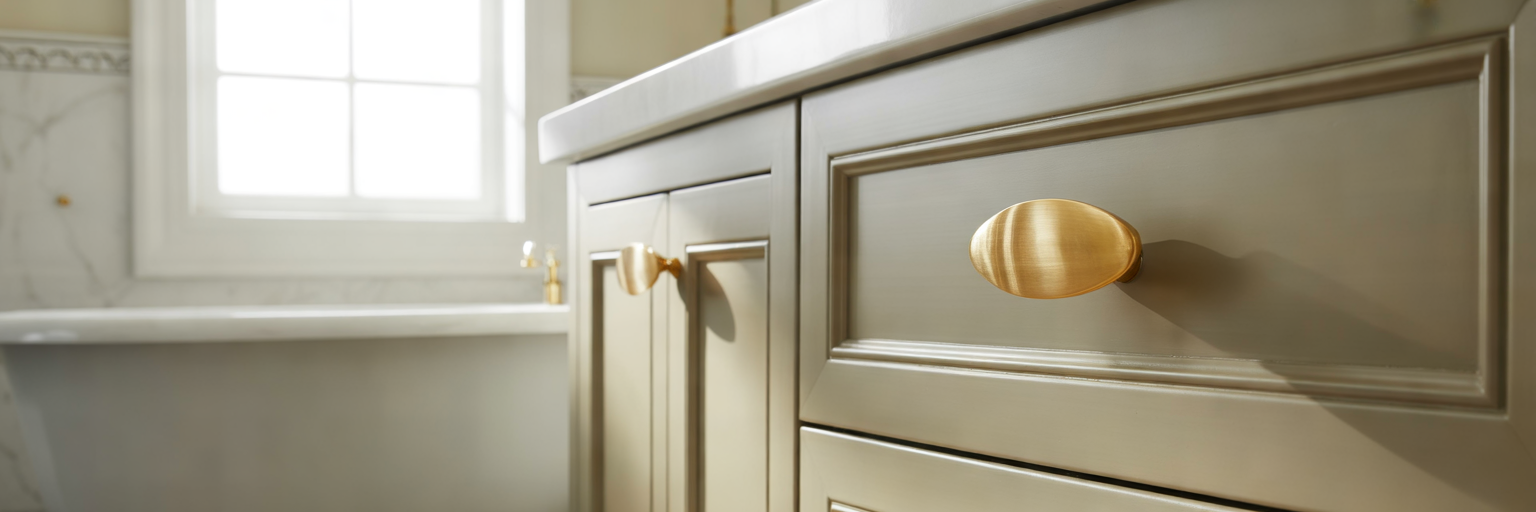
Cabinet Knobs for Under-Sink Doors and Small Trays
Once you confirm the finish suits your bathroom ventilation, the physical shape of the hardware determines how comfortably your vanity functions every morning. Compact brass bathroom vanity knobs work exceptionally well on swing-out cabinet doors below the sink basin, narrow tilt-out sponge trays, and shallow top drawers where a wide handle might crowd the frame. Keep in mind that knobs require a pinch grip between your thumb and fingers, which can feel slightly slippery if your hands are soapy or coated in lotion when pulling heavy drawers.
Bar and Arch Pulls for Heavy Storage Drawers
For medium and wide drawers packed with heavy hair tools, stacked bath towels, or bulk toiletries, lacquered brass cabinet pulls in bar or arch profiles are usually the most practical choice. They allow a full four-finger grip and keep damp fingertips from smudging painted or stained wood cabinet fronts. You can read more about how different profiles feel in the hand in our practical guide to choosing bar pulls, T-bar pulls, and bridge pulls.
Cup Pulls for Traditional Vanity Drawers
A cup pull, also called a bin pull, is an inverted half-moon shell handle that you grip from underneath with your fingertips. Designs like our vintage solid brass floral cup pulls suit classic or shaker bathroom vanities beautifully, though you should always check the underside pocket depth so adult fingers fit comfortably without scraping the drawer face.
| Hardware Type | Best Vanity Location | Grip Comfort with Damp Hands | Visual Impact | Key Sizing Metric to Check |
|---|---|---|---|---|
| Cabinet Knobs | Under-sink doors, tilt-out trays, narrow top drawers | Moderate (requires a thumb-and-finger pinch grip) | Subtle, low-profile accent that lets cabinetry stand out | Diameter and projection from the door face |
| Bar and Arch Pulls | Medium to wide drawers holding towels or hair tools | High (allows a secure four-finger hook grip) | Clean linear statement; defines horizontal or vertical lines | Center-to-center hole spacing and overall length |
| Cup Pulls (Bin Pulls) | Traditional or shaker-style pull-out drawers | Moderate to High (upward palm or fingertip scoop) | Classic heritage look with stronger surface presence | Center-to-center spacing and inner pocket depth |
Sizing, Grip, and Placement Around Your Vanity Layout
Key Measurements: Center-to-Center, Overall Length, and Projection
Selecting the right profile leads directly into verifying physical dimensions so every drawer opens smoothly in a compact room. Three measurements matter most: center-to-center spacing is the exact distance from the middle of one screw hole to the middle of the second screw hole, overall length is the total end-to-end measurement of the handle front, and projection is how far the hardware extends outward from the cabinet surface.
For balanced bathroom drawer pull sizing, many homeowners follow the one-third rule of thumb, choosing a pull whose overall length is roughly one-third of the drawer width. Drawers under 12 inches wide work well with a single knob or a compact 3-inch to 4-inch pull. Drawers between 12 and 24 inches typically suit a single centered 4-inch to 6-inch pull, while drawers wider than 30 inches often feel more stable with two evenly spaced pulls. Aim for a projection of at least 1 to 1.25 inches for comfortable knuckle clearance, and favor rounded edges over sharp T-bar corners in narrow bathroom walkways where hips or knees brush past the vanity.
Bathroom Layout Traps and Replacement Measuring Checklist
Knowing how to measure cabinet pulls before drilling or ordering prevents costly alignment mistakes around plumbing and tight walls.
- Measure existing center-to-center hole spacing in both inches and millimeters before shopping for replacement pulls.
- Check the outer footprint of new hardware to confirm it covers any old paint rings or indentations on the wood, or read our guide on fitting cabinet knobs and pulls with backplates to conceal worn marks cleanly.
- Test swing clearance near adjacent walls, glass shower doors, and wall-mounted toilet paper holders so handles do not collide when cabinet doors open fully.
- Verify whether top sink panels are false drawer fronts hiding the sink basin, as these fixed panels require front brackets or adhesive mounting rather than standard rear screws.
- Measure the thickness of the cabinet door and drawer box front to make sure the included mounting screws are the proper length.
Matching Lacquered Brass to Bathroom Faucets and Fixtures
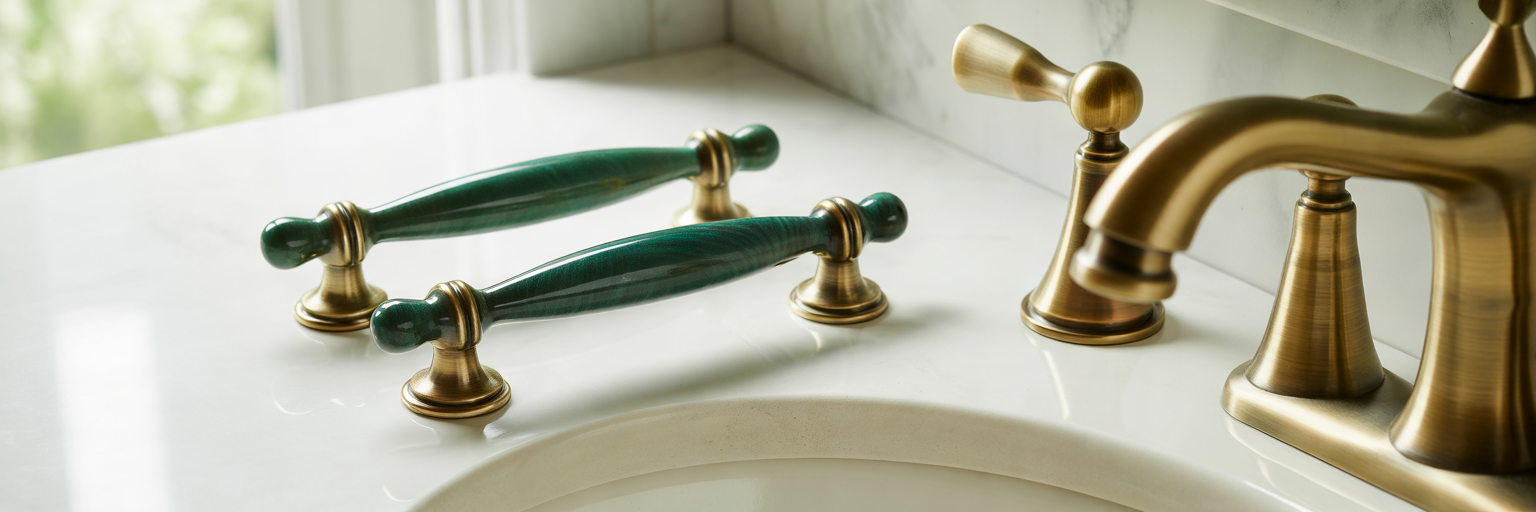
Why Brass Tones Vary Under Bathroom Lighting
Even when your measurements are exact, getting the color right requires paying attention to how metal finishes interact with surrounding surfaces. A common hurdle when matching brass hardware to faucet spouts, vanity sconces, and mirror frames is that brass and gold names are not standardized across manufacturers. One brand's lacquered brass may look bright and sunny, while another leans toward muted champagne, brushed gold, or warm honey. Bathroom countertops and lighting also shift perception. Cool gray veining in Carrara marble, warm cream quartz counters, and the color temperature of vanity bulbs from warm 2700K to daylight 4000K all change how reflective brass looks from morning to night.
To avoid finish clashes, consider using the JRM Accessories Sample Program to order a single piece from our coordinated drawer pulls and knobs collection first. Holding a physical sample directly against your sink faucet, wall tile, and painted cabinet door under your actual bathroom lights removes the guesswork before you commit to a full vanity set.
Before You Buy: Choosing the Right Finish for Your Vanity
- Choose lacquered brass if: you want a warm, consistent golden tone that resists quick fingerprint darkening, you have a well-ventilated bathroom, and you prefer simple soap-and-water wiping over periodic metal polishing.
- Consider another finish if: your bathroom lacks an exhaust fan and stays steamy for hours, you prefer an organic living finish that develops dark patina over time, or your household uses strong bleach or acidic sprays across all vanity surfaces.
Care Habits and Common Mistakes to Avoid in Humid Bathrooms
Safe Daily Cleaning for Lacquered Brass
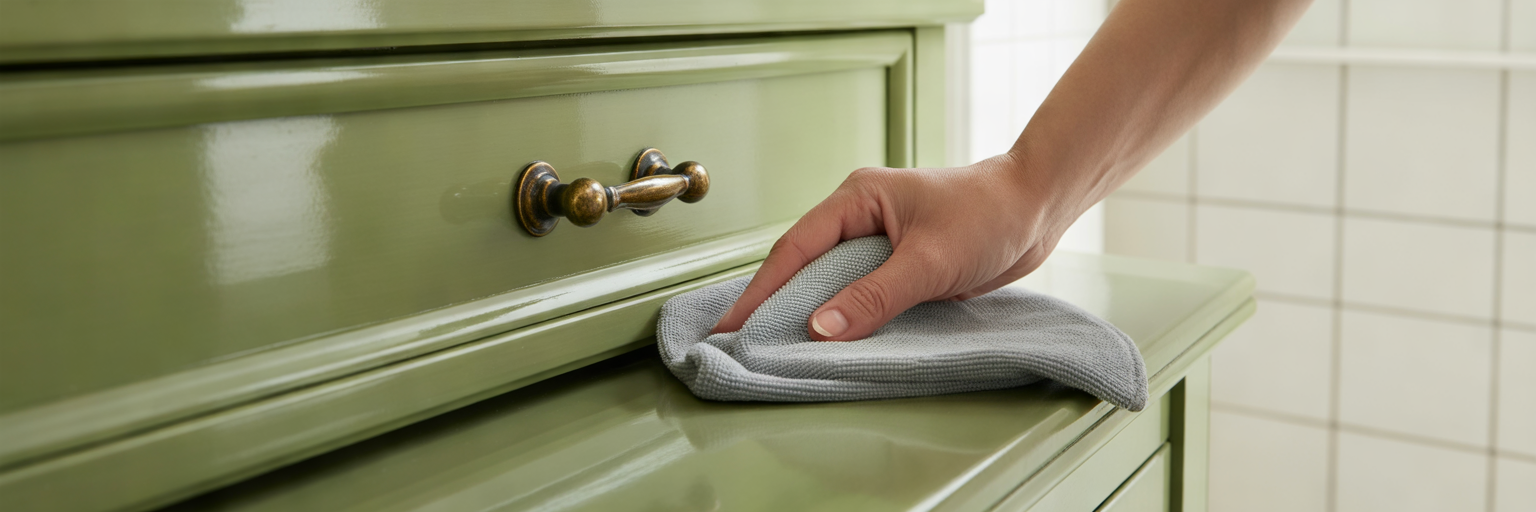
Once your hardware is installed, gentle upkeep keeps the protective topcoat clear and intact. Wipe lacquered brass hardware regularly with a soft, lint-free microfiber cloth lightly dampened with warm water and a drop of mild dish soap. Immediately buff each piece dry with a clean towel so water droplets, liquid hand soap residue, or toothpaste splashes never sit on the clear coat. Never use abrasive scrubbing sponges, traditional brass polish, vinegar solutions, bleach wipes, or harsh bathroom cleaners on lacquered brass, as these strip or scratch the protective coating. Just as a guide on maintaining delicate work in a humid climate emphasizes consistent moisture control and gentle daily aftercare, keeping bathroom condensation off sealed metal prevents premature wear. For more detailed maintenance routines across different brass finishes, review our dedicated JRM Accessories brass care instructions and product care notes.
Four Vanity Hardware Mistakes to Avoid
- Skipping the tape mockup: Drilling into new cabinet doors before testing knob and pull positions with painter's tape to check sightlines and comfortable reach from the sink.
- Ordering the exact piece count: Buying only the exact number of knobs and pulls needed without adding 1 or 2 spare pieces from the same finish batch in case of future damage.
- Trapping shower steam: Forgetting to run the bathroom exhaust fan during and for 20 minutes after hot showers to clear condensation off metal hardware.
- Using a power drill on screws: Overtightening mounting screws with a power tool, which can crack the clear lacquer ring around the base of the knob or pull.
Frequently Asked Questions
Will lacquered brass tarnish in a bathroom?
The clear lacquer coat slows down tarnishing by blocking air and everyday moisture, keeping the brass bright with normal indoor use. However, if standing water, heavy unventilated steam, or harsh cleaners wear through the lacquer over time, the exposed metal underneath can begin to oxidize.
What is the difference between lacquered and unlacquered brass on a vanity?
Lacquered brass has a clear protective seal that preserves its original warm golden finish with simple soap-and-water wiping. Unlacquered brass is bare metal that reacts naturally with bathroom humidity and hand oils to develop a darker, aged patina over time.
Should I use knobs or pulls on bathroom vanity doors?
Either option works well, though many homeowners place knobs on swing-out under-sink doors for a clean look and use bar pulls on pull-out drawers for a stronger four-finger grip when hands are damp.
What size pull works best for a 12-inch or 24-inch bathroom drawer?
Following the one-third sizing rule, a 12-inch drawer pairs well with a pull measuring around 3 to 4 inches in overall length, while a 24-inch drawer looks balanced with a pull measuring 6 to 8 inches long.
How do I clean lacquered brass cabinet handles without ruining the finish?
Wipe them gently with a soft microfiber cloth dampened in mild soapy water, then dry immediately with a clean towel. Avoid metal polishes, abrasive pads, and acidic or bleach bathroom sprays that can strip the protective coating.
Next Steps for Your Vanity Upgrade
Choosing vanity hardware feels straightforward when you take it step by step: measure your existing center-to-center hole spacing, match knobs and pulls to how each door or drawer opens, verify individual product material notes, and test a sample under your bathroom lighting. When you are ready to compare warm metallic tones at home, explore options like our brushed gold solid brass round cabinet knobs and pulls and order a sample to check the fit and finish right next to your vanity faucet.


