

Selecting the right hinge for a small project like a jewelry box or keepsake chest feels different than choosing one for a kitchen cabinet. It requires more precision. The success of your project depends on matching the hinge's size, style, and strength to your box's delicate construction. This guide will walk you through how to choose box hinges with confidence, ensuring your finished piece is both beautiful and functional.
Your Guide to Choosing Small Box Hinges
Finding the perfect small box hinges is about understanding the relationship between the hardware and the wood. A hinge that is too large can overwhelm a small box, while one that is too weak can cause the lid to sag or fail. The goal is to find a balanced fit that provides smooth movement for years to come.
Here are the key takeaways to keep in mind:
- Measure First: Before you start shopping, measure the thickness of your box's walls and lid. This is the most important factor in determining the right hinge size.
- Consider the Lid: Think about the lid's weight and how you want it to open. Heavier lids require stronger hinges, and some hinges can hold the lid open for you.
- Choose No-Mortise for Thin Walls: For boxes with thin walls, a no-mortise hinge is often the safest and easiest choice. It mounts directly to the surface, avoiding the need to cut into the wood.
- Opt for Quality Material: Solid brass is a durable, classic, and reliable material for small projects. It ensures smooth movement and resists corrosion over time.
How Box Hinges Differ from Cabinet Hinges
It’s helpful to understand why you can't simply use a smaller version of a cabinet hinge for a delicate box. The difference is like comparing a watchmaker's tools to a carpenter's hammer. Both are effective for their own purpose, but they are engineered for entirely different scales and forces.
First, there is the matter of scale and material thickness. Small box hinges are designed for thin materials, sometimes as fine as a few millimeters. Cabinet hinges, by contrast, are built for robust doors that are typically 3/4-inch thick. The hardware is sized accordingly.
This leads to the next point: torque and lid weight. A small hinge must support the lid's weight without tearing its tiny screws from thin wood. This rotational force, or torque, is a much bigger concern on a small box where there is less material for the screws to grip. Cabinet hinges are designed to handle the significant leverage of a heavy door, a task for which box hinges are not equipped.
The mounting style also differs. Many tiny jewelry box hinges are "no-mortise" or surface-mounted. This means they screw directly onto the wood surface without requiring a recessed cut, known as a mortise. Cutting a mortise can weaken or even split the thin wall of a jewelry box, making no-mortise hinges a much safer option.
Finally, the screws themselves are miniature and require careful, precise installation. Unlike the larger, more forgiving screws used for furniture, a tiny brass screw can easily snap or strip the wood if not handled correctly.
What to Measure Before Choosing Your Hinges

Taking a few simple measurements before you buy will save you from the frustration of ordering the wrong size. Think of it as creating a blueprint for your project's success. Here is what you need to check.
First and most importantly, measure the box and lid thickness. Use a ruler or calipers to get an accurate measurement of the walls where the hinges will attach. This dimension will determine the appropriate size for the hinge leaf, which is the flat plate that screws into the wood. The two leaves are connected by the knuckle, the round, tube-like part that allows the pivot.
As a practical rule of thumb for stability, aim for a hinge leaf height that is about two-thirds the thickness of your box's lid. This provides a good balance of support without overwhelming the piece visually. For example, if your lid is 1/2-inch thick, a hinge leaf around 1/3-inch high would be a good starting point.
You should also consider hinge placement for proper balance. To prevent the lid from wobbling or twisting, a good practice is to place your hinges about one-fifth of the lid's total length in from each side. For a 10-inch long box, this means placing the center of each hinge about two inches from the edge. This thoughtful placement ensures a smooth, stable opening every time. Considering these details is part of selecting the right furniture hardware for any project.
Comparing Common Types of Small Box Hinges
Small hinges come in several styles, each suited for different applications and skill levels. Understanding the options will help you select the perfect type for your jewelry box, keepsake chest, or other small project. Below is a simple comparison to guide your decision.
Butt Hinges are the classic, simple choice. They consist of two matching leaves connected by a central pin, like these hinges. They are strong and offer a traditional look but often require a mortise to be cut so they sit flush with the wood. This makes them better for boxes with slightly thicker walls (1/2-inch or more).
No-Mortise Hinges are ideal for beginners and thin-walled boxes. As the name suggests, they are designed to be surface-mounted without any cutting. One leaf is slightly smaller and fits inside the other, creating a thin gap when closed. They are incredibly easy to install and preserve the integrity of delicate wood.
Stop Hinges, including quadrant hinges, have a built-in mechanism that holds the lid open at a set angle, typically 90 to 95 degrees. This feature is perfect for display cases or jewelry boxes where you want the lid to remain upright without falling shut.
Concealed Barrel Hinges offer a completely hidden, minimalist look. These small cylindrical hinges are installed into holes drilled into the edge of the box and lid, making them invisible when the box is closed. They require very precise drilling and are best suited for experienced makers.
| Hinge Type | Best For | Installation Notes | Key Feature |
|---|---|---|---|
| Butt Hinge | Classic look on boxes with thicker walls (1/2"+) | Often requires cutting a mortise for a flush fit. | Simple, traditional, and strong. |
| No-Mortise Hinge | Beginners and boxes with thin walls. | Screws directly onto the surface; no cutting needed. | Easy to install and preserves wood integrity. |
| Stop Hinge | Jewelry boxes or display boxes. | Surface-mounted; alignment is key for proper function. | Holds the lid open at a fixed angle (e.g., 95°). |
| Concealed/Barrel Hinge | Modern, minimalist boxes where hardware is hidden. | Requires precise drilling; best for experienced makers. | Invisible when the box is closed. |
Choosing the Right Material and Finish
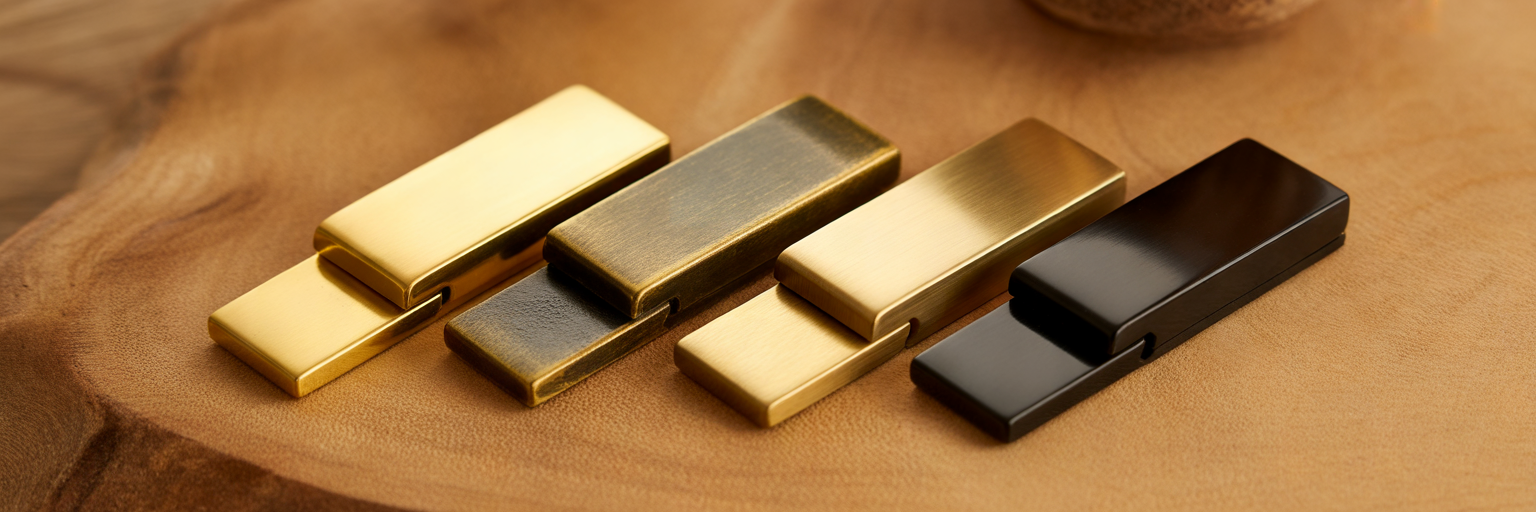
The material and finish of your hinges contribute just as much to the final piece as their shape and size. For small, delicate projects, the quality of the material is especially important.
We often recommend solid brass as the ideal choice for small brass hinges for boxes. It is strong enough for delicate applications, naturally resists corrosion, and develops a beautiful patina over time. More importantly, brass has self-lubricating properties, which means the hinge will maintain a smooth, fluid pivot for decades without binding or squeaking. This makes brass box hinges a reliable, long-term investment in your project's quality.
Brass also comes in a variety of finishes to match your design aesthetic. Polished brass offers a bright, reflective shine, while antique brass provides a darkened, aged look perfect for a vintage feel. For a more contemporary style, a brushed or satin finish gives a soft, modern sheen. Exploring a collection of solid brass cabinet pulls and knobs can give you a good sense of how these different finishes look.
While other materials like steel or zinc alloy are available and can be more budget-friendly, it is good to be aware of the trade-offs. They may not offer the same longevity, corrosion resistance, or premium feel as solid brass. Finally, remember to coordinate your hinge finish with any other hardware on the box, such as a latch or decorative feet, to create a cohesive and polished look.
Installation Tips to Avoid Common Mistakes
Installing miniature box hinges requires a delicate touch. The small scale leaves little room for error, but with the right techniques, you can achieve a perfect fit every time. Here are a few tips to help you avoid common frustrations.
- Always Drill Pilot Holes: This is the most important rule for preventing delicate wood from splitting. A pilot hole clears a path for the screw, reducing pressure on the wood fibers. The hole should be slightly smaller than the screw's diameter.
- Use a Self-Centering Bit: For flawless alignment, consider a self-centering drill bit (also known as a Vix bit). This clever tool has a spring-loaded guide that fits perfectly into the hinge's screw hole, ensuring your pilot hole is dead center every time.
- A Pro Tip for Hardwoods: Tiny brass screws can sometimes snap when driven into dense hardwoods like oak or maple. To prevent this, first drive a steel screw of the same size into the pilot hole to cut the threads. Then, carefully remove the steel screw and install the final brass screw.
- Perform a 'Dry Fit': Before you drill any holes, use painter's tape to temporarily fix the hinges in place. This allows you to open and close the lid to check its alignment and movement. This simple step can save you from misaligned holes and a wobbly lid.
Frequently Asked Questions About Small Hinges
How many hinges do I need for a small box?
For most jewelry or keepsake boxes up to 12 inches long, two hinges provide excellent stability. For very small boxes under 4 inches long with a lightweight lid, a single, centered hinge can sometimes work.
What is a 'mortise' and do I need one?
A mortise is a shallow recess cut into the wood so the hinge leaf sits flush with the surface. You generally only need one for butt hinges if you want a seamless, gap-free look. For most thin-walled boxes, it is safer and easier to choose no-mortise hinges and skip this step.
The screws are tiny! How do I handle them?
Use a jeweler's screwdriver or a small precision screwdriver that fits the screw head perfectly for better control. A helpful trick is to apply a small dab of wax from a candle to the screw threads. This lubricates them, helping them drive into the wood more easily without snapping.
Can I use these hinges for a cabinet door?
No, these hinges are designed specifically for the light weight and small scale of boxes. They are not strong enough to support the weight and leverage of a cabinet door, which would cause them to fail quickly.
Finding the Perfect Fit for Your Project
Choosing the right hardware for a small box doesn't have to be complicated. By following a few simple steps, you can select your hinges with complete confidence. Start by measuring your box's thickness, then choose a hinge type that suits its construction, like a no-mortise hinge for thin walls. Finally, select a quality material like solid brass for a beautiful, lasting result.
With these guidelines in mind, you are ready to find the perfect hardware to complete your project. Feel free to explore our collections of drawer pulls and knobs to see the different styles and finishes available.


