

Standard kitchen cabinet doors in American homes typically measure three quarters of an inch thick, yet antique dressers and imported furniture rarely follow a single fastening standard. Understanding cabinet knob mounting types before you shop prevents stripped threads, split wood, and frustrating return trips.
Quick Answer on Cabinet Knob Mounting Types and Panel Access
If you just removed an old knob and discovered the fastener does not match the standard rear screw you expected, your furniture uses one of three verified fastening routes:
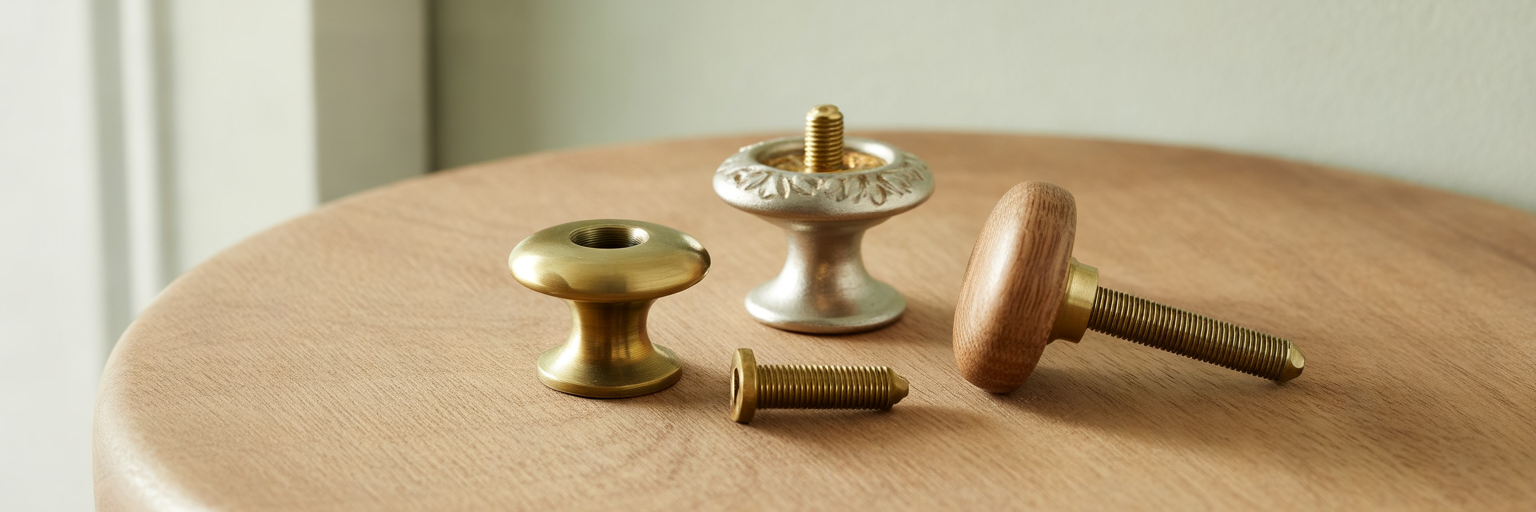
- Rear machine bolts: A smooth-shanked machine screw passes from the inside of the door or drawer through a pre-drilled hole and threads into a female socket inside the knob base.
- Fixed threaded studs: A metal threaded rod is permanently attached to the back of the knob. It pushes through the door from the front and is secured on the inside with a washer and hex nut.
- Direct wood screw studs: A pointed, coarse-threaded screw is fixed to the knob base and twists straight into the wood from the outside without requiring rear access.
The primary rule when replacing cabinet knobs is to confirm your existing fastening route and check whether the back of the panel is reachable before ordering new hardware. Shoppers updating vintage pieces often uncover unexpected bolts or blind mounts, which we cover in our step-by-step guide on replacing branded dresser handles. Taking two minutes to diagnose your cabinet door or drawer box now ensures you order hardware that installs cleanly on the first try.
How to Inspect and Photograph Your Existing Hardware Safely
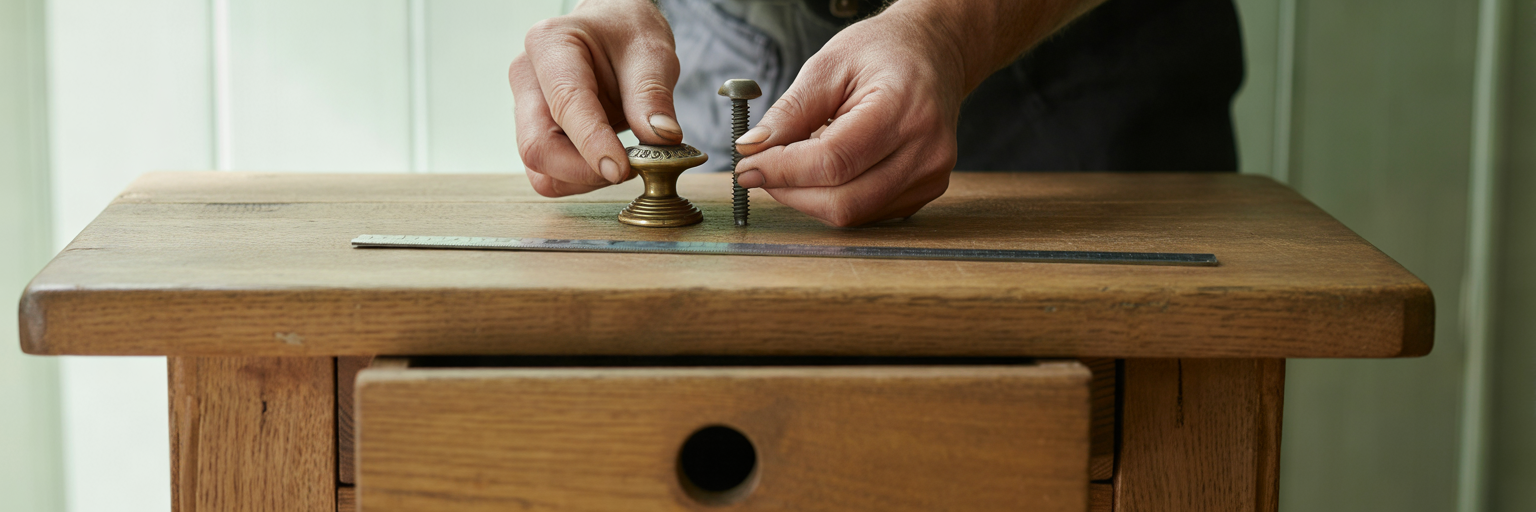
When an old knob feels stuck or unfamiliar, forcing it with pliers can crack delicate porcelain or tear out aged wood fibers. Follow this safe inspection checklist to remove your existing hardware intact:
- Empty the drawer or open the cabinet door fully so you have a clear view and steady lighting.
- Look inside the panel for an exposed screw head or hexagonal nut.
- If you see a slotted or Phillips screw head, hold the front knob steady with one hand and gently turn the screw counter-clockwise with a matching screwdriver.
- If you see a small hex nut on a threaded post, hold the front knob still and loosen the nut counter-clockwise using a small wrench or nut driver.
- If the inside of the drawer is smooth wood with no visible metal fastener, firmly grasp the knob on the outside and turn the entire knob body counter-clockwise to see if it unscrews directly from the wood.
Checking Rear Panel Access Inside the Drawer or Door
Inspecting the interior tells you whether your furniture has a through-hole, which is drilled completely through the wood panel, or a pilot hole, which is a shallow guide hole drilled only partway into the front surface. Some solid wood drawers are built with a separate decorative drawer front attached over an inner structural box. When that inner box covers the back of the outer panel, rear access is blocked unless you unscrew and remove the inner drawer front first. Smaller pieces like heirloom chests frequently lack rear clearance altogether, a factor we highlight in our guide on choosing jewelry box knobs for small drawers.
Capturing Clear Reference Photos Next to a Ruler
Once a single knob is safely removed, lay the knob and its screw or nut flat on a well-lit table next to a metal ruler or tape measure. Take a clear photo looking straight down so the exact length of the screw and the coarseness of the threads are visible without perspective distortion. Next, hold the ruler flush against the front of your drawer to photograph the width of the hole and any circular indentation left by the old base. Keep these reference photos on your phone to compare directly against product specification sheets.
Comparing Rear Bolts, Fixed Studs, and Wood Screws
Each fastening method relies on a specific combination of thread design and receiving material to keep the knob from spinning loose during daily use.
Rear Machine Bolts and Internal Threads
Rear machine bolts are the standard choice for modern kitchens and bathroom vanities. The bolt slides cleanly through a smooth bore in the wood panel and engages an internal metal thread tapped inside the knob neck. Most imported and European hardware uses metric M4 threads, while domestic American hardware typically uses imperial 8-32 machine threads. Heavy duty pulls sometimes step up to thicker M5 bolts. Because metal holds precise internal threading under tension, solid brass and zinc alloy knobs almost always use this rear bolt setup.
Fixed Threaded Studs with Nuts and Washers
With fixed stud cabinet knobs, the machine-threaded rod is anchored permanently into the knob head during manufacturing. You push the stud through the cabinet door, slide a flat washer over the rod on the inside to distribute pressure against the wood, and tighten a hex nut. Artisans and manufacturers favor this design for ceramic cabinet knobs, glass knobs, and vintage styles. Because you tighten the nut from behind rather than twisting the knob body against a screw, delicate porcelain and glazed earthenware are protected from cracking under torque.
Direct Wood Screw Studs for Blind Mounting
When a piece of furniture has a solid decorative front with no way to reach the back, wood screw cabinet knobs solve the problem from the outside. These pieces feature a pointed, coarse-threaded screw fixed directly into the base of the knob, which is common on traditional wood cabinet pulls and knobs and petite brass accents. As you twist the knob clockwise into a pre-drilled pilot hole, the sharp metal threads bite directly into the surrounding wood grain. The holding strength depends entirely on dense, intact timber fibers gripping the screw threads, a complex cellular structure explored in an article from Nature Is Crazy. For this reason, direct wood screws work well in solid oak, maple, or walnut, but should be avoided on flaky particleboard or hollow-core doors.
| Mounting Type | Rear Panel Access Needed | Receiving Material and Thread | Best Furniture Use Cases and Avoid If |
|---|---|---|---|
| Rear Machine Bolt | Yes, screwdriver access required inside door or drawer | Smooth wood through-hole; internal M4, M5, or 8-32 metal thread inside knob | Best for standard kitchen cabinets, bathroom vanities, and dressers; avoid if inner drawer box blocks the rear hole |
| Fixed Threaded Stud | Yes, space needed for washer, nut, and small wrench | Smooth wood through-hole; external machine thread on fixed rod with hex nut | Best for vintage dressers, ceramic knobs, and thick furniture doors; avoid if tight clearance inside prevents nut rotation |
| Direct Wood Screw Stud | No, installs entirely from the front surface | Wood pilot hole; coarse self-tapping threads bite directly into wood fibers | Best for double-layered drawer fronts and small wooden boxes; avoid if panel is thin hollow core or loose particleboard |
Matching your replacement hardware to your existing mounting system saves you from having to bore through a double drawer box or plug and redrill antique woodwork.
What to Measure Before Ordering Replacement Cabinet Knobs

Before placing an order, remember that there is no universal thread diameter or universal screw length in furniture hardware. Taking three straightforward measurements ensures your new pieces fit right out of the box.
Checking Door Thickness and Cabinet Knob Screw Size
Knowing how to measure cabinet knobs starts with measuring the wood they attach to. Open the cabinet door or pull out the drawer and measure the exact thickness of the panel edge using a tape measure or calipers. While standard kitchen doors are 3/4 inch (19mm) thick, bathroom vanities, Shaker frames, and solid wood dressers often range from 1/2 inch up to 1.5 inches thick when an inner drawer box is included. To select the right cabinet knob screw size for a rear bolt setup, you need a screw that passes completely through the wood and extends into the knob base. As detailed in the Lowe's cabinet hardware installation guide, your machine screw generally needs to be about 1/4 inch longer than the cabinet door thickness to engage the internal threads securely without bottoming out.
Verifying Hole Diameter and Base Coverage
Next, measure the diameter of the hole drilled into your wood panel. Standard rear machine bolts require a 3/16 inch (5mm) through-hole, whereas vintage fixed studs often sit inside wider 1/4 inch (6mm to 7mm) holes. Finally, measure the diameter of the circular base on your old knob, or the ring mark it left behind on the wood finish. Choosing a new knob with an equal or wider base diameter hides old paint lines and compressed wood grain. If your favorite new knob has a slender base or your old hole is slightly worn, you can achieve a clean, stable fit by following our guide on fitting cabinet knobs and pulls with backplates. Always review the exact manufacturer specifications for thread pitch, included screw length, and required pilot hole diameter before buying.
Common Replacement Mistakes and Why Improvised Fixes Fail
When a replacement screw does not fit right away, it is tempting to try a quick workaround with whatever tools are nearby. However, improvised conversions almost always damage either the hardware or the furniture. Avoid these common mistakes during installation:
- Forcing mismatched machine threads: Imperial 8-32 screws and metric M4 screws look nearly identical to the naked eye, but their thread pitches differ. Forcing an 8-32 screw into an M4 socket permanently strips the brass threads inside the knob.
- Twisting a fixed machine stud into bare wood: Fine machine threads on a fixed stud cannot cut into solid wood fibers. Trying to screw a fixed stud into a shallow hole will ream out the wood and leave the knob wobbling.
- Gluing loose bolts into oversized holes: Pouring construction adhesive or wood glue around a loose machine bolt makes future removal impossible without tearing out the cabinet face.
- Cutting fixed studs without thread protection: Sawing a long stud with dull pliers crushes the end threads so the hex nut can no longer spin on. Always thread a nut onto the stud before cutting with a fine hacksaw, then unthread the nut to clean the burrs.
- Driving wood screws into particleboard: Coarse wood screws quickly strip out of pressed MDF or particleboard drawers under daily pulling tension.
Instead of relying on unapproved workarounds, match your hardware to your furniture construction. If you are permanently converting a blind hole to a rear bolt, glue a solid hardwood dowel into the old hole, sand it flush, and drill a clean through-hole once cured. When shopping at JRM Accessories for precision-tapped solid brass cabinet pulls and knobs, ceramic styles, or wood designs, you can also use our Sample Program to test the exact fastener, thread fit, and finish on your furniture before committing to a full room order.
Frequently Asked Questions About Cabinet Knob Fasteners
Why will my new cabinet knob screw not fit my old screw?
Your old screw and new knob likely use different measurement standards. Most American hardware uses imperial 8-32 threads, while European and imported designs use metric M4 threads. Always use the new machine screws supplied with your replacement knobs, or buy longer screws that match the exact thread specification listed on the product page.
How do I replace a cabinet knob when I cannot reach the back of the drawer?
First, check the inside walls of the drawer box for four corner screws holding a removable false drawer front in place. If the front panel comes off, you can install standard rear-bolt knobs and reattach the panel. If the drawer front is permanently glued, choose direct wood screw cabinet knobs that twist in from the outside.
How much longer should a cabinet knob screw be than the door thickness?
A rear machine screw should be approximately 1/4 inch (6mm) longer than the total thickness of your cabinet door or drawer front. For a standard 3/4 inch cabinet door, a 1 inch screw provides ideal thread engagement. Many hardware installers also keep adjustable break-away screws on hand to snap to the exact length needed.
Are fixed stud cabinet knobs harder to install than rear bolt knobs?
They are just as straightforward, provided you have enough room inside the drawer or cabinet to slip a washer and hex nut onto the rod and turn a small wrench. Tighten the nut gently until snug, avoiding excessive force that could crack a ceramic or glass knob head.
What if the hole in my vintage dresser is too wide for a standard machine screw?
Antique wooden dressers often have wider holes worn down by decades of use. Place a flat metal washer against the inside of the drawer so the small screw head cannot pull through the wood, and pair the knob with a decorative brass backplate on the front to keep the hardware centered so it does not wobble.
Before You Buy: Your Final Replacement Checklist
Choosing the right knob comes down to three simple checks: confirm whether you have rear access inside the panel, measure your exact wood thickness and hole diameter, and verify the fastener type on the product listing. Once you have your measurements in hand and have compared finishes under your own room lighting, browse our full range of drawer pulls and knobs to find coordinated pieces that fit your furniture with confidence.


