

The right hardware can completely change the character of a cabinet or dresser, and sometimes the most impactful detail is texture. A subtle pattern can add depth and a satisfying tactile quality that plain hardware simply cannot match.
Quick Answer: What Is Knurled Hardware?
Knurled cabinet hardware features a precise, machined texture, most often a diamond-shaped or straight-line crisscross pattern. This texture adds visual interest by catching light in unique ways and provides a pleasant, non-slip grip. It’s a detail that brings both form and function to your cabinets and furniture.
This distinctive texture transforms a simple knob or pull into a piece of functional jewelry for your furniture. The precise pattern on knurled cabinet hardware catches the light, creating subtle highlights and shadows that draw the eye. The feel is just as important as the look. There is a satisfying, grippy quality to knurled hardware that makes opening a drawer or cabinet door a more considered experience.
This style has roots in industrial design, where knurling was applied to tools, dials, and watch crowns to ensure a secure grip. Today, that same functional detail brings a touch of modern, industrial, or even Art Deco sophistication to home interiors. It’s a small detail that signals quality and thoughtful design.
It is also helpful to know the difference between knurled and fluted hardware. While both add texture, knurling is a crisscross pattern designed for grip. In contrast, fluting consists of parallel vertical or horizontal grooves, creating a softer, more decorative linear look. Both are beautiful, but they offer distinct styles.
Choosing Between Knurled Knobs, Pulls, and Handles
Once you decide on a textured look, the next step is choosing the right format for your project. The choice between a knob, a pull, or a T-bar handle depends on the size of your door or drawer, your existing drill holes, and the style you want to achieve.
Knurled Knobs: For Doors and Small Drawers
Knurled brass knobs are perfect for smaller applications like cabinet doors, vanity cupboards, or the top drawers of a dresser. They act as a single point of contact, offering a small but impactful textured detail. Because they install with a single screw, they are incredibly easy to fit, whether you are updating old furniture or working on a new piece.
Knurled Pulls and Handles: For Larger Drawers and Cabinets
For larger or heavier drawers, knurled cabinet pulls and handles provide better leverage. They require two screws, so the most important measurement is the center-to-center distance, which is the space between the two drill holes. If you are replacing existing handles, measuring this accurately ensures your new hardware will fit perfectly without needing to drill new holes.
Knurled T-Bar Pulls: A Modern Hybrid
A T-bar pull combines the single-point installation of a knob with the length and grip of a handle. These are a great modern choice for both doors and drawers, especially on minimalist, flat-panel cabinetry. Their sleek profile offers a clean look while the knurled texture adds a touch of industrial refinement.
Mixing and Matching for a Coordinated Look
You do not have to stick to just one type of hardware. A popular and practical approach is to use knurled knobs on upper cabinet doors and matching knurled drawer pulls on lower drawers. This creates a balanced, cohesive look that is also highly functional. Exploring a full collection of drawer pulls and knobs can help you visualize the right combination for your own space.
| Hardware Type | Best For | Installation | Design Tip |
|---|---|---|---|
| Knurled Knob | Cabinet doors, small drawers, furniture accents | Single screw, very simple | A small, jewel-like detail that adds texture without overwhelming. |
| Knurled Pull | Kitchen drawers, heavy drawers, pantry doors | Two screws; requires precise 'center-to-center' measurement | Creates a strong horizontal or vertical line, ideal for modern and industrial styles. |
| Knurled T-Bar | Both cabinet doors and drawers, narrow spaces | Typically a single screw, like a knob | Offers the length of a pull with the simple installation of a knob; great for a minimalist look. |
How Finishes Transform Knurled Texture
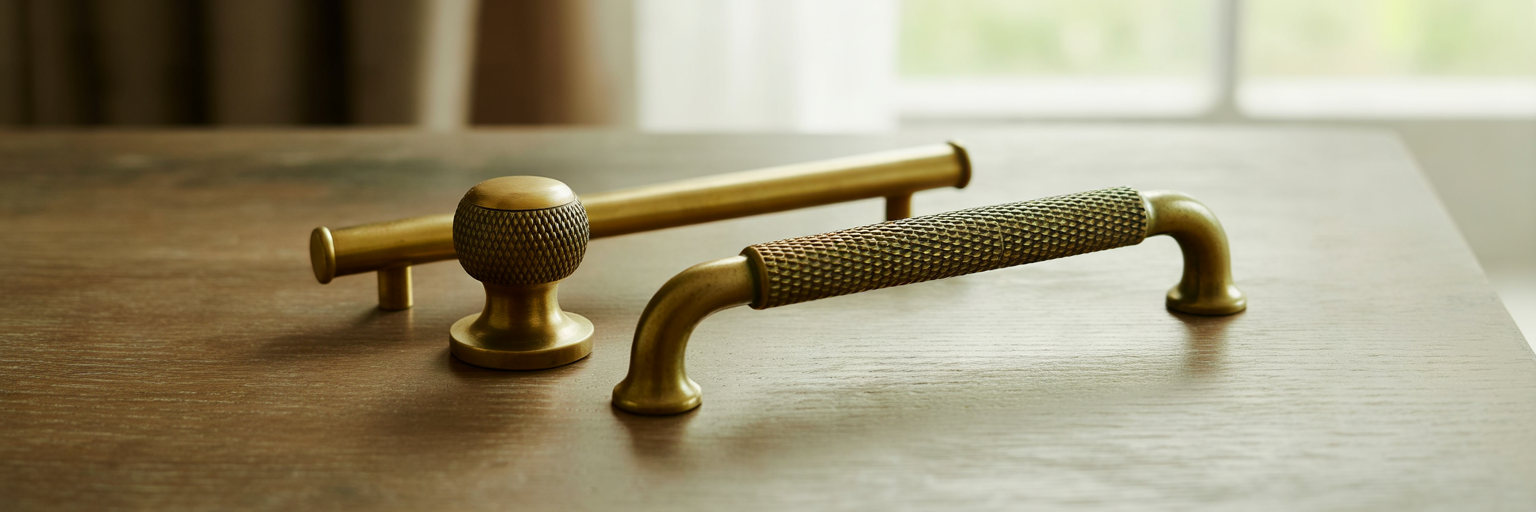
The finish you choose dramatically changes how the knurled texture appears. The same pattern can look bold and glamorous or subtle and industrial, depending on whether the surface is polished, brushed, or aged.
- Polished Gold or Brass: A shiny, reflective surface makes the knurled texture truly pop. The facets of the pattern catch the light, creating a bright, jewel-like effect. This look works beautifully in spaces with Art Deco or glam influences, where the hardware is meant to be a statement piece.
- Brushed or Matte Finishes: Finishes like brushed gold or matte black give the texture a softer, more understated appearance. The light plays more gently across the surface, highlighting the pattern without high-contrast reflections. This makes it a perfect fit for modern, industrial, or mid-century designs where texture is appreciated but not overpowering. A finish like the brushed gold on these solid brass knurled cabinet pulls offers a contemporary feel that is warm yet understated.
- Antique Finishes: Antique brass knurled cabinet handles have a darker, aged patina that settles into the grooves of the pattern. This enhances the texture and gives the hardware a sense of history and depth, making it ideal for vintage-inspired or traditional spaces.
Because the texture interacts with light, gold knurled cabinet pulls may appear slightly different in tone compared to a smooth pull of the same finish. We always recommend ordering a sample to see how the hardware looks and feels in your home's unique lighting conditions.
Styling Knurled Hardware for Your Project
Knurled hardware is versatile enough to complement a wide range of design styles, from sleek and modern to warm and industrial. The key is to think about how the texture will interact with the other elements in your room.
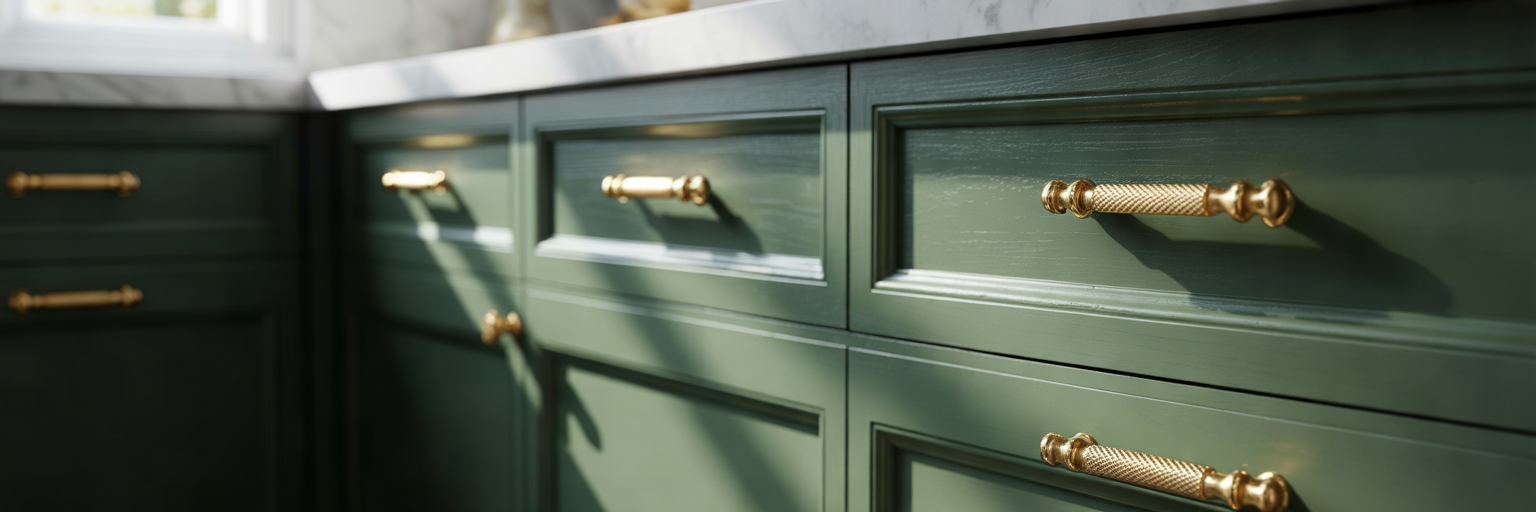
- Consider Your Cabinet Style: The scale of the knurling should feel proportional to your cabinetry. A fine, delicate knurl looks elegant on sleek, flat-panel doors, while a more robust, deeper texture can stand up to the classic lines of a Shaker-style cabinet.
- Create Contrast or Cohesion: Use knurled hardware to add a touch of texture to an otherwise simple piece of furniture. A plain white dresser, for example, is instantly more interesting with the addition of knurled brass pulls. Alternatively, use it to reinforce an existing theme, such as adding brass knurled cabinet pulls to a kitchen with other industrial-style fixtures.
- Coordinate with Other Fixtures: Your hardware does not need to be an exact match to your faucet or light fixtures. In fact, a coordinated palette is often more sophisticated. For example, knurled brass hardware can look stunning paired with a matte black faucet, as the shared warmth of the brass ties the room together.
- Plan a High-Impact Upgrade: One of the easiest and most effective DIY projects is replacing the generic hardware on a store-bought vanity, dresser, or set of cabinets. This simple swap can make a standard piece of furniture look custom and thoughtfully designed. For projects that call for the warmth and durability of brass, browsing a full collection of solid brass cabinet pulls and knobs can provide inspiration.
Before You Buy: Measurement and Care
A little preparation ensures your hardware upgrade goes smoothly. Before you fall in love with a particular style, take a moment to confirm a few practical details.
First and most importantly, measure twice, order once. If you are replacing existing handles, you must measure the center-to-center distance between the screw holes. This measurement is far more important than the overall length of the pull.
Next, consider the projection. This is how far the knob or pull will stick out from the cabinet surface. Check this measurement to ensure your drawers and doors will not bump into adjacent walls, corners, or appliances when opened.
Finally, there is no substitute for seeing the hardware in person. Ordering a sample allows you to feel the weight, appreciate the texture, and see how the finish looks in your home. It is the most confident way to make a final decision.
Caring for knurled hardware is straightforward. A regular wipe with a soft, dry cloth is usually all that is needed. Avoid abrasive cleaners that could damage the finish. Once you have your measurements, you can confidently select the right furniture hardware for your upgrade.
Frequently Asked Questions
Is knurled hardware difficult to keep clean?
Not at all. The texture is not deep enough to trap significant dirt. A quick wipe with a soft, dry cloth is sufficient for routine cleaning. Just be sure to avoid abrasive sponges or harsh chemical cleaners, as they can scratch the finish.
Is knurled hardware a timeless choice or a trend?
While its popularity has grown recently, knurling has industrial roots that go back over a century. This gives it a classic, functional quality that feels more timeless than trendy. It is a lasting detail that adds character without being tied to a specific moment in design.
Can I mix knurled hardware with smooth hardware?
Absolutely. This is a great strategy for creating a layered, balanced look. For instance, you could use knurled pulls on your main drawers and simple, smooth knobs on upper cabinets or a pantry door. This prevents the texture from feeling overwhelming and adds subtle variety.
What is the main difference between knurled and fluted hardware?
The difference is in the pattern. Knurling is a crisscross, diamond-shaped texture that is often used to improve grip. Fluting consists of simple, parallel grooves that run vertically or horizontally for a more decorative, linear effect.


