

Finding the right hardware is the final, defining touch for any Mid-Century Modern furniture piece or kitchen. But with so many options, it can be hard to distinguish authentic style from generic modern designs. This guide will walk you through everything you need to know about choosing the perfect mid century modern cabinet hardware, ensuring your choice honors the clean lines and warm materials of the era.
Key Takeaways for Choosing Mid Century Modern Cabinet Hardware
If you're looking for a quick answer on how to choose MCM hardware, start here. These are the core principles to guide your selection and help you buy with confidence.
- Focus on Form: Authentic MCM hardware uses simple geometric shapes like circles, squares, and slender bars, alongside gentle organic curves. It is always free of ornamentation like carvings or intricate patterns.
- Identify Key Styles: The most common types are tapered bar pulls, simple cylindrical or mushroom knobs, and unadorned cup pulls. These shapes prioritize function and clean lines.
- Select Signature Materials: Warm metals, especially satin or antique brass, are hallmarks of the era. You will also find frequent use of wood, like walnut, and mixed-material designs that combine wood and brass.
- Prioritize Proportion: The hardware's size should complement the furniture. Long pulls emphasize the lines of a credenza, while simple knobs suit smaller doors. The hardware should feel integrated, not tacked on.
What Makes Hardware Look Mid-Century Modern?
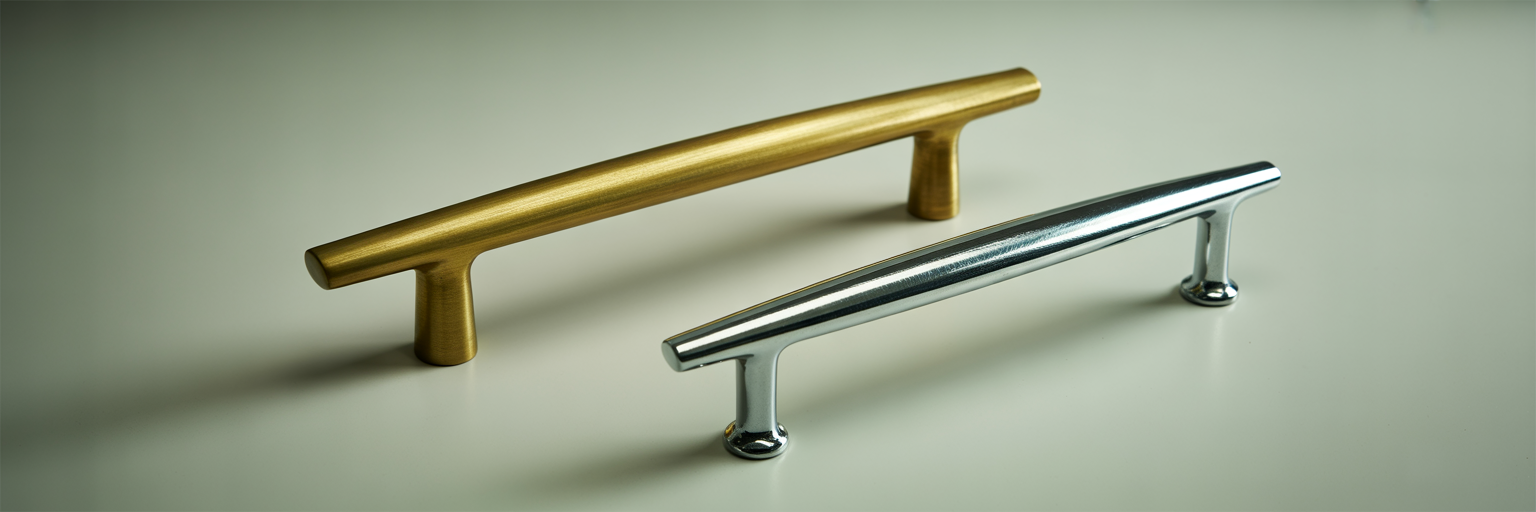
The Mid-Century Design Philosophy: Function First
The Mid-Century Modern movement (roughly 1945-1969) grew from a desire for functional, uncluttered living after World War II. Designers focused on honesty in materials, simplicity, and a connection to nature. This philosophy extends directly to the hardware. Each pull or knob was designed to be beautiful in its utility, with a shape that was comfortable to use and visually clean. There was no room for decoration for decoration's sake.
MCM vs. Generic Modern: Spotting the Difference
While both styles are minimalist, MCM hardware has a distinctly warmer and more organic feel. A generic modern pull might be a stark, blocky rectangle with sharp corners, reflecting a more industrial or severe aesthetic. In contrast, an MCM tapered pull has a softer, more elegant silhouette. It feels crafted and human-scaled, avoiding the cold, machine-made look of some contemporary hardware.
The Vocabulary of MCM Shapes: Geometric and Organic
The beauty of mid century modern cabinet hardware lies in its simple yet expressive shapes. The style often plays with two key ideas. The first is clean geometry, seen in unadorned circular knobs, square backplates, and slender bar pulls that create a clean, satisfying rhythm across a set of drawers. The second is organic form, which includes smooth, curved pulls or knobs inspired by shapes found in nature. This blend of clean geometry and natural texture is perfectly captured in hardware that combines both, like these solid brass and wood cabinet pulls.
Comparing MCM Pulls, Knobs, and Handles
Understanding the common types of MCM hardware will help you choose the right style for your doors and drawers. The most iconic are tapered bar pulls. Often called mid century modern cabinet pulls, their slender shape adds an elegant, linear look that works equally well on drawers and doors. They are a versatile and classic choice.
MCM knobs are defined by their simplicity. Look for plain cylinders, smooth mushroom shapes, or unadorned squares. Their small footprint makes them ideal for smaller cabinet doors or for creating a minimal, dot-like pattern on a piece of furniture like a nightstand or vanity.
Minimalist cup pulls or half-moon pulls also fit the aesthetic, provided they have clean curves and no decorative details or visible face screws. They offer a softer, more grounded look that is especially popular for kitchen drawers.
A common practice is to mix hardware types, using pulls on drawers to emphasize horizontal lines and knobs on doors for a lighter touch. To see these styles side-by-side, you can explore our full collection of drawer pulls and knobs.
| Hardware Type | Best For | Visual Effect | Common Use Case |
|---|---|---|---|
| Tapered Bar Pulls | Drawers and larger cabinet doors | Emphasizes horizontal or vertical lines; elegant and linear | Dressers, credenzas, kitchen base cabinets |
| Simple Knobs | Smaller cabinet doors and furniture | Creates a subtle, dotted pattern; minimalist and clean | Upper kitchen cabinets, nightstands, small vanity doors |
| Minimalist Cup Pulls | Drawers, especially in kitchens | Grounded, functional, and slightly retro feel | Kitchen drawers, apothecary-style chests |
This table helps you decide which type of hardware best suits your furniture's function and style, based on common Mid-Century Modern design principles.
Signature Materials and Finishes for an MCM Look
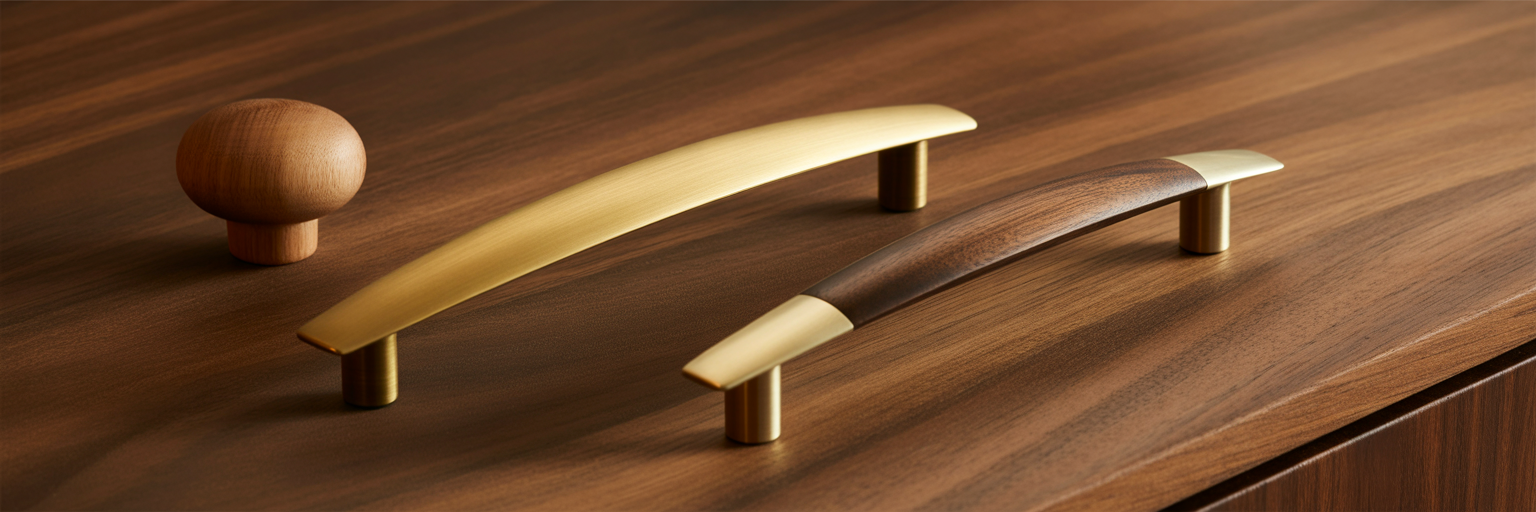
Brass is the quintessential metal for MCM hardware. However, the finish is critical. A satin or brushed brass offers the authentic warm, soft glow associated with the era. It has a subtle sheen that complements wood tones beautifully. Polished brass, on the other hand, can look too bright and traditional. When searching for mid century brass pulls, look for that softer, matte quality.
Wood was another key material, often paired with metal to add natural texture and warmth. Walnut was a favorite, and pulls that combine a wood grip with brass ends are a classic example of this mixed-material approach. These are excellent mcm cabinet pulls for adding character to flat-fronted cabinets.
While brass is iconic, other finishes can work well. Antique brass provides a slightly aged, mellow look. For a more contemporary interpretation, matte black offers a strong, graphic contrast that looks stunning against light wood or painted cabinets. For a classic look, warm metals are an excellent choice. You can see a variety of options in our collection of solid brass cabinet pulls and knobs.
How Hardware Proportion Shapes Your Furniture's Style
In MCM design, hardware is an integral part of the furniture's composition, not just a functional afterthought. The goal is balance and intention. The scale of your hardware should enhance the form of the piece it's on.
For example, long, low furniture like credenzas and media consoles are beautifully accentuated by longer, horizontal mcm drawer pulls that draw the eye across the piece. In contrast, a series of simple knobs might look better on a set of tall, narrow pantry doors. As a general rule of thumb, a pull that is about one-third the width of the drawer front is often a good starting point, but feel free to adjust based on visual preference.
Also consider the hardware's projection, which is how far it extends from the cabinet face. Lower-profile pulls are a practical choice for high-traffic areas like kitchens to avoid snagging clothes. A statement dresser in a bedroom, however, can easily accommodate hardware with more depth and presence.
Common Mistakes to Avoid When Choosing MCM Hardware
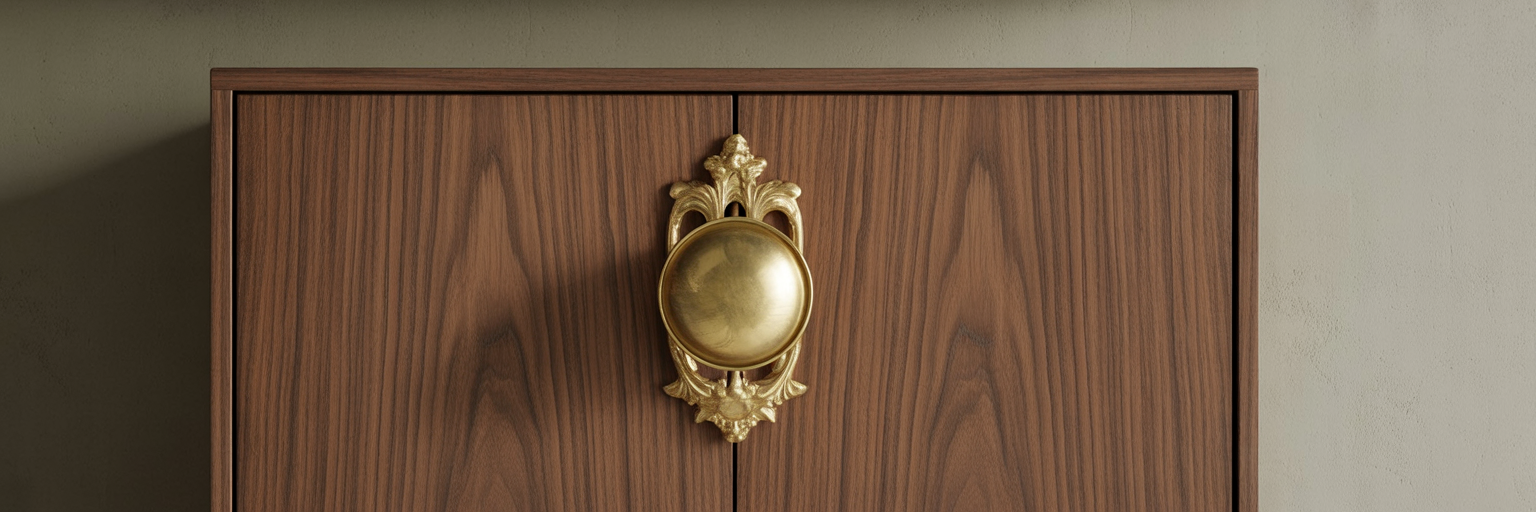
Choosing the right hardware is easier when you know what to avoid. Here are a few friendly tips to prevent common missteps:
- Choosing Overly Ornate Hardware: The MCM ethos is about clean, functional simplicity. Steer clear of anything with decorative backplates, intricate carvings, or faceted details that feel more traditional or Art Deco.
- Ignoring Existing Hole Spacing: If you are replacing old hardware, measure the "center-to-center" distance between the screw holes before you buy. This saves you from the difficult task of filling old holes and drilling new ones, especially on a valuable vintage piece.
- Mismatching the Hardware to the Furniture's Character: The hardware should feel appropriate for the piece. A heavy, industrial-style pull would look out of place on a delicate side table with tapered legs. Let the furniture's scale and style guide your choice.
- Forgetting to Order a Sample: This is the best way to avoid disappointment. Ordering a single knob or pull first allows you to see how the finish, material, and scale truly look in your home's lighting and next to your furniture.
Taking the time to browse different options can help you find the right fit. Explore our complete range of furniture hardware to see what works for your project.
Frequently Asked Questions About MCM Hardware
Can I mix different hardware styles on one piece of furniture?
For a cohesive MCM look, it is best to stick to one style family. However, mixing hardware types (like knobs and pulls) from the same collection is a common and effective strategy. For example, using pulls on lower drawers and matching knobs on upper cabinet doors creates a balanced and intentional look.
Is brass the only authentic material for MCM hardware?
While brass is iconic, original designers also used wood, chrome, and sometimes ceramic. For a classic look, mid century brass knobs and pulls are excellent choices. For a modern interpretation that still honors the simple forms of the era, matte black offers a great alternative.
What's the difference between a drawer pull and a cabinet pull?
The terms are often used interchangeably. The most important factor is not the name but choosing a size and style that is proportional to the specific door or drawer it will be mounted on. A "drawer pull" can work perfectly on a cabinet door if the scale is right.
How do I care for brass MCM hardware?
Care depends on the finish. Lacquered brass has a protective coating and should just be wiped with a soft, damp cloth. Unlacquered brass is a living finish that will develop a natural patina over time. This aged look is often desired, but you can polish it with a suitable brass cleaner to restore its shine. Always check the specific product's care instructions.


