

Choosing the right cabinet knob can feel like a small detail, but it has a significant impact on the look and feel of your furniture and cabinetry. This cabinet hardware style guide will walk you through how to choose cabinet knobs that not only function well but also perfectly complement your home’s decor.
Key Takeaways for Choosing Cabinet Knobs
If you need a quick answer, here are the most important factors to consider when selecting cabinet knobs:
- Start with your home's style. First, identify your decor as Modern, Traditional, or Rustic. This is the easiest way to narrow down your options to shapes and designs that will feel cohesive and intentional in your space.
- Match materials and finishes. Look at the other fixtures in the room, like faucets, lighting, and appliances. Choosing a knob with a complementary material and finish, such as brushed gold or antique brass, creates a polished and unified look.
- Think about function and proportion. A knob must feel comfortable to grip and be sized correctly for your cabinet door or drawer. Always order a sample to test the size, feel, and finish in your home's lighting before committing to a full set.
Matching Knobs to Your Decor Style
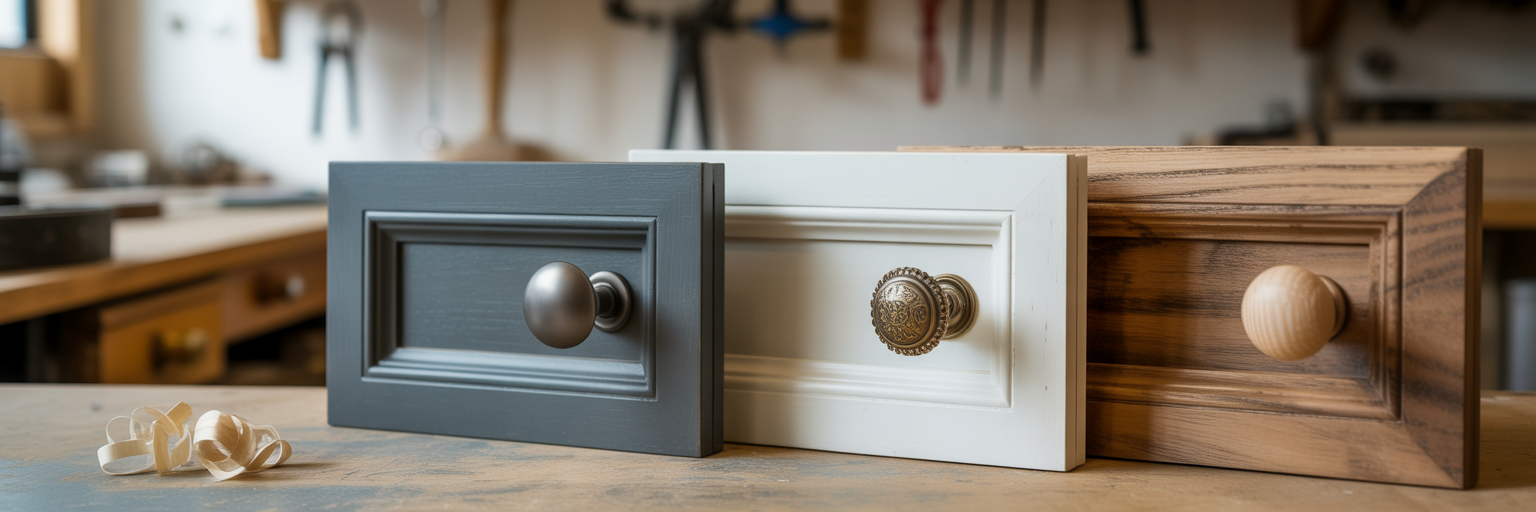
The best way to select hardware is to let your home’s existing aesthetic guide you. Below, we break down the most common decor styles and suggest knobs that work beautifully with each.
For Modern and Minimalist Homes
Modern design values simplicity, clean lines, and uncluttered forms. The hardware should feel integrated and functional, not ornamental. Look for cabinet knobs for modern kitchens with geometric shapes like circles, squares, or simple bars. Materials are often sleek and unadorned. Finishes like matte black, brushed nickel, and brushed gold add a touch of quiet sophistication without creating visual noise. For a clean look, consider something like our Solid Brass Round Cabinet Pulls Knobs, which embody minimalist design.
For Traditional and Classic Interiors
Traditional spaces are defined by elegance, detail, and a sense of history. The hardware in these homes often has more ornamentation, with curved silhouettes, beveled edges, or subtle decorative motifs. Classic materials like solid brass, bronze, and porcelain are excellent choices. Finishes such as antique brass or oil-rubbed bronze add a timeless, warm character. This is where you will find beautiful traditional cabinet hardware, including ceramic knobs with delicate patterns that add a touch of vintage charm.
For Rustic and Farmhouse Kitchens
Rustic and farmhouse styles celebrate warmth, texture, and a connection to natural materials. The hardware should feel sturdy, authentic, and perhaps even a little bit handcrafted. Look for rustic drawer knobs made from wood, hammered metal, or cast iron. Finishes are often matte or aged, like antique bronze or pewter, to give the impression of use over time. Combining materials, such as in our Solid Brass & Wood Cabinet Pulls, is a great way to introduce natural warmth and texture to your cabinetry.
| Style | Key Characteristics | Recommended Materials | Popular Finishes |
|---|---|---|---|
| Modern / Minimalist | Clean lines, geometric shapes, no ornamentation | Metal Alloy, Solid Brass | Matte Black, Brushed Gold, Polished Chrome, Brushed Nickel |
| Traditional / Classic | Ornate details, curved shapes, decorative elements | Solid Brass, Ceramic, Porcelain | Antique Brass, Polished Brass, Oil-Rubbed Bronze |
| Rustic / Farmhouse | Natural textures, handcrafted feel, simple forms | Wood, Hammered Metal, Cast Iron | Antique Bronze, Pewter, Matte Black, Natural Wood |
Note: This table provides general guidelines. The best choice always depends on your specific cabinetry, color palette, and other fixtures in the room.
A Practical Guide to Materials and Finishes
Understanding the materials and finishes available will help you choose hardware that is not only stylish but also practical for your needs.
-
Common Materials:
- Brass: A heavy, durable metal that feels substantial in hand. It can be finished in many ways, from shiny polished brass to modern matte black. Unlacquered brass will develop a natural patina over time.
- Ceramic & Porcelain: These materials offer a chance to add color, pattern, and a vintage feel. They are beautiful but can be more fragile than metal, making them better for furniture or less-used cabinets.
- Wood: Adds natural warmth and texture. Wood knobs are best suited for furniture pieces or cabinets in low-traffic areas to prevent wear.
-
Common Finishes:
- Polished: A shiny, reflective surface that offers a classic, clean look. It shows fingerprints more easily than other finishes.
- Brushed or Satin: Features a soft, low-sheen look created by fine brush marks. It is excellent at hiding fingerprints and smudges, making it a popular choice for busy kitchens.
- Matte: A non-reflective, flat finish that provides a distinctly modern and understated appearance.
- Antique: This finish is chemically treated to create an aged, darkened appearance that highlights details and adds character from day one.
For a cohesive look, try to match your knob finish to other metal elements in the room, such as your faucet or light fixtures. If you can't find an exact match, choose finishes from the same color family, like pairing brushed gold with a brass faucet.
Mixing Knobs and Pulls with Confidence
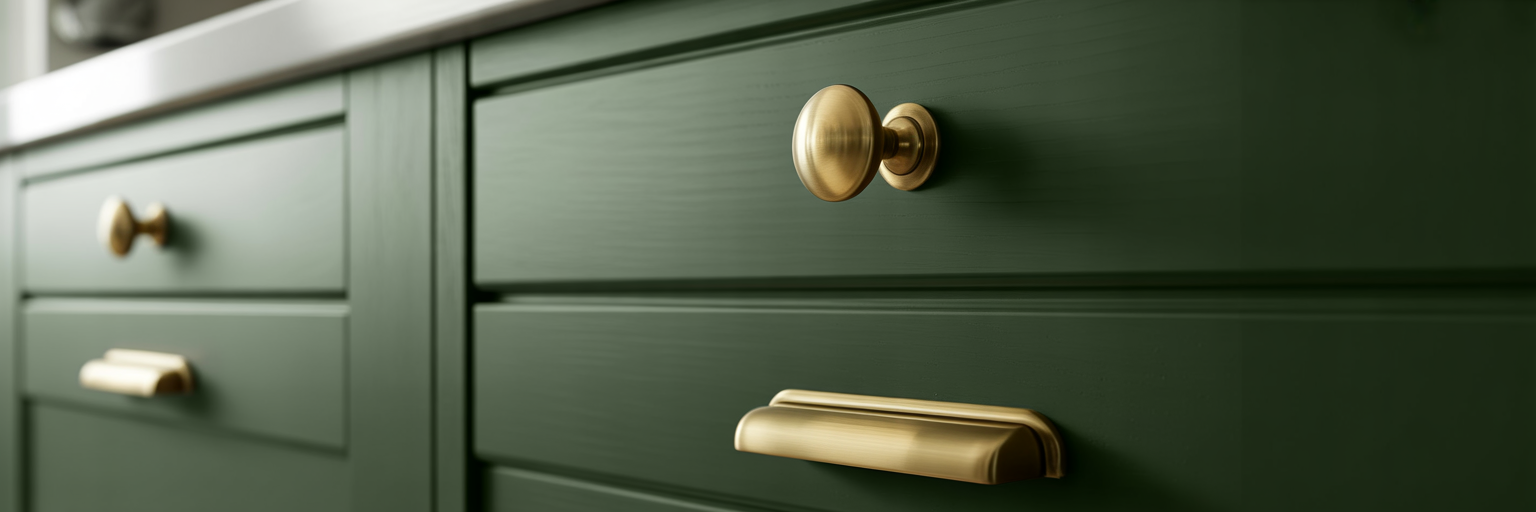
One of the most common questions in hardware selection is about mixing cabinet knobs and pulls. The good news is there is a simple rule of thumb that works for almost any kitchen: knobs on doors, pulls on drawers.
This approach is popular for both aesthetic and functional reasons. Cabinet doors are lightweight and easy to open with a simple knob. Drawers, especially larger ones filled with pots and pans, are heavier and easier to operate with a wider pull that you can grip with your whole hand.
The most important rule for creating a cohesive look is to use the same finish and style family for both the knobs and pulls. A matte black knob paired with a matte black pull of a similar design will look intentional and coordinated. Many hardware styles, like our Solid Brass Lotus Cabinet Pulls & Knobs, are available in both forms to make matching easy.
Of course, rules can be broken. You might use knobs on very small drawers or a large pull on a tall pantry door. As long as the finish and style are consistent, the result will look great.
Common Mistakes to Avoid When Buying Knobs
A little planning can help you avoid common frustrations. Here are three mistakes to watch out for before you buy.
- Ignoring Scale and Proportion. A knob that is too small will look lost on a large door, while one that is too big can overwhelm a small drawer. Before you order, use a piece of painter's tape or a sticky note cut to the knob's diameter to visualize its size on your cabinet.
- Forgetting About Projection. Projection is the distance the knob sticks out from the cabinet surface. Too little projection makes a knob difficult to grip, especially for people with larger hands or limited dexterity. Too much projection can cause knobs to snag clothing in narrow walkways. Always check this measurement in the product details.
- Not Ordering Samples. This is the single most important step. The color of a finish can look different on your screen, and its appearance will change dramatically under your home's specific lighting. Ordering a sample is the best way to see how a knob looks and feels in your space, ensuring you make a choice you will love for years.
Frequently Asked Questions About Cabinet Knobs

-
What is the standard size for a cabinet knob?
- The most common diameter for cabinet knobs is between 1 inch and 1.5 inches. A 1.25-inch knob is a versatile size that works well for most standard cabinet doors.
-
Can I use knobs on drawers instead of pulls?
- Yes, you can, especially for smaller, lightweight drawers. However, for wide or heavy drawers, using two knobs or a single pull is often better for function and helps prevent stress on the drawer slides over time.
-
How do I replace old knobs?
- Replacing knobs is typically very simple. Most are attached with a single screw from inside the cabinet door or drawer. Just unscrew the old one and screw in the new one. No new drilling is usually required.
-
How do I clean my cabinet knobs?
- For most finishes, a soft, damp cloth with a bit of mild soap and water is all you need. Avoid using abrasive sponges, harsh chemical cleaners, or polishes, as they can damage the protective lacquer and the finish itself.
Your Next Step to Perfect Hardware
Choosing the right cabinet knob is about finding the perfect balance between your home's style and everyday function. Now that you have the tools to decide, the next step is to explore the possibilities. We invite you to browse our collections of drawer pulls and knobs to see these styles in action and order a few samples to finalize your choice with confidence.


