

Choosing the right hardware can completely transform your cabinets or a piece of furniture. While it might seem complicated, mixing knobs and pulls is a classic design technique that adds both function and personality. This guide will walk you through the simple rules for getting it right.
A Quick Guide to Mixing Knobs and Pulls
If you need a fast answer, here are the three core principles for successfully mixing cabinet hardware. Following these guidelines will ensure your project looks intentional and professionally styled.
1. Stick to One Primary Finish
The most important rule is to use a single, consistent finish for all hardware in the room. Whether you choose matte black, brushed gold, or antique bronze, a unified finish creates a visual thread that ties different hardware shapes together. This is the secret to a curated, not chaotic, look.
2. Use Knobs for Doors and Pulls for Drawers
This classic approach, often called the knobs on doors pulls on drawers rule, is popular for a reason. It’s ergonomic. Knobs are easy to pinch and twist for swinging cabinet doors, while pulls offer a better grip for sliding heavy drawers open and closed.
3. Maintain a Consistent Style Family
Your hardware should share a similar design language. For example, pair clean, geometric bar pulls with simple round knobs for a modern look. Avoid combining an ornate, vintage knob with a stark, minimalist pull, as this can look like a mistake.
Why Mix Hardware? Function Meets Style
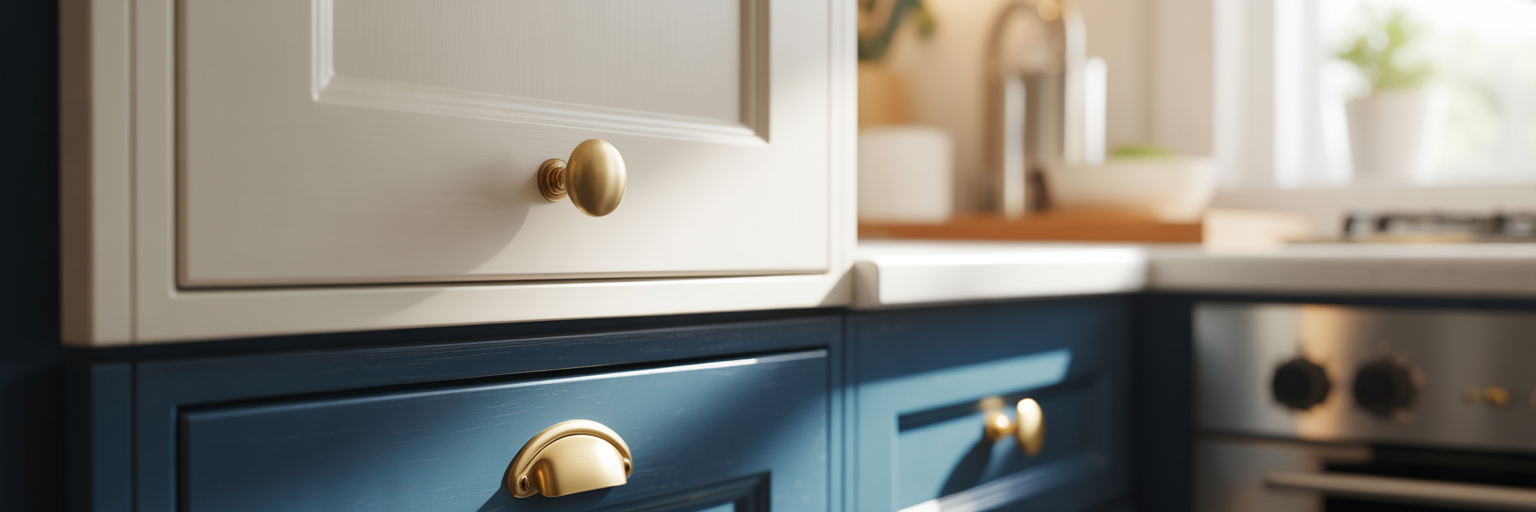
The decision to mix hardware goes beyond just following a trend. It’s a practical choice that balances ergonomics with aesthetics. Functionally, pulls are simply better suited for heavy drawers filled with pots, pans, or dishes. The ability to use your whole hand provides a more comfortable and secure grip compared to pinching a small knob.
Aesthetically, mixing cabinet hardware adds visual interest and a layered, custom-designed feel to your space. Using the same handle on every single door and drawer can look monotonous. By thoughtfully combining knobs and pulls, you introduce subtle variety that signals attention to detail. It’s one of those small touches that makes a kitchen or furniture piece feel more considered and complete.
There can also be a budget advantage. In many cases, knobs are slightly more affordable than pulls. By using knobs on upper cabinets and reserving pulls for high-use lower drawers, you can achieve a beautiful, functional result while managing costs. Exploring a full collection of drawer pulls and knobs can help you see the possibilities.
Choosing Your Primary Finish and Style
The first step in learning how to choose cabinet hardware is committing to a primary finish and a style family. This decision will guide all your other choices.
To select a finish, look at the existing metal fixtures in your room, like the faucet, lighting, and appliances. As design professionals at Nero Tapware highlight, anchoring a project with one primary finish creates a shared design language. A good starting point is to identify whether your room has warm or cool tones. Warm metals like brass, gold, and bronze pair well with warm paint colors, while cool metals like chrome, nickel, and black complement cooler palettes.
Once you have a finish, select a style family that reflects the overall look of your cabinets and room. For instance, detailed brass cabinet hardware can enhance a traditional design, while sleek pulls reinforce a modern aesthetic. While some designers explore broader trends, the most reliable formula for a cohesive look is simple: one finish plus two complementary hardware types from the same style family.
Cabinet Hardware Style Guide
| Style Family | Characteristics | Knob Examples | Pull Examples |
|---|---|---|---|
| Modern / Minimalist | Clean lines, simple geometric shapes, no extra ornamentation. | Simple round, square, or T-bar knobs. | Slim bar pulls, flat edge pulls, or flush pulls. |
| Traditional / Classic | Detailed, often with curves, beveled edges, or decorative elements. | Mushroom knobs, ceramic knobs, or knobs with a backplate. | Cup pulls (bin pulls), drop pulls, or classic bail pulls. |
| Rustic / Farmhouse | Textured, utilitarian, often with a handmade or aged feel. | Forged iron knobs, simple wood knobs, or hammered metal knobs. | Simple iron bar pulls, barn door style pulls, or rustic bronze cup pulls. |
This table provides examples to help you identify a style family. Choose knobs and pulls from the same family for a guaranteed cohesive look.
Getting Proportions and Placement Right
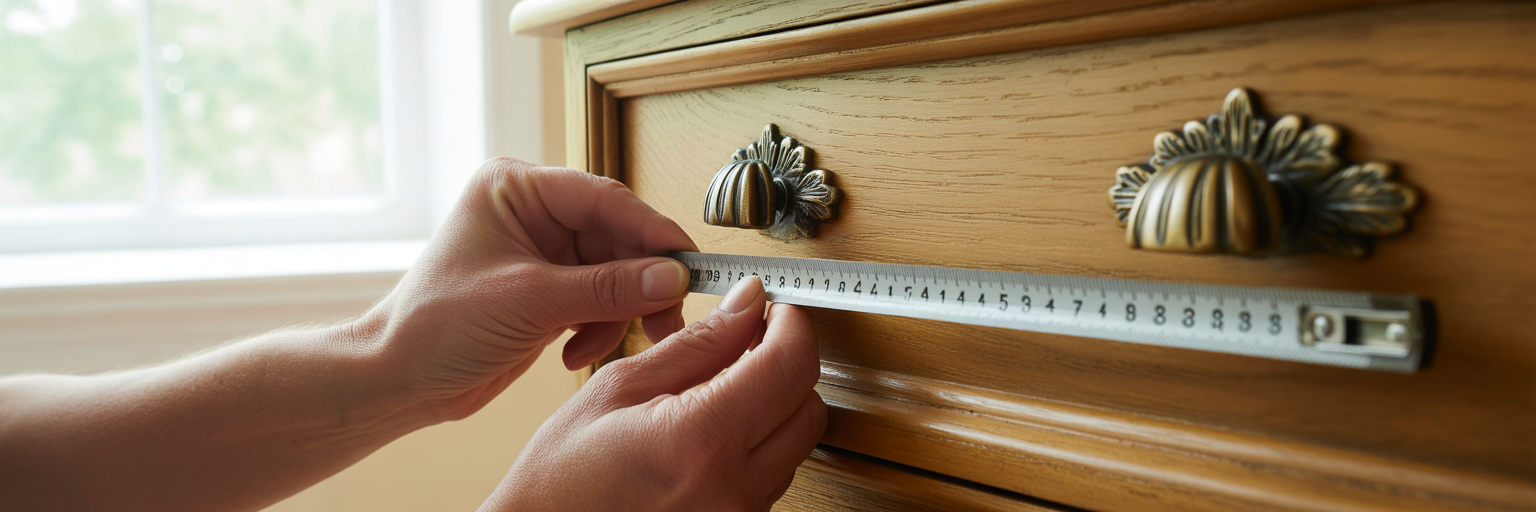
Once you’ve chosen your styles, the next step is ensuring they are the right size for your cabinets and drawers. Paying attention to a few key measurements will help you avoid common ordering mistakes.
For drawer pulls, a good guideline is the "rule of thirds." This suggests the pull's length should be about one-third of the drawer's width for a balanced look. For example, on a 24-inch wide drawer, a pull around 8 inches long will look proportional. For very wide drawers over 36 inches, consider using two smaller pulls or a single extra-long appliance pull for better function and scale.
If you are replacing existing hardware, the most critical measurement is the center-to-center distance. This is the distance between the center of the two screw holes on a pull. Measure this carefully before ordering new furniture hardware to ensure a perfect fit without drilling new holes.
Finally, check the projection. This is how far the knob or pull sticks out from the cabinet face. In tight spaces, like corners or next to appliances, check the projection to make sure doors and drawers can open fully without the hardware bumping into an adjacent wall or appliance.
Common Mistakes to Avoid When Mixing Hardware
A little planning helps prevent design regrets. Here are a few common pitfalls to watch out for when you match cabinet knobs and pulls.
- Mistake 1: Mixing Too Many Styles or Finishes. The goal is a curated look, not a collection of everything you like. Using more than one finish or combining very different styles, like ornate Victorian with stark minimalist, will look accidental and messy. Stick to one finish and two complementary styles.
- Mistake 2: Ignoring Scale and Proportion. The size of your hardware should match the size of your doors and drawers. Tiny knobs can get lost on large pantry doors, and oversized pulls can overwhelm small vanity drawers. Always consider visual balance.
- Mistake 3: Forgetting to Order Samples. Metal finishes can look very different on a screen compared to in your home's unique lighting. We strongly recommend testing samples first. The JRM Accessories sample program is designed to solve this, letting you compare options in person before committing to a full order.
- Mistake 4: Mismatched Undertones. Even within the same metal family, undertones can clash. For example, a yellow-toned brushed brass might not sit well next to a rosy-toned copper faucet. Placing samples next to your other fixtures is the best way to confirm they work together.
Frequently Asked Questions
Can I use three different hardware styles?
We advise against it. While not impossible for a professional designer, it's very difficult to pull off without looking cluttered. Sticking to two complementary types (one knob, one pull) in a single finish is the most reliable formula for a cohesive look.
Should all the hardware in my house match?
No, not at all. It's best to keep hardware consistent within a single room (like the kitchen), but it’s perfectly fine to choose different styles and finishes for other rooms. A bathroom, bedroom, or living room can have its own hardware that matches that specific space's decor.
What if I have slab (flat) cabinet doors?
Long bar pulls are excellent for complementing the clean, horizontal lines of modern slab doors. However, simple, minimalist knobs can also work well, especially on upper cabinets, to break up the flat surface. This is one of the most popular kitchen cabinet hardware ideas for contemporary spaces.
Is it okay to put pulls on cabinet doors?
Yes, absolutely. The "knobs on doors, pulls on drawers" rule is a guideline, not a law. Using pulls on all your cabinetry can create a very clean, uniform look. Vertically installed pulls are also often more ergonomic on tall pantry doors or heavy base cabinet doors.
How do I choose between a matte or polished finish?
Polished finishes add a touch of shine and glamour but tend to show fingerprints and smudges more easily. Matte or brushed finishes are better at hiding daily wear and offer a more understated, contemporary feel. The choice depends on your style preference and how much maintenance you're willing to do.


