

Changing the hardware on a cabinet or dresser is one of the quickest ways to refresh a room's style. This guide will help you choose the right pieces with confidence for your DIY home improvement projects.
Key Takeaways:
- Knobs vs. Pulls: Knobs are great for doors, while pulls offer a better grip for heavy drawers.
- Material Matters: Choose durable materials like solid brass for high-use areas and consider how finishes like brushed gold or antique brass will complement your existing fixtures.
- Measure Twice: The "center-to-center" measurement is critical for pulls, and "projection" ensures your new hardware won't obstruct nearby doors or appliances.
- Order Samples: Always test samples in your own home to see how finishes look in your specific lighting before placing a full order.
Understanding Furniture Hardware for DIY Projects
When you begin looking at furniture hardware for DIY, you will find three main types: knobs, pulls, and hinges. Hinges are the functional mechanism that allows a door to swing open and closed. While essential, the hardware that truly defines the look and feel of your furniture are the knobs and pulls you interact with every day.
A knob is a single-point piece of hardware that attaches with one screw. A pull, often called a handle, is a linear piece that attaches with two screws. You can explore a wide variety of drawer pulls and knobs to see these differences firsthand. Choosing between them involves balancing function with aesthetics. While visual appeal is important, a growing number of homeowners also prioritize durability. This practical mindset ensures your hardware not only looks good but also stands up to daily use for years to come.
Knobs vs. Pulls: Which Is Right for Your Project?
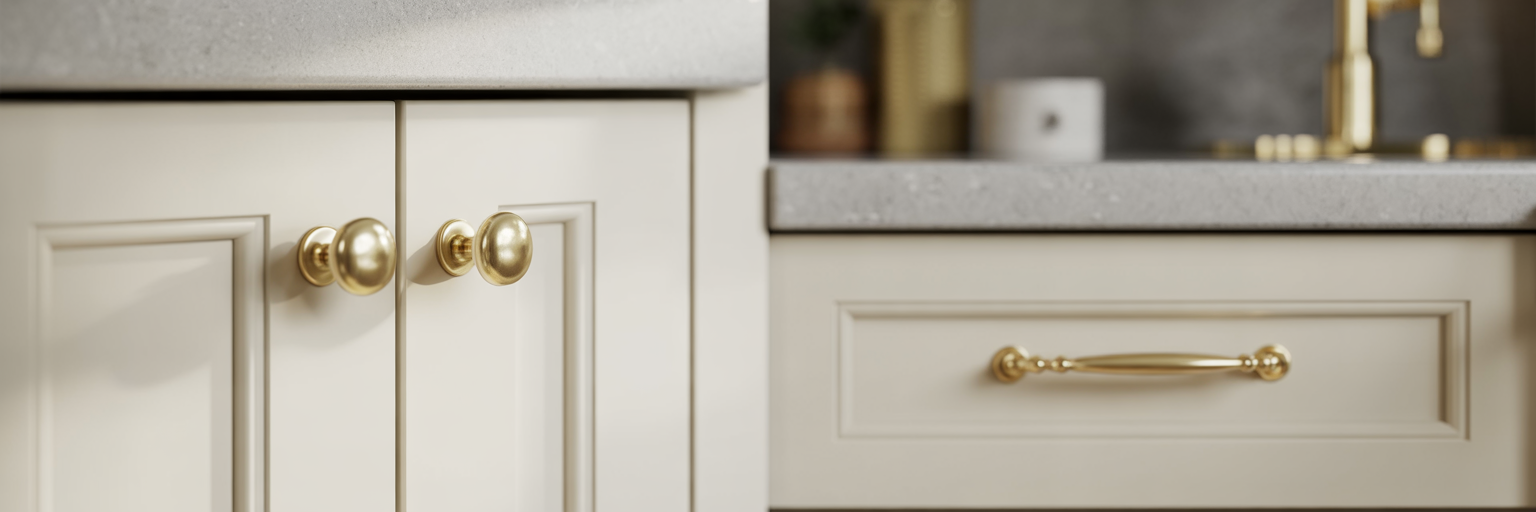
Deciding between knobs and pulls is a common question for any furniture update. A good rule of thumb is to use knobs for cabinet doors and pulls for drawers. This is because the full-hand grip of a pull makes it easier to open heavy or wide drawers, while the pinch grip of a knob is perfectly sufficient for lightweight doors. This is a key consideration when thinking about cabinet knobs vs pulls.
Ergonomics also play a role. Pulls are often easier to use for people with limited hand strength, making them a thoughtful choice for kitchens and bathrooms. A popular design approach is to mix both, for instance using knobs on upper cabinets and pulls on lower cabinets and drawers. If you are considering this, we strongly recommend ordering samples to see how the combination feels in your space. Some hardware, like our solid brass and wood collection, is available in both knob and pull styles to make coordination simple.
Decision-Making Table: Knobs vs. Pulls
| Factor | Knobs | Pulls (Handles) |
|---|---|---|
| Best For | Cabinet doors, small drawers, vintage look | Large or heavy drawers, high-use cabinets |
| Installation | Simpler, requires only one hole | Requires precise measurement for two holes |
| Grip | Pinch grip, can be harder for some | Full-hand grip, easier to open |
| Style | Classic, traditional, or minimalist | Modern, transitional, versatile |
This table summarizes the practical differences between knobs and pulls to help you decide based on your project's needs and your personal style.
Choosing the Right Material and Finish
When you explore how to choose cabinet hardware, material and finish are just as important as style. For high-traffic areas like kitchens and bathrooms, durability is key. Many designers prefer solid metals like brass because they feel substantial and are built to last. Solid brass has a satisfying weight, ceramic offers a charming, decorative touch, and wood brings a natural warmth to furniture.
Finishes determine the final look. A polished finish is shiny and reflective, creating a classic feel. A brushed or satin finish has a soft, matte look that is excellent at hiding fingerprints, making it a practical choice for busy households. An antique finish is treated to look gracefully aged from the start. A great tip is to match your hardware finish to other metal fixtures in the room, like your faucet or lighting, for a cohesive look. Our brushed gold solid brass pulls are a perfect example of a durable material combined with a modern, practical finish.
Most importantly, computer screens can't accurately show how a finish will look in your home. We always recommend ordering a few samples. This allows you to see and feel the hardware in your own space and compare how different finishes react to your room's natural and artificial light.
How to Measure for a Perfect Fit
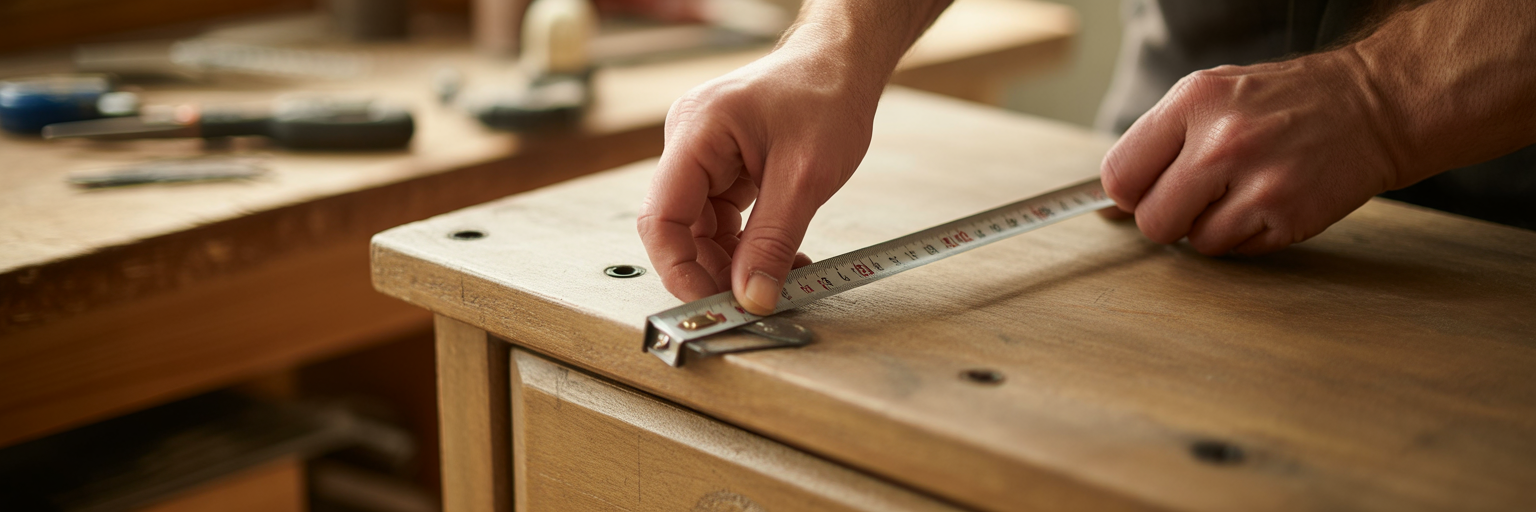
Correctly measuring for cabinet pulls is the secret to a smooth installation. If you are replacing existing pulls, the most critical measurement is the center-to-center distance. This is the space between the center of one screw hole to the center of the other. Common sizes are often in metric, such as 96mm or 128mm. Measuring this accurately ensures your new pulls will fit the existing holes perfectly.
Another key measurement is projection. This is how far the knob or pull sticks out from the cabinet surface. You need to ensure there is enough clearance for the hardware to not bump into adjacent walls, doors, or appliances when opened. As experts at This Old House often emphasize, taking the time to measure correctly is the key to a professional-looking result.
A helpful design guideline for choosing pull length is the "one-third rule," where the pull is roughly one-third the width of the drawer front. Remember, this is just a guideline, not a strict rule. Your personal preference is what matters most.
Before You Buy Checklist:
- New or Replacement? Are you drilling new holes or do you need to match existing ones?
- Center-to-Center: If replacing pulls, measure the distance between screw holes carefully.
- Door/Drawer Thickness: Measure the thickness of your cabinet door or drawer front to ensure the included screws will fit.
- Projection Clearance: Check that your new hardware won't hit anything when the door or drawer is opened.
Avoiding Common DIY Installation Mistakes
A successful hardware update is all in the details. Following a few tips for installing drawer pulls can help you avoid common frustrations and achieve a clean, professional finish.
- Use a Template: A cabinet hardware jig or template is the best tool for ensuring your knobs and pulls are perfectly straight and evenly spaced. It takes the guesswork out of measuring and marking each hole.
- Prevent Wood Splintering: When drilling through a door or drawer front, clamp a small block of scrap wood to the back where the drill bit will exit. This "backer block" supports the wood fibers and gives you a clean hole without splintering.
- Stop Knobs from Twisting: If a knob tends to loosen and spin over time, a small drop of non-permanent thread-locking compound on the screw before tightening can keep it securely in place.
- Fix a Misplaced Hole: Don't worry if you drill a hole in the wrong spot. It's an easy fix. Simply fill the hole with wood filler, let it dry completely, sand it smooth, and touch it up with matching paint.
Frequently Asked Questions
Can I mix different hardware finishes in the same room?
Yes, you can. The key to making it look intentional is to have a strategy. A simple approach is to choose one dominant finish for most of the hardware and use a second, complementary finish as an accent. For example, you could match all your hardware to your light fixtures and use a different finish on a standalone furniture piece.
How many extra pieces of hardware should I order?
It is always a wise idea to order one or two extra pieces. This gives you a spare in case a piece is damaged during installation or needs to be replaced down the road.
What are the essential tools for installing new hardware?
For a basic installation, you will need a tape measure, a pencil, a power drill with the correct size drill bit, and a screwdriver. A cabinet hardware template is also highly recommended for accuracy.
What if the screws that come with my hardware are too long or short?
This usually happens when your cabinet doors or drawer fronts are thicker or thinner than standard. Before ordering, measure the thickness of your doors. If the included screws won't work, you can easily find screws in the correct length at any local hardware store.
Your Next Step to a Beautiful Finish
Choosing the right hardware comes down to a few simple steps: decide between knobs and pulls, select a material and finish that suits your style and needs, and measure carefully for a perfect fit. This thoughtful approach is all it takes to give your furniture a beautiful and lasting update.
When you are ready, a great next step is to browse our collections of furniture hardware for inspiration. Even better, consider ordering a few samples to see how they look and feel in your own home. It is the most confident way to begin your project.


