

Full-height hinged closet doors weigh significantly more than standard bedroom nightstand drawers, putting extra daily strain on a single mounting screw. Selecting the right wardrobe handles starts with matching your grip leverage and hole spacing to the physical scale of the door.
Quick Answer for Choosing Wardrobe Handles
Unlike smaller kitchen cabinets, tall closet panels often use strong spring hinges or magnetic catches that require a firm pull at chest height. Browsing our collection of furniture hardware for cabinets and wardrobes is much easier once you know the physical demands of your doors.
Key Takeaways for Hinged Wardrobe Doors
- Measure existing holes first: Always record the exact center to center hole spacing before choosing replacement pulls so you do not have to patch and redrill wood doors.
- Match leverage to door weight: Choose two-point handles with comfortable finger clearance for tall or solid wood doors, and save single knobs for lighter armoire panels or upper cubbies.
- Check surrounding clearance: Verify how your wardrobe door handles align with lower drawers and confirm they will not hit nearby walls when swung open.
Knobs vs. Handles on Hinged Wardrobe Doors
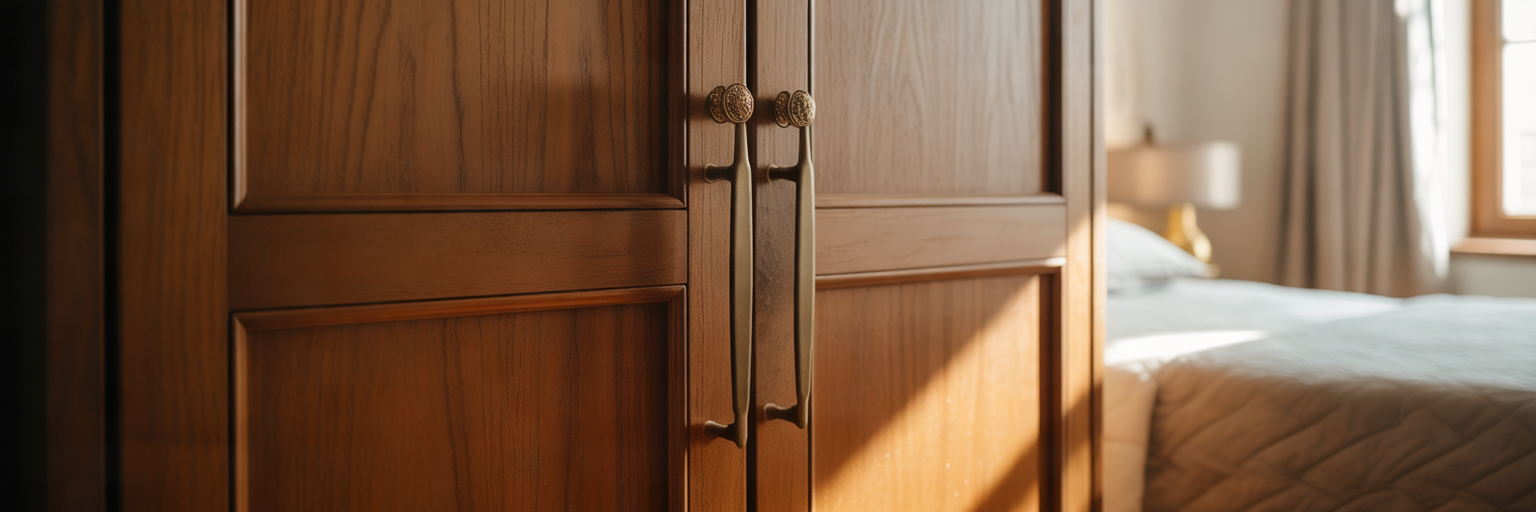
Weighing knobs vs handles for wardrobe doors comes down to panel weight, hinge resistance, and daily hand comfort. While a small knob looks charming on a vintage piece, pulling open a heavy floor-to-ceiling door with just two pinched fingers quickly becomes frustrating, and the twisting force can loosen a single screw over time. For a closer look at how different handle shapes feel in the hand, read our guide on choosing bar pulls, T-bar pulls, and bridge pulls.
Choose This If: Matching Hardware to Door Weight
- Choose single knobs if: You have lighter single-door vintage armoires, slatted louvered doors with narrow side rails, or small upper storage doors where a subtle visual footprint keeps the focus on the wood grain.
- Choose two-point bar handles if: You have full-height MDF or solid wood hinged doors, or cabinets fitted with high-tension soft-close hinges that require a full four-finger grip to open smoothly.
Coordinating Tall Hinged Doors with Lower Drawers
Many bedroom wardrobes pair tall upper doors with two or three wide drawers at the base. You can create a cohesive look without using the exact same piece everywhere by mounting vertical bar pulls on the hinged doors and placing matching knobs or shorter horizontal pulls from the same finish family on the lower drawers. Let door resistance and comfortable hand grip drive your choice between single-point and two-point hardware.
| Hardware Type | Best Wardrobe Door Type | Grip and Leverage | Visual Impact |
|---|---|---|---|
| Single Knobs (20mm to 35mm diameter) | Lighter armoire doors, bifold panels, or upper topper cabinets | Finger-pinch grip; low leverage for heavy hinges | Subtle, classic focal point that lets wood grain or molding stand out |
| Standard Pulls (96mm to 192mm hole spacing) | Mid-sized hinged doors (36 to 60 inches tall) and lower wardrobe drawers | Comfortable four-finger grip; reliable daily leverage | Balanced, traditional proportion that suits framed or shaker panels |
| Long Wardrobe Pulls (320mm and longer) | Full-height hinged closet doors (72 to 96 inches tall) and heavy solid panels | Full-hand ergonomic grip; maximum pulling power at various heights | Creates a clean, intentional vertical line across tall bedroom elevations |
What to Measure Before Replacing Wardrobe Hardware
Once you decide on a handle style, taking accurate measurements prevents the headache of ordering hardware that does not fit your existing drill holes. Understanding how to measure cabinet pulls takes only a tape measure and a few minutes at your closet door.
Center-to-Center Spacing vs. Overall Length
Center-to-center spacing is the exact distance from the middle of one screw hole to the middle of the second screw hole. Most furniture hardware is manufactured in standard metric sizes, including 64mm (about 2.5 inches), 96mm (3.75 inches), 128mm (5 inches), 160mm (6.3 inches), 192mm (7.5 inches), and 320mm (12.6 inches). Keep in mind that overall length is the total end-to-end measurement of the handle, which is always longer than the hole spacing because the metal bar overhangs the mounting posts on both ends.
- Open the wardrobe door and back out the two mounting screws holding the current pull.
- Hold a metric and imperial tape measure flat against the inside or outside face of the door.
- Measure from the exact center point of the top hole to the exact center point of the bottom hole.
- Repeat this check on every door and drawer, as older wooden armoires often have slight variations from panel to panel.
Checking Door Thickness, Projection, and Old Drill Holes
Measure the edge of your door to check its thickness, especially on antique armoires or thick framed doors that may require longer mounting screws than standard cabinet fronts. You should also check projection, which is how far the handle stands out from the door surface. If your new handle spacing does not match the old holes, you will need to plug the holes with wood filler, sand, and touch up the paint or stain. Alternatively, if old hardware left circular rings or slight surface dents on the wood, read our guide on fitting cabinet knobs and pulls with backplates to cover old marks cleanly without refinishing the door.
Grip, Proportion, and Variant-Level Material Choices
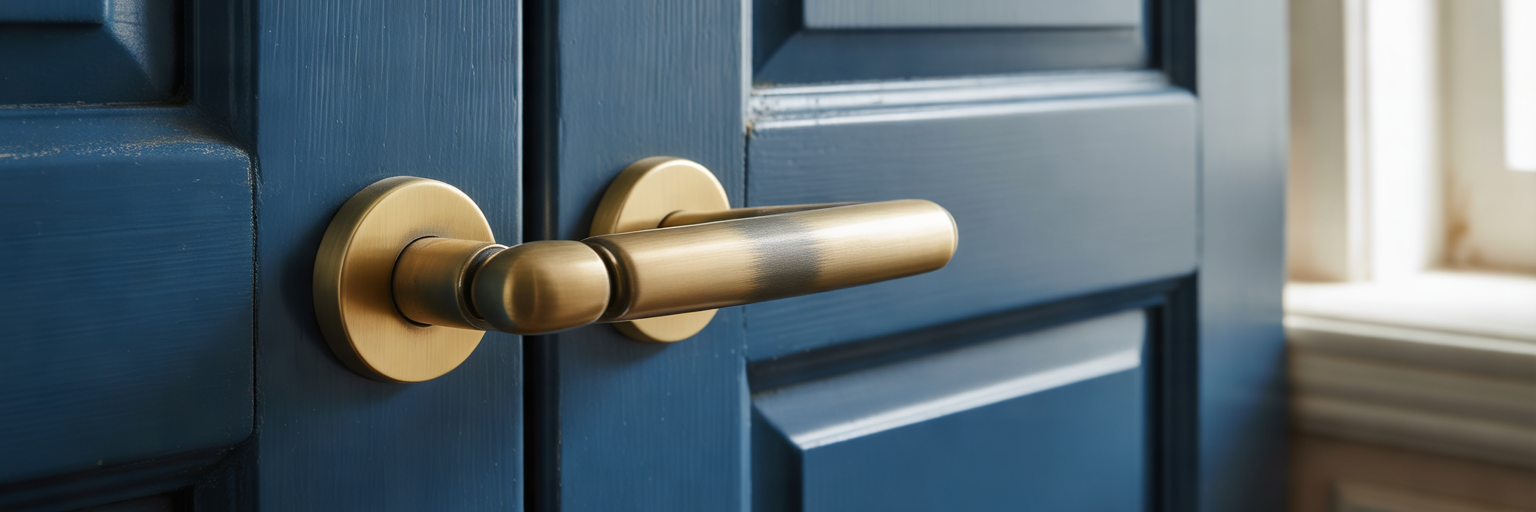
Accurate measurements guarantee your hardware will bolt onto the door, while good proportion and tactile feel make it a pleasure to use every morning. Tall bedroom doors occupy a large visual area, so the scale and texture of your hardware noticeably change the character of the room.
Judging Handle Scale and Knuckle Clearance
Flat-panel modern wardrobes often look balanced with longer pulls spanning up to one-third of the door height, whereas traditional shaker or raised-panel doors suit mid-sized pulls centered neatly on the vertical frame rail (known as the stile). Beyond visual scale, pay attention to knuckle clearance. Look for a projection of roughly 28mm to 35mm so four fingers can wrap around the bar without scraping your knuckles or fingernails against painted or stained wood.
Comparing Specific Material and Size Variants
Choosing the specific variant for your project helps tie the room together:
- Stepping up hole spacing: On a medium 60-inch tall wardrobe door, stepping up from a 128mm to a 192mm pull in a warm antique brass finish gives the tall panel better visual grounding and a roomier hand grip.
- Warming up flat panels: Installing minimalist wood and solid brass cabinet pulls in a 160mm or 192mm spacing softens tall, plain bedroom doors with natural wood grain and warm metal posts.
- Adding tactile grip: If your closet doors have stiff magnetic catches, knurled brushed gold solid brass bar pulls offer a diamond-textured surface that keeps your fingers from slipping on heavy panels.
- Lighter vintage doors: Painted ceramic knobs add gentle contrast on lightweight linen press doors or inner wardrobe cubbies.
Because JRM Accessories offers coordinated hardware across solid brass, wood-combined, ceramic, and alloy options, you can use our Sample Program to test the real weight, hand feel, and finish tone under your bedroom lighting before ordering a full set.
Placement Tips and Clearance Around Adjacent Doors
Once you have chosen the right material and size, thoughtful wardrobe handle placement ensures your doors open comfortably without hitting surrounding furniture or walls.
Standard Mounting Heights and Multi-Door Alignment
On full-height hinged wardrobe doors, the comfortable ergonomic sweet spot for handle placement is typically 900mm to 1,100mm (roughly 35 to 43 inches) from the floor. You can adjust this height slightly upward for taller homeowners, lower it in children's bedrooms, or align it naturally with a horizontal center rail on traditional armoires. Across a bank of three or four closet doors, keep your sightlines tidy by centering vertical door pulls directly along the vertical stiles and aligning lower horizontal drawer pulls down the exact center of each drawer front.
Testing Swing Clearance in Tight Bedroom Walkways
Before picking up a drill, check what happens when each door swings open 90 degrees. A handle with a deep projection placed on a corner wardrobe door can strike an adjacent bedroom wall and dent the drywall. On double doors that hinge away from each other or fold closely, check that neighboring handles will not collide mid-swing, and make sure T-bar ends do not jut into narrow walkways beside the bed where they might catch on knit sweaters. Use a strip of blue painter's tape or removable mounting putty to hold the handle in place on the door, step back to check the alignment across the room, and test the full door swing before drilling a single hole.
Common Wardrobe Hardware Mistakes and FAQs
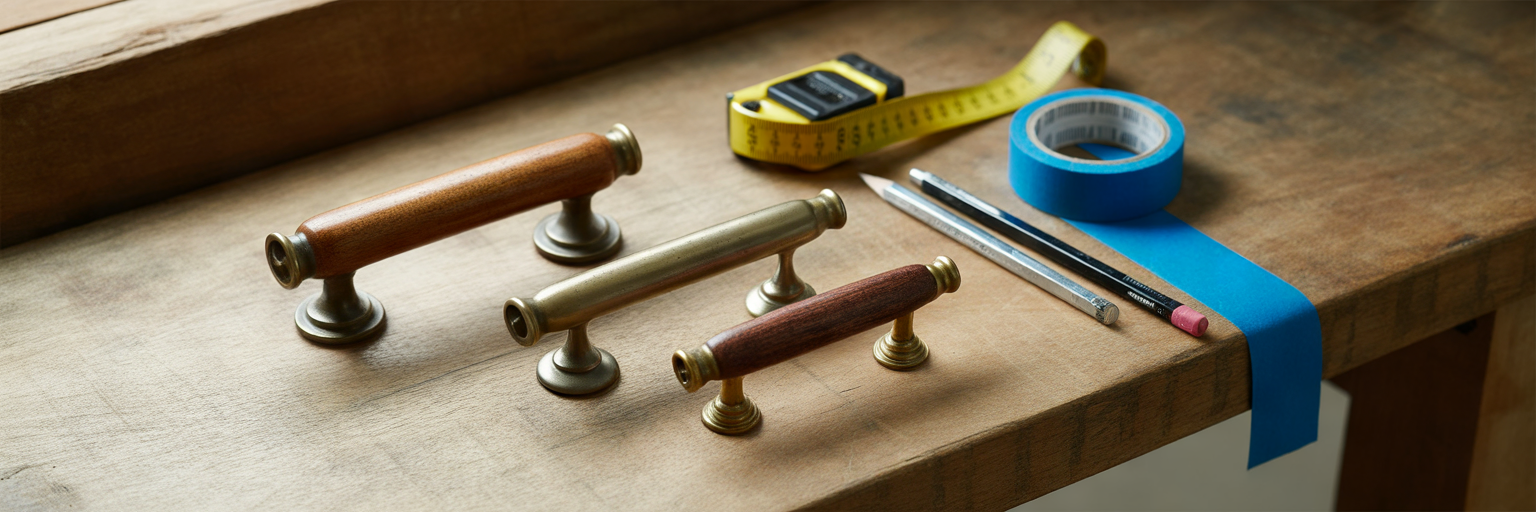
Taking a few extra minutes to double-check your counts and measurements prevents mid-project delays.
4 Buying Mistakes to Avoid Before You Drill
- Confusing overall length with hole spacing: Ordering a 160mm overall length bar when your existing drill holes are 160mm center-to-center will leave the mounting posts too short to reach the holes.
- Putting tiny knobs on heavy full-height doors: Small single-point knobs lack the pulling leverage needed to release heavy hinged panels day after day.
- Forgetting lower drawers and upper cubbies: Count every hinged panel, lower sock drawer, and overhead storage door so you can order all coordinated pieces in the same batch.
- Skipping finish samples in bedroom lighting: Warm bedside lamps and low natural light can make brass, gold, and bronze tones look noticeably different than they do on a bright phone screen.
Frequently Asked Questions
What size handle works best for full-height wardrobe doors?
For full-height doors measuring 72 to 96 inches tall, pulls with a 192mm, 224mm, or 320mm (and longer) center-to-center hole spacing provide the best visual proportion and a comfortable full-hand grip.
Can I replace wardrobe knobs with handles without filling holes?
Yes, as long as you keep the existing knob hole as either the top or bottom screw point for your new pull and drill one new hole vertically in line with it to match the new handle's hole spacing.
Should wardrobe handles be mounted vertically or horizontally?
Hinged wardrobe doors almost always use vertically mounted handles because a vertical bar matches the natural angle of your wrist when pulling a tall door outward. Horizontal handles are typically reserved for pull-out drawers below the doors.
How far from the edge of a hinged wardrobe door should a handle go?
On framed or shaker doors, center the handle horizontally within the vertical frame rail (usually 45mm to 65mm from the door edge). On flat slab doors, placing the handle 40mm to 60mm (about 1.5 to 2.5 inches) in from the opening edge looks balanced and preserves maximum pulling leverage.
How do I match wardrobe handles with dresser drawer pulls in the same bedroom?
Choose a coordinated hardware family that offers multiple sizes in the same finish, using longer vertical pulls on the tall wardrobe doors and matching 96mm or 128mm pulls or single knobs on the dresser drawers.
Publishing Metadata and Next Steps
When you are ready to update your bedroom storage, start by measuring your existing hole spacing and checking your door thickness. You can browse our coordinated solid brass cabinet pulls and knobs to compare matching sizes for doors and drawers, or order a piece through our Sample Program to check the finish against your wardrobe at home. All orders are processed within 1 to 3 business days and are backed by our 14-day return policy so you can complete your project with confidence.
- SEO Title: How to Choose Wardrobe Handles for Hinged Doors: Size & Placement
- Meta Description: Learn how to choose wardrobe handles for hinged doors. Compare knobs vs. pulls, measure center-to-center spacing, and check grip and placement.
- URL Slug: how-to-choose-wardrobe-handles-hinged-doors
- Excerpt: A practical guide to measuring hole spacing, comparing knobs with bar pulls, and positioning hardware on hinged closet and armoire doors.
- Primary Keyword: wardrobe handles
- Secondary Keywords: wardrobe door handles, how to measure cabinet pulls, knobs vs handles for wardrobe, wardrobe handle placement, center to center hole spacing
- Suggested Internal Links: furniture hardware for cabinets and wardrobes, choosing bar pulls, T-bar pulls, and bridge pulls, fitting cabinet knobs and pulls with backplates, minimalist wood and solid brass cabinet pulls, knurled brushed gold solid brass bar pulls, solid brass cabinet pulls and knobs
- Suggested Image Guidance & Alt Text: Hero image showing a double-door wooden bedroom wardrobe fitted with vertical brass bar pulls (Alt text: Tall hinged wooden wardrobe doors fitted with vertical brushed brass bar handles and matching lower drawer pulls); Inline diagram comparing center-to-center hole spacing vs overall handle length (Alt text: Diagram showing how to measure center to center hole spacing and overall length on a wardrobe handle).
- Recommended Schema: Article, FAQPage


