

In a small kitchen, every detail matters. The right cabinet hardware can do more than just open doors and drawers; it can make the entire room feel more spacious, organized, and comfortable to work in. Choosing space-saving cabinet hardware is a smart design decision that prevents snagged clothing in tight walkways and reduces visual clutter. This guide will walk you through practical choices that blend function with a clean aesthetic, helping you find hardware that works beautifully in your compact space.
Key Takeaways for Small Kitchens
If you need a quick answer on how to choose kitchen hardware for a compact area, here are the most important points to remember:
- Choose low-profile hardware. Styles like edge pulls or slim bar pulls have minimal projection, meaning they don’t stick out far. This saves physical space and creates a clean, uncluttered look.
- Mix knobs and pulls strategically. Use pulls on lower cabinets and heavy drawers for a better grip. Use knobs on upper cabinets to create a lighter, more open feeling.
- Follow the "Rule of Thirds" for sizing. For a balanced look, choose pulls that are about one-third the width of your drawer front. This prevents hardware from looking too small or overpowering the cabinetry.
- Stick to a single finish. Even if you mix knobs and pulls, using one consistent finish like brushed brass or matte black creates a cohesive, intentional design that makes the space feel calmer.
Understanding Space-Saving Cabinet Hardware
When we talk about "space-saving" hardware, we are referring to two distinct benefits. The first is physical. In a small kitchen with narrow passages, bulky hardware with a large projection—how far it sticks out—can be a constant nuisance. You might find your clothes snagging on handles or your hips bumping into knobs as you move around. Choosing hardware with a low profile solves this practical problem.
The second benefit is visual. Ornate, oversized, or mismatched hardware can make a small kitchen feel busy and cramped. Simple, streamlined hardware does the opposite. It reduces visual noise, allowing the eye to see clean lines and uninterrupted surfaces. This simple trick helps the kitchen feel larger, calmer, and more organized. Your hardware choice is a foundational one that affects both how you use your kitchen every day and how spacious it feels.
Low-Profile Hardware for a Clean, Uncluttered Look
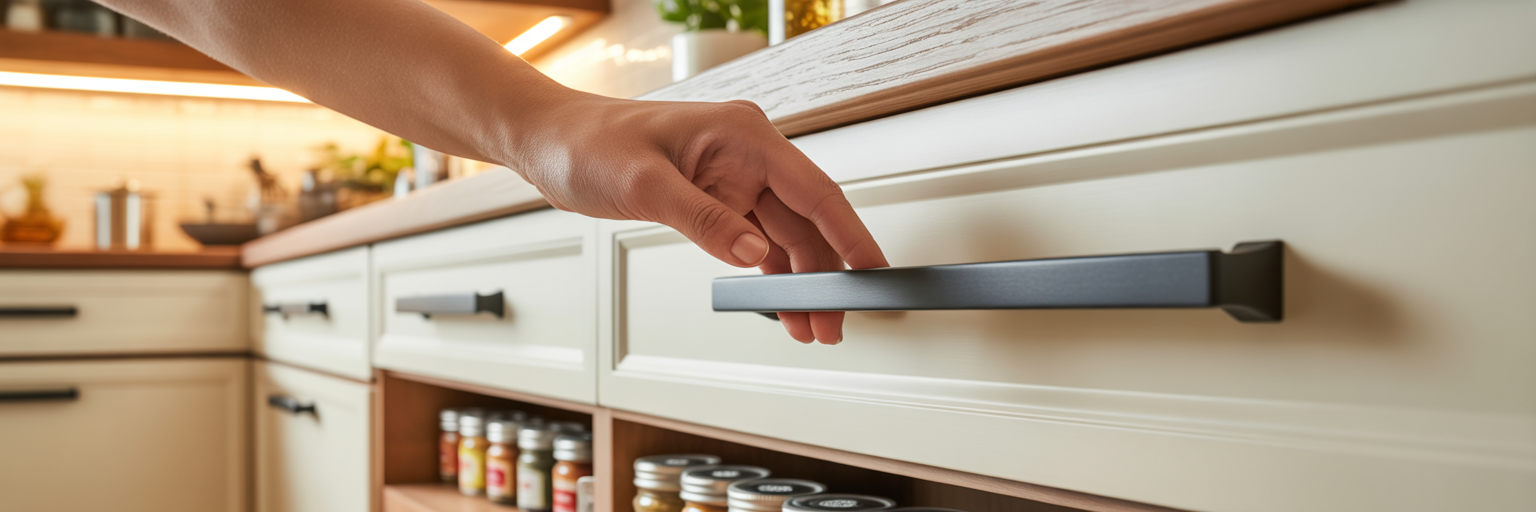
To achieve that clean, spacious feel, certain hardware styles are more effective than others. These low profile cabinet pulls are designed to be functional yet discreet, making them perfect for compact kitchens where every inch counts.
Edge Pulls: The Ultimate Minimalist Choice
Edge pulls for cabinets are the definition of minimalist design. Instead of mounting on the face of the door or drawer, they attach to the top or side edge, leaving only a small lip visible to pull. This creates an almost-flush surface that is seamless and incredibly modern. They are an ideal match for flat-front or slab-style cabinets, where they practically disappear, contributing to a clean, architectural look. Because they barely project, they are one of the best solutions for preventing snags in very tight kitchen layouts.
Finger and Tab Pulls: Function Meets Simplicity
Similar to edge pulls, finger and tab pulls offer function without fuss. They provide a small, subtle lip to grip, making them easy to use while maintaining a very low profile. These pulls are excellent for anyone aiming for a minimalist or contemporary aesthetic. For example, sleek designs like alloy cabinet edge pulls offer this exact benefit, providing just enough to grab onto without adding visual bulk. Their simple form ensures they blend in with the cabinetry, reinforcing a sense of openness and order in the room.
Knobs vs. Pulls: What’s Best in a Compact Kitchen?
The choice between knobs and pulls in a small kitchen should be guided by ergonomics and visual balance. A popular and highly functional approach is to use both. Use small kitchen cabinet handles, or pulls, on all your drawers and any large lower cabinet doors. A pull allows for a full-hand grip, which is more comfortable and secure for opening heavy drawers filled with pots, pans, or dishes.
For upper cabinets, simple knobs are often a better choice. Their smaller scale reduces visual weight, helping the top half of the kitchen feel lighter and more open. This hybrid strategy—pulls on drawers, knobs on doors—is a designer-approved method that looks balanced and intentional. The key to success is consistency. Ensure both your knobs and pulls are in the same finish to create a unified look. You can explore a variety of matching drawer pulls and knobs to find a pair that works for your style.
| Hardware Type | Best For | Ergonomics | Visual Impact |
|---|---|---|---|
| Knobs | Upper cabinets, small doors | Pinch grip; less ideal for heavy loads | Small footprint, creates an airy feel |
| Pulls | Lower cabinets, all drawers (especially heavy ones) | Full-hand grip; easier and safer to open | More substantial, can ground lower cabinetry |
| Edge/Finger Pulls | Modern, minimalist slab-front cabinets | Requires fingertip grip; very low profile | Nearly invisible, maximizes clean lines |
| Cup Pulls | Drawers in farmhouse or transitional kitchens | Scoop grip; easy to use on drawers | Contained shape, low projection but can feel visually heavier |
Getting Size and Projection Right
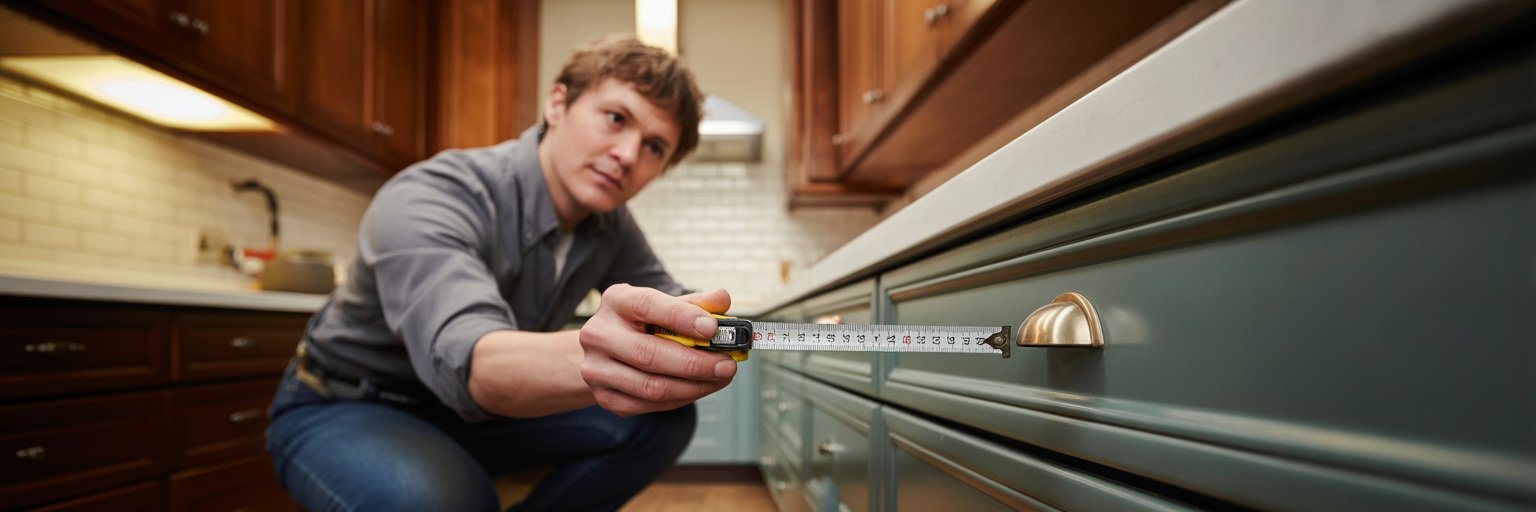
Two measurements are critical when selecting hardware for a small kitchen: projection and length. Projection is simply how far the hardware sticks out from the cabinet face. In a kitchen with narrow walkways, this is crucial. A pull that projects too far can become an obstacle. As a practical guideline, look for hardware with a projection of 1.25 inches (about 32mm) or less to minimize bumps and snags.
For pull length, the "Rule of Thirds" is a helpful design principle that ensures visual balance. As highlighted by design resources like Blackburns Interiors, a pull that is approximately one-third the width of the drawer front typically looks best. It’s substantial enough to be functional without overwhelming the cabinet. A great way to visualize this before you buy is to use painter's tape on your drawers. Mark out different pull lengths to see how the scale looks in your actual space before you commit to drilling holes.
Common Mistakes to Avoid When Choosing Hardware
Choosing hardware can feel overwhelming, but avoiding a few common mistakes will help you make a confident decision.
- Ignoring Projection: It’s easy to fall in love with a handle's design and forget to check how far it sticks out. Always check the projection measurement to ensure it won’t snag clothes or get in the way in your tightest spots.
- Creating Visual Overload: In a small kitchen, less is more. Avoid hardware that is too large, ornate, or detailed for your cabinet style. This can make the space feel busy and smaller than it is. Simple, clean lines are your friend.
- Forgetting Appliance Finishes: Your cabinet hardware doesn't need to be an exact match to your appliance handles, but it shouldn't clash. A warm, shiny brass pull next to a cool, brushed chrome refrigerator handle can look accidental. Hold potential hardware near your appliances to see how the finishes interact.
- Skipping the Samples: This is the most important step. Ordering samples is the only way to see how hardware looks and feels in your home. Finishes like the matte gold and aged antique brass can look different in your kitchen's unique lighting than they do online. Samples let you check size, finish, and feel before committing to a full set.
Frequently Asked Questions
Can I mix hardware finishes in a small kitchen?
It's generally best to avoid it. Sticking to one consistent finish for all your hardware creates a cohesive and calming effect, which is a major benefit in a small, busy space. A single finish helps unify the look, even if you're mixing knobs and pulls.
What is the best hardware for minimalist kitchens?
For true minimalist kitchen hardware, your best options are edge pulls for cabinets or slim, simple bar pulls. Choose them in a non-reflective finish like matte black or brushed brass to keep the look understated and sophisticated.
Do cabinet pulls have to be centered?
Not necessarily. While centering pulls on drawer fronts is a classic look, a more modern placement is on the top third of the drawer. For cabinet doors, the standard placement is on the vertical stile, opposite the hinges.
Are cup pulls good for small kitchens?
Yes, they can be a great choice. Their contained, scoop-like shape often has a naturally low profile. However, it's still wise to check the projection measurement. Some styles are bulkier than others, so a smaller design like these antique bronze cup pulls may be a better fit. Consider if their traditional look suits your kitchen's overall style.
Your Next Step to a Better Kitchen
You now have the framework to choose hardware that will make your small kitchen more functional and feel more spacious. Remember to prioritize low-profile designs, select hardware based on its location and use, and always double-check the projection and size before you buy. The next logical step is to measure your cabinets and drawers to determine what sizes you need.
With those measurements in hand, you can confidently explore collections of furniture hardware to find the perfect fit for your project. And before you make your final decision, order a few samples. Seeing them in your own home is the best way to ensure you’ll love your new hardware for years to come.


