

The right hardware can feel like the final, defining touch on a piece of restored furniture, connecting its past with your present. Choosing from the many drawer pull styles available is key to an authentic update that honors the furniture's original era. This guide will walk you through five timeless options to help you find the perfect match for your project.
Understanding Classic Drawer Pull Styles
Quick Answer: Choosing the Right Style
For classic furniture, the goal is to match the hardware to the piece's era. The most authentic choices are often Victorian, Art Deco, Rustic, Arts and Crafts, or Federal styles. Before you buy any furniture restoration hardware, the most important step is to measure the existing hole spacing, known as the center-to-center distance, to ensure a perfect fit.
Why Hardware Style Matters in Restoration
Drawer pulls are more than just functional; they are historical details that tell a story. Selecting period-appropriate hardware maintains the furniture's authenticity and character. A modern pull on an antique dresser can feel jarring, while the right classic drawer pulls complete the restoration with integrity. The hardware should feel like it has always been there, enhancing the piece rather than distracting from it.
Key Terms for Shoppers
Understanding a few terms makes the process of how to choose drawer pulls much simpler.
- Center-to-Center: This is the distance between the center of the two screw holes on a pull. It is the most important measurement to take when replacing existing hardware, as it ensures the new pull will fit the old holes without extra drilling.
- Projection: This measures how far the pull sticks out from the drawer front. It's an important consideration for furniture in tight spaces, like a dresser next to a doorway, to ensure there is enough clearance.
- Backplate: This is the decorative plate that sits behind a knob or pull. It serves two purposes: adding an extra layer of detail and conveniently covering old marks, scratches, or previous screw holes.
Style 1: Victorian Brass Pulls for Ornate Detail
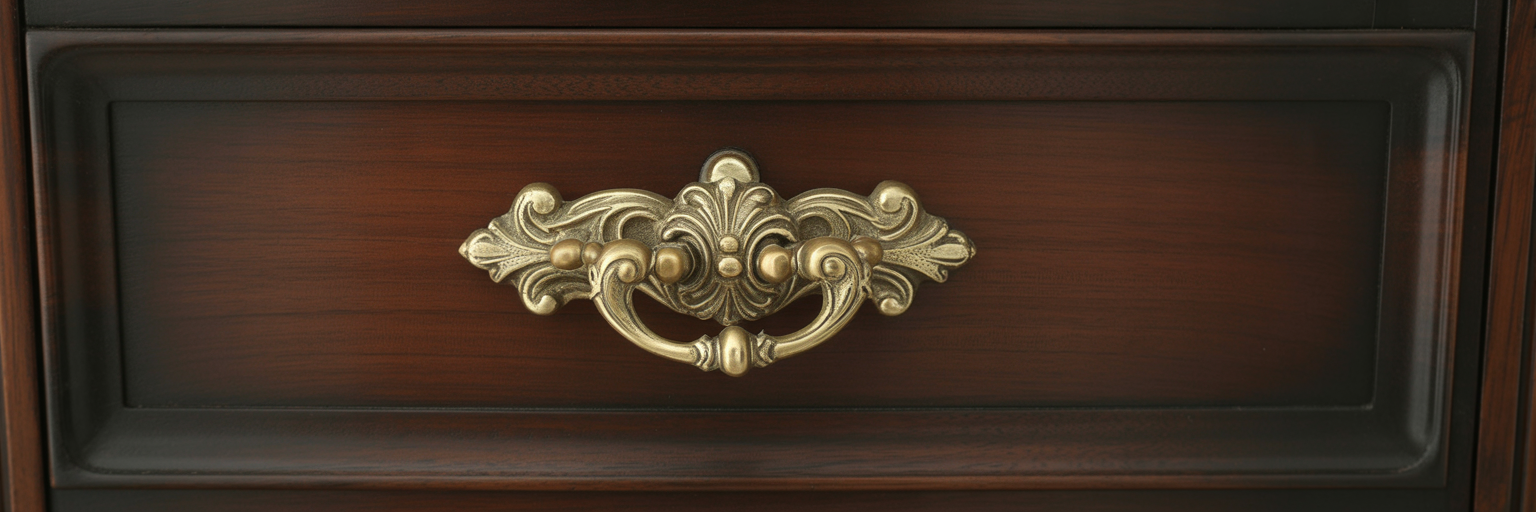
Reflecting the mid-to-late 19th century's love for ornamentation, Victorian hardware is anything but subtle. These pulls are typically made of solid, heavy brass and feature intricate details like scrolling vines, leaves, and floral patterns. They feel substantial and decorative, adding a sense of history and grandeur. As a guide from Rocky Mountain Hardware notes, Victorian pulls are often defined by their elaborate, nature-inspired motifs. These detailed vintage cabinet handles bring a rich, historical feel to any piece.
Best For: Heavy, dark wood furniture such as walnut wardrobes, mahogany dressers, and ornate sideboards. These pulls beautifully complement pieces that already have carved details and a formal presence.
Considerations: Their elaborate design can easily overwhelm simpler furniture. Avoid using them on minimalist or mid-century modern pieces, where the ornate style would clash with clean lines. For an example of this style, see our Solid Brass Floral Cabinet Pulls.
Style 2: Art Deco Pulls for Geometric Elegance
The Art Deco period of the 1920s and 1930s celebrated glamour, geometry, and machine-age symmetry. This is clearly reflected in its hardware. Art Deco pulls are known for their distinct look, featuring stepped patterns, sunburst fan shapes, and clean, angular lines. They were often made from brass or chrome and sometimes included colorful inlays, adding a touch of sophistication to furniture.
Best For: Furniture from the era, such as waterfall dressers, sleek cocktail cabinets, and mirrored vanities. These pulls add a touch of vintage glamour that is specific to the period. Our Solid Brass Geometric Cabinet Ring Pulls are a great example of this clean, distinctive look.
Considerations: Their strong geometric statement is not a universal fit. It is best to avoid using them on rustic, traditional, or country-style furniture, as their sleekness pairs best with polished wood finishes and streamlined forms.
Style 3: Cast Iron & Drop Ring Pulls for Rustic Charm
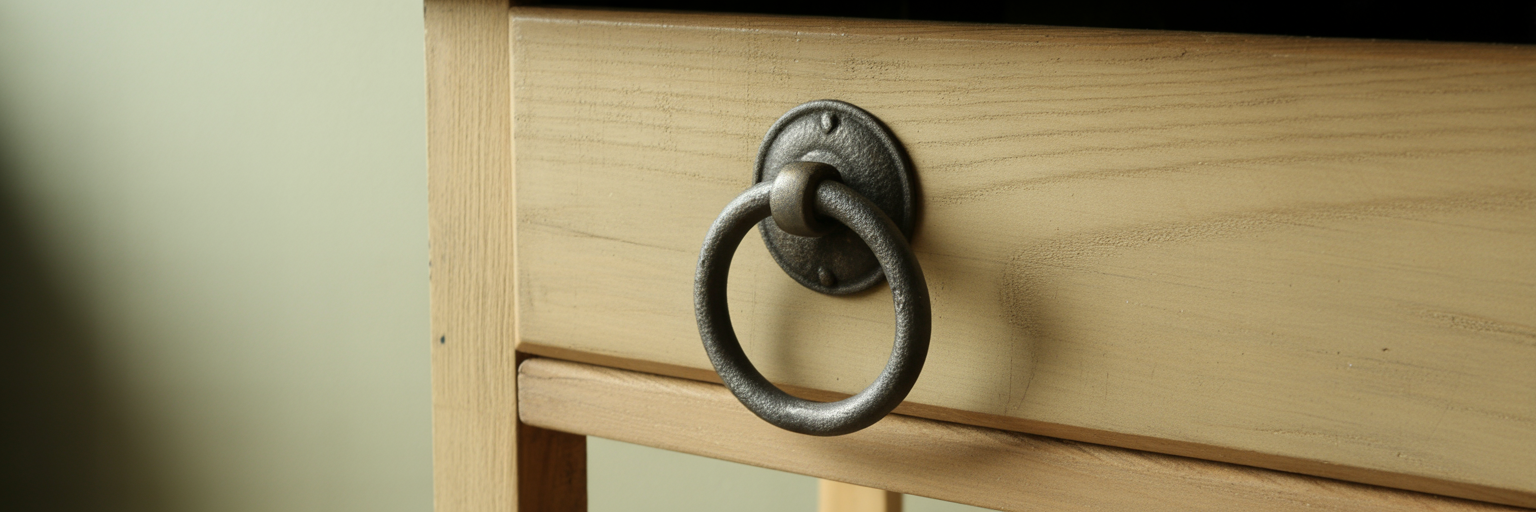
Evoking an earlier, more functional aesthetic, rustic hardware is perfect for Colonial, farmhouse, or primitive styles. Cast iron pulls are characterized by their heavy, forged appearance and often feature a dark, textured finish. Simple drop ring pulls and bail pulls are common, emphasizing a functional, handcrafted look that speaks to durability. These sturdy vintage cabinet handles add an authentic, unpretentious character to simpler furniture pieces.
Best For: Rustic pieces like apothecary cabinets, blanket chests, and simple pine cupboards. The rugged feel of this hardware enhances the natural, historic quality of the furniture.
Considerations: The heavy, informal feel can be out of place on more refined furniture, such as delicate neoclassical pieces from the Hepplewhite or Sheraton periods. A product like our Solid Brass Cabinet Cup Pulls in Antique Bronze offers this aged, rustic finish.
Style 4: Arts and Crafts Pulls for Simple Craftsmanship
The Arts and Crafts movement of the late 19th and early 20th centuries valued simple, honest construction over mass-produced ornamentation. The hardware from this period reflects that philosophy. Key features include hand-hammered textures, straight lines, and square or rectangular shapes. Common materials were copper, iron, and dark-toned brass, all chosen to feel sturdy and authentic.
Best For: Mission, Craftsman, or Stickley-style furniture. This hardware is designed to highlight the beauty of natural wood, especially oak, and visible joinery. It emphasizes function and skilled handiwork over decoration.
Considerations: The stark simplicity and handcrafted look can feel out of place on highly polished or formal furniture. Avoid pairing Arts and Crafts hardware with ornate Victorian or delicate French Provincial styles, as the contrast would feel inconsistent.
Style 5: Federal & Hepplewhite Pulls for Neoclassical Grace
The Federal period in the late 18th century was defined by a light, elegant, and symmetrical aesthetic. Its hardware is equally refined. Signature characteristics include thin, stamped brass backplates, often in oval or rectangular shapes, paired with slender bail handles. These classic drawer pulls frequently feature neoclassical motifs like eagles, urns, and swags, adding a touch of formal grace.
Best For: Fine, delicate furniture made from woods like mahogany, satinwood, or cherry. These pulls are perfect for sideboards, inlaid card tables, or bow-front dressers from the Hepplewhite, Sheraton, or Federal periods.
Considerations: Their delicate scale and formal appearance are not suited for heavy, rustic, or chunky furniture. The hardware must match the graceful proportions of the furniture piece itself to look authentic.
Before You Buy: A Quick Comparison Guide
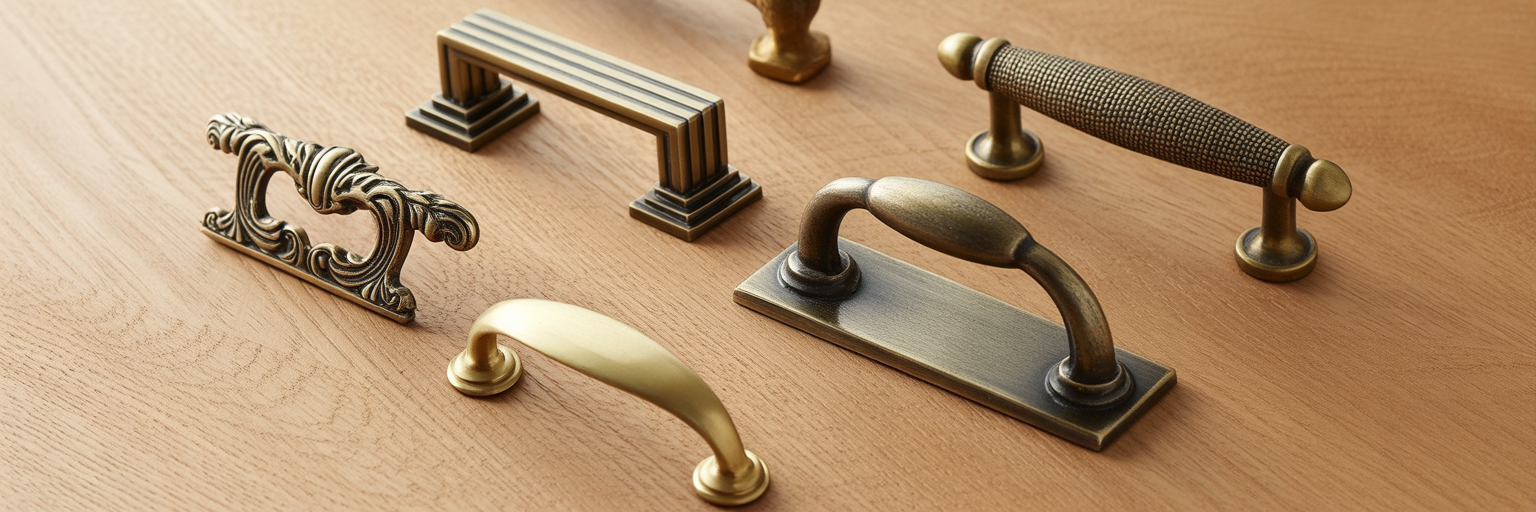
This table summarizes the key characteristics to help you match hardware to your furniture's period and style.
| Style Name | Typical Era | Best For (Furniture Type) | Overall Feel |
|---|---|---|---|
| Victorian Brass | Mid-to-Late 19th C. | Ornate, heavy wood (mahogany, walnut) | Ornate & Decorative |
| Art Deco | 1920s–1930s | Sleek, polished pieces, cocktail cabinets | Geometric & Glamorous |
| Cast Iron / Drop Ring | 18th–19th C. | Rustic, primitive pieces (pine, oak) | Rustic & Handcrafted |
| Arts and Crafts | Late 19th–Early 20th C. | Mission, Craftsman-style oak furniture | Simple & Honest |
| Federal / Hepplewhite | Late 18th C. | Fine, delicate wood (cherry, mahogany) | Elegant & Formal |
How to Make Your Final Choice
To make your final decision, consider the furniture's wood type, its finish, and the overall style of the room where it will live. The best way to ensure you love the result is to see it in person. We always recommend ordering a sample to check how the pull looks and feels in your own home before committing to a full set. Once you have an idea of the style you need, you can browse our collection of drawer pulls and knobs to find the perfect fit.
Frequently Asked Questions About Restoration Hardware
How do I know what size drawer pull to get?
Measure the "center-to-center" distance, which is the space between the middle of each screw hole on your drawer. This is the most critical measurement for a simple replacement. If you fall in love with a pull that has different spacing, you can often use hardware with a backplate to cover the old holes.
Can I mix different hardware styles on one piece of furniture?
For an authentic restoration, it is best to stick to one style. Mixing different drawer pull styles can look inconsistent and detract from the piece's character. If you must mix, a common approach is to use knobs on small top drawers and pulls on larger bottom drawers, but ensure they are from the same style family and have the same finish to maintain a cohesive look.
How should I clean antique-finish brass pulls without ruining the patina?
To clean antique furniture hardware, use a soft, damp cloth with a very small amount of mild soap, then wipe dry. It is important to avoid harsh chemical brass polishes, as these will strip the aged patina that gives the hardware its authentic, vintage character.
What if my furniture has no existing hardware or holes?
This is a great opportunity, as you can choose any style that suits the piece without worrying about existing measurements. Consider the furniture's proportions: larger pulls generally work well on large drawers, while smaller knobs are better for small doors. We recommend using a drilling template to ensure your new holes are spaced accurately for a professional-looking installation.


